
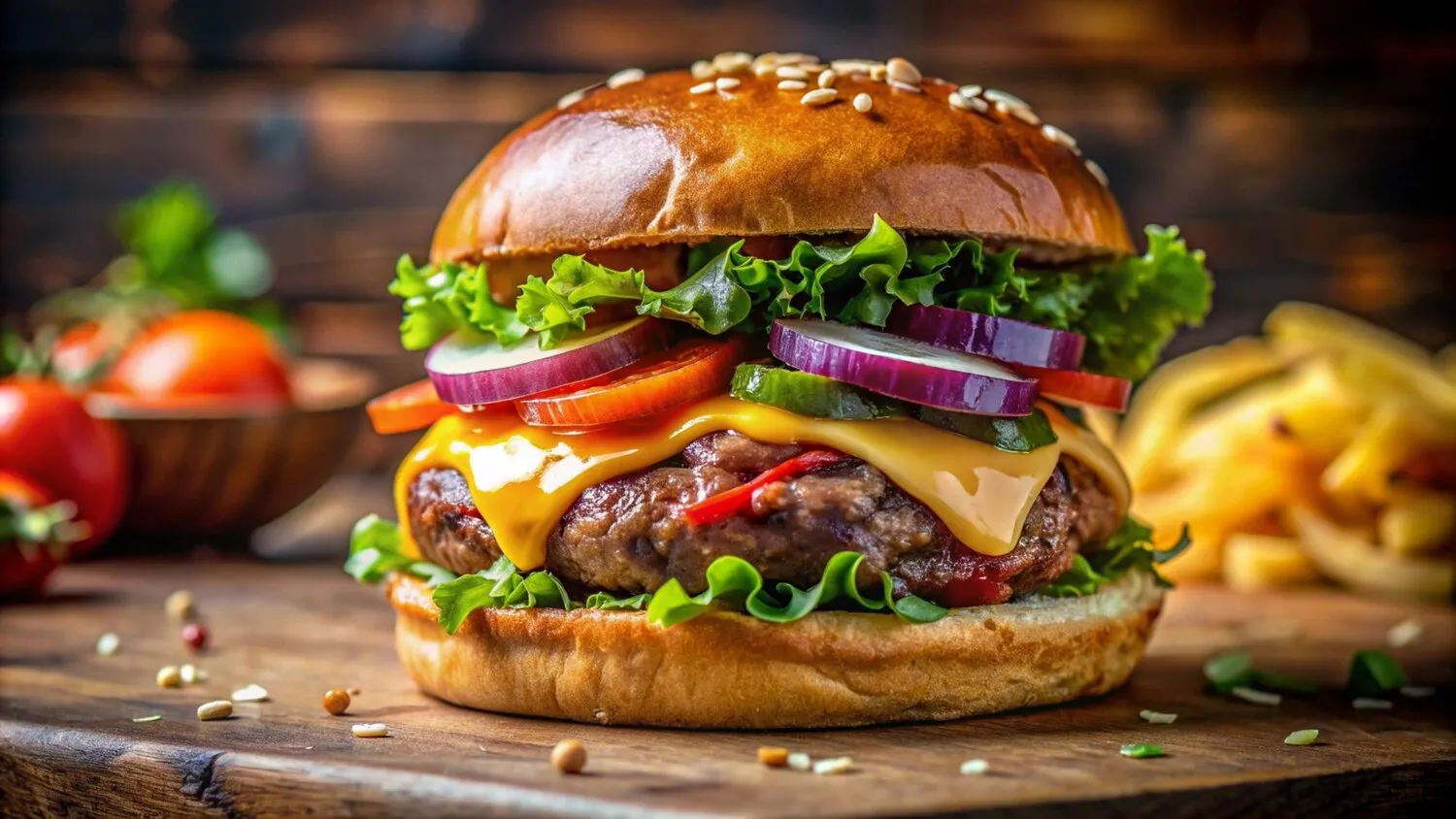

Burger
They also serve Burgers.
Tabela Nutricional
* O % do Valor Diário (VD) informa quanto um nutriente em uma porção de alimento contribui para uma dieta diária. 2.000 calorias por dia são usadas para conselhos nutricionais gerais.
Recurso Premium
Recurso Premium
The burger's origins are debated, but it's widely believed to have evolved from the Hamburg steak brought by German immigrants in the 19th century. These steaks were initially served without buns. The concept of placing the patty between two slices of bread gained popularity in the late 19th and early 20th centuries, leading to the modern burger as we know it.
Recurso Premium
Burgers are deeply ingrained in American food culture, representing convenience, casual dining, and a customizable culinary experience. They are a staple at fast food restaurants, diners, and backyard barbecues.
Fast Food Icon
Burgers are synonymous with fast food, representing a readily available and affordable meal option.
Barbecue Staple
Burgers are a common sight at barbecues and outdoor gatherings, signifying casual and social dining.
Regional Variations
Different regions have developed unique burger styles, such as the Oklahoma Onion Burger or the Juicy Lucy from Minneapolis, reflecting local culinary preferences.
Recurso Premium
Burgers offer a balance of savory, fatty, and umami flavors, often complemented by tangy, sweet, and spicy elements from condiments and toppings.
The primary flavor comes from the ground beef patty, which is typically seasoned with salt and pepper. The fat content of the beef contributes to the juicy texture and richness. Toppings such as cheese add a creamy, salty, and sometimes sharp flavor. Condiments like ketchup and mustard provide sweetness and tang, while pickles offer acidity and crunch. Onions can contribute sweetness, pungency, or both depending on preparation (raw, caramelized, etc.). Bacon adds smoky and salty notes. Overall, the flavor profile is highly customizable based on ingredient selection.
Recurso Premium
Beef Selection
Choose ground beef with a good fat content (around 80/20 blend) for a juicy and flavorful patty. Avoid overly lean ground beef, which can result in a dry burger.
Patty Shaping
Gently form the patties, avoiding over-packing the meat. Make a slight indentation in the center of each patty to prevent them from bulging during cooking.
Cooking Temperature
Cook burgers over medium-high heat for a good sear. Use a meat thermometer to ensure the burgers reach the desired internal temperature for doneness (medium-rare: 130-135°F, medium: 135-145°F, medium-well: 145-155°F, well-done: 155°F+).
Toasting the Bun
Toasting the burger bun lightly can improve its texture and prevent it from becoming soggy from the burger juices.
Recurso Premium
Explore pratos e restaurantes adicionais de Burgers
Explorar BurgersDescubra os melhores restaurantes e experiências culinárias em Bregenz.
Explorar BregenzSaiba mais sobre a cultura gastronômica, a cena de restaurantes e o patrimônio culinário de Austria.
Explorar Austria