
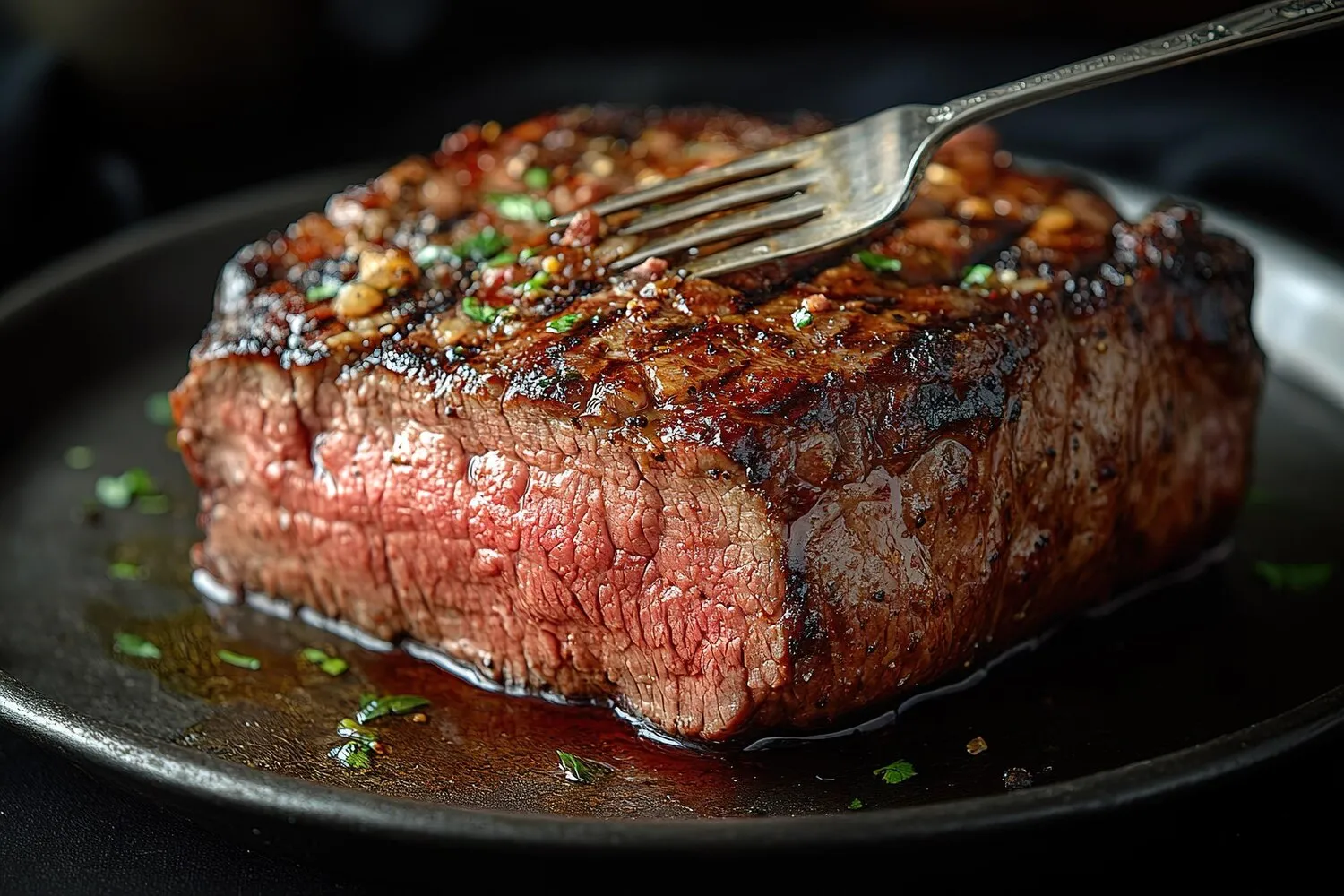

Steak
Several reviews mention the good steak at 't Hof.
Tabela Nutricional
* O % do Valor Diário (VD) informa quanto um nutriente em uma porção de alimento contribui para uma dieta diária. 2.000 calorias por dia são usadas para conselhos nutricionais gerais.
Recurso Premium
Recurso Premium
The concept of cooking meat over a fire dates back to prehistoric times. However, the modern steak, as we know it, evolved over centuries. In Europe, the practice of butchering and portioning beef cuts for specific cooking methods became refined, particularly in Britain. The British are credited with popularizing the specific cuts and grilling techniques that led to the modern steakhouse experience.
Recurso Premium
Steak is often associated with celebrations, special occasions, and fine dining. It represents indulgence and quality, frequently served in steakhouses and upscale restaurants. The ritual of preparing and enjoying steak is deeply ingrained in Western culinary culture.
Steakhouse Culture
Steakhouses provide a specific dining experience focused on high-quality beef, professional service, and a sophisticated atmosphere. Ordering steak often involves selecting the cut, size, and level of doneness.
Grilling Traditions
Backyard grilling and barbecues are common ways to enjoy steak at home. This often signifies a social gathering and a celebration of outdoor cooking.
Symbol of Affluence
Steak is frequently perceived as a luxury item, reflecting a higher standard of living and access to premium ingredients.
Recurso Premium
Steak is characterized by its rich, savory flavor, often enhanced by Maillard reaction during cooking. The core flavor profile is beefy and umami, with variations depending on the cut, marbling, and cooking method.
The primary flavor comes from the inherent qualities of the beef itself. The amount of fat (marbling) within the muscle significantly impacts the flavor; more marbling equals a richer, more succulent flavor. Cooking at high temperatures promotes the Maillard reaction, creating complex flavors and a browned crust. Seasoning typically involves salt and pepper, allowing the natural beef flavor to shine. Additional flavors can be introduced through marinades, rubs (often containing herbs, spices, and sugars), and sauces (such as Béarnaise, peppercorn, or chimichurri). Some steaks benefit from being finished with butter and herbs like thyme or rosemary.
Recurso Premium
Selecting the Right Cut
Consider the desired flavor and texture. Ribeye is known for its rich marbling, while filet mignon is prized for its tenderness. New York strip offers a balance of flavor and tenderness.
Achieving a Good Sear
Ensure the pan or grill is extremely hot before adding the steak. This promotes the Maillard reaction, creating a flavorful crust. Use a high smoke point oil like avocado or canola.
Using a Meat Thermometer
For consistent results, use a meat thermometer to monitor the internal temperature. This ensures the steak is cooked to the desired level of doneness (rare, medium-rare, medium, etc.).
Resting the Steak
Allow the steak to rest for at least 5-10 minutes after cooking. This allows the juices to redistribute, resulting in a more tender and flavorful steak.
Recurso Premium
Explore pratos e restaurantes adicionais de Meat
Explorar MeatDescubra os melhores restaurantes e experiências culinárias em Hofstade.
Explorar HofstadeSaiba mais sobre a cultura gastronômica, a cena de restaurantes e o patrimônio culinário de Belgium.
Explorar Belgium