
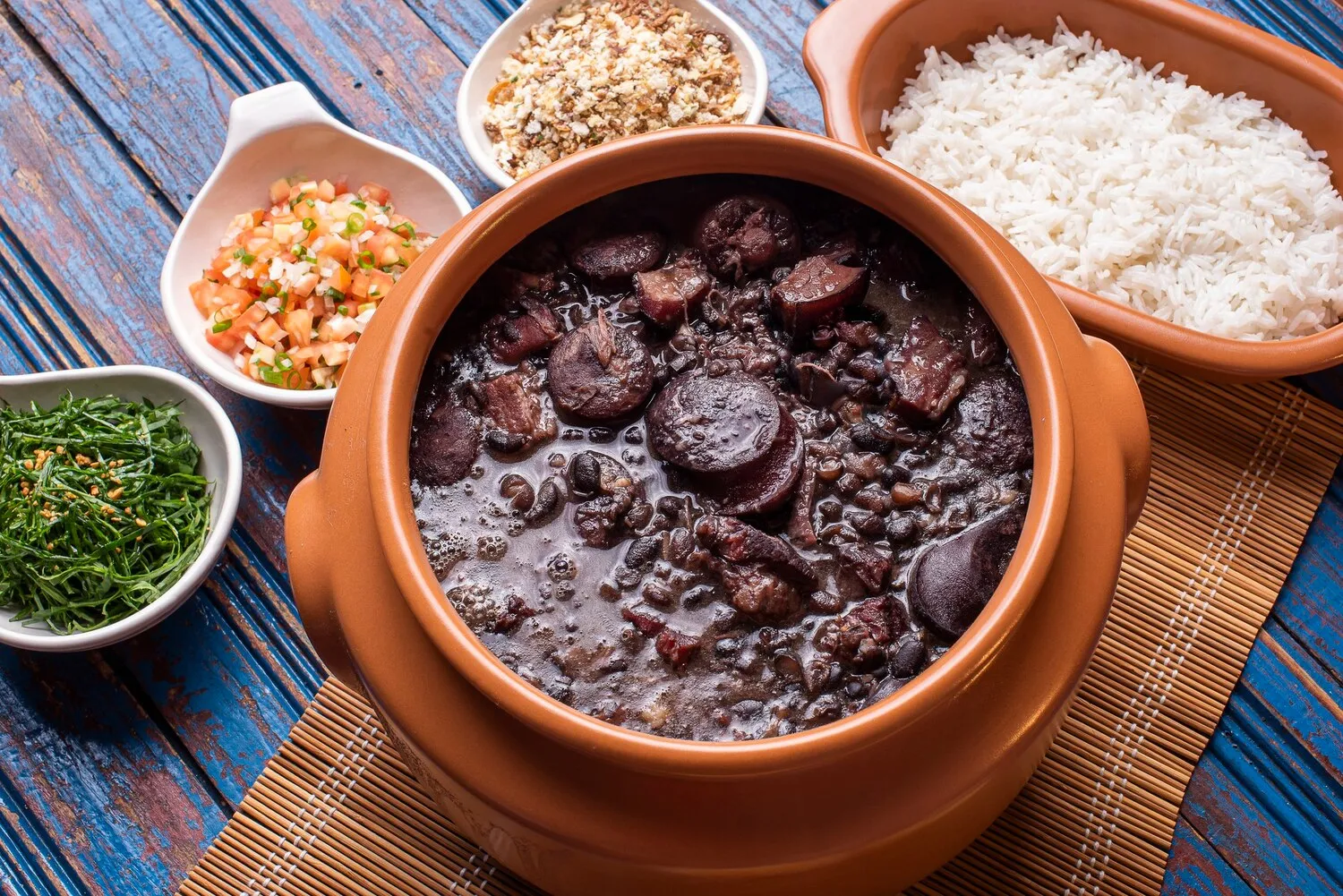

Feijoada
A traditional Brazilian black bean stew with various cuts of pork and beef. Often served with rice, collard greens, farofa (toasted cassava flour), and orange slices.
Tabela Nutricional
* O % do Valor Diário (VD) informa quanto um nutriente em uma porção de alimento contribui para uma dieta diária. 2.000 calorias por dia são usadas para conselhos nutricionais gerais.
Recurso Premium
Quaresmeira
Recurso Premium
Feijoada's origins are debated, with some attributing it to enslaved Africans who used discarded pork parts to create a nourishing meal. Others suggest it evolved from European stews brought by Portuguese colonizers, adapted with local ingredients like black beans. Regardless, it became a symbol of Brazilian identity.
Recurso Premium
Feijoada is more than just a dish; it's a cultural institution in Brazil. It's often associated with weekend gatherings, celebrations, and family meals, representing a sense of community and shared heritage.
Social Gathering
Feijoada is typically enjoyed on Saturdays or Sundays as a long, leisurely meal shared with family and friends. The preparation and consumption are often a communal activity.
Regional Variations
While the core ingredients remain consistent, regional variations exist, particularly in the types of pork and beef used. Some regions may include tripe or other offal, while others may emphasize specific cuts of meat.
National Dish
Feijoada is widely considered Brazil's national dish, symbolizing the country's diverse culinary influences and its history.
Recurso Premium
Feijoada is a rich and savory stew with smoky, salty, and earthy flavors. The combination of black beans and various pork and beef cuts creates a complex and satisfying taste profile.
The primary flavor comes from black beans, providing a creamy and earthy base. Salted and smoked pork, including bacon, sausage (like linguica and paio), and sometimes dried beef (carne seca), contribute saltiness, smokiness, and depth. Beef cuts, such as brisket or ribs, add richness and umami. Garlic, onions, and bay leaves are essential aromatics. Orange slices served alongside offer a bright, citrusy counterpoint, while the farofa adds a toasted, nutty texture.
Recurso Premium
Soaking the Beans
Soak the black beans overnight (or for at least 6-8 hours) to reduce cooking time and improve their texture. Discard the soaking water before cooking.
Desalting the Meats
Salted meats, such as dried beef or some sausages, should be soaked in water for several hours (changing the water frequently) to remove excess salt before cooking. This prevents the feijoada from becoming too salty.
Layering the Ingredients
Add the meats in stages, starting with the ones that require the longest cooking time. This ensures that all the ingredients are cooked perfectly and the flavors meld together harmoniously.
Patience is Key
Allow the feijoada to simmer slowly for several hours (2-4 hours) to develop its rich flavor. Stir occasionally to prevent sticking.
Recurso Premium
Explore pratos e restaurantes adicionais de Brazilian comfort food
Explorar Brazilian comfort foodDescubra os melhores restaurantes e experiências culinárias em Barueri.
Explorar BarueriSaiba mais sobre a cultura gastronômica, a cena de restaurantes e o patrimônio culinário de Brazil.
Explorar Brazil