
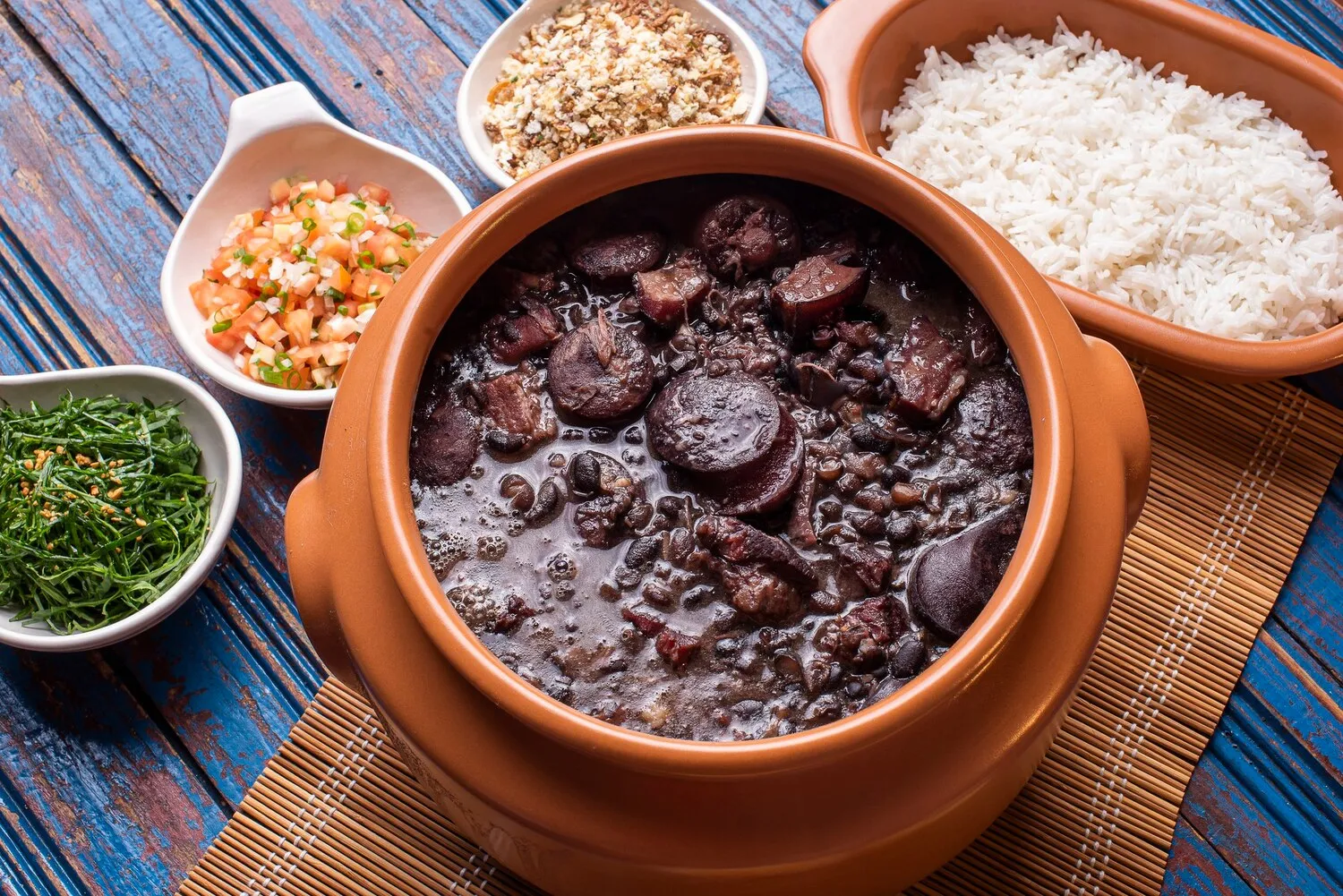

Feijoada
A traditional Brazilian black bean stew with various cuts of pork, beef, and sausage. Served with rice, collard greens, orange slices, farofa (toasted cassava flour), and crackling.
Tabela Nutricional
* O % do Valor Diário (VD) informa quanto um nutriente em uma porção de alimento contribui para uma dieta diária. 2.000 calorias por dia são usadas para conselhos nutricionais gerais.
Recurso Premium
Recurso Premium
Feijoada's origins are debated, with some claiming it originated during slavery as a way for enslaved people to utilize leftover pork parts. Others believe it evolved from Portuguese stews, influenced by indigenous ingredients. Regardless, it became a symbol of national identity over time.
Recurso Premium
Feijoada is more than just a meal; it's a cultural institution in Brazil, often enjoyed during gatherings and special occasions. It represents Brazilian hospitality and communal dining.
Sunday Lunch Tradition
Feijoada is traditionally eaten on Saturdays or Sundays for lunch, bringing families and friends together for a leisurely meal.
Regional Variations
While the core ingredients remain consistent, regional variations exist, reflecting local culinary traditions. Some regions might include different cuts of meat or add vegetables.
Symbol of National Identity
Feijoada is widely considered Brazil's national dish, representing its diverse culinary heritage and uniting Brazilians across different social classes and regions.
Recurso Premium
Feijoada is a complex and savory dish, boasting rich, smoky, and hearty flavors.
The black beans provide an earthy base, while the various cuts of pork (such as salted pork, smoked ribs, bacon, and sausage) contribute saltiness, smokiness, and depth. Beef adds further richness. Garlic, bay leaf, and sometimes orange peel infuse aromatic notes. The dish is balanced by the freshness of collard greens, the slight sweetness of orange slices, and the textural contrast of farofa and crackling.
Recurso Premium
Soaking the Beans
Soak the black beans overnight (or for at least 8 hours) to reduce cooking time and improve digestibility.
Desalting the Pork
Desalt the salted pork by soaking it in water for 24-48 hours, changing the water several times. This removes excess saltiness.
Cooking Time
Feijoada requires slow cooking to allow the flavors to meld and the meat to become tender. Be patient and allow ample time for simmering.
Serving Suggestions
Serve feijoada with rice, collard greens (couve), farofa (toasted cassava flour), orange slices, and crackling (torresmo) for a complete and authentic experience.
Recurso Premium
Explore pratos e restaurantes adicionais de Traditional
Explorar TraditionalDescubra os melhores restaurantes e experiências culinárias em Blumenau.
Explorar BlumenauSaiba mais sobre a cultura gastronômica, a cena de restaurantes e o patrimônio culinário de Brazil.
Explorar Brazil