
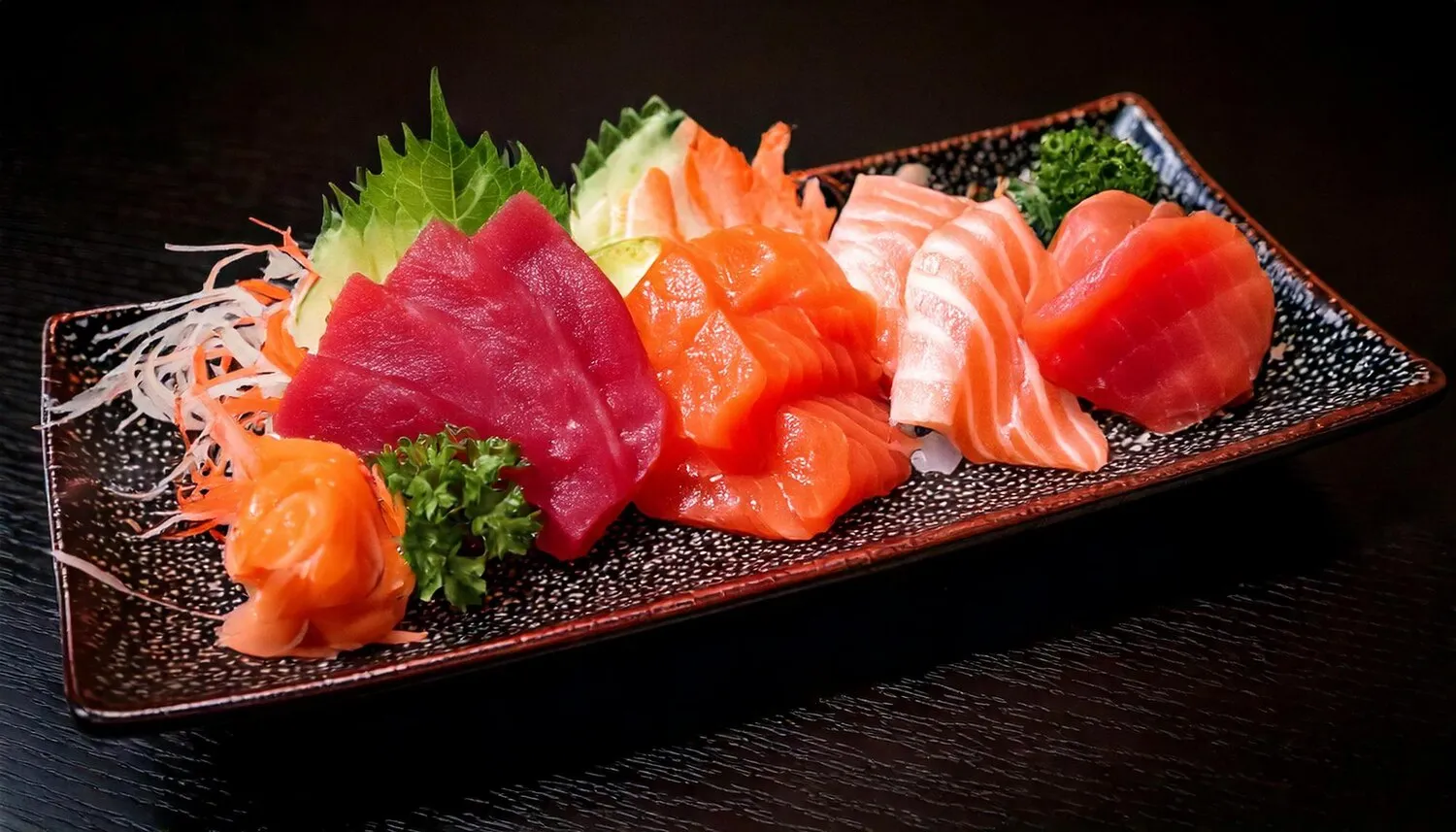

Sashimi
Thinly sliced raw fish, a traditional Japanese delicacy. They seem to offer varied options of fish.
Tabela Nutricional
* O % do Valor Diário (VD) informa quanto um nutriente em uma porção de alimento contribui para uma dieta diária. 2.000 calorias por dia são usadas para conselhos nutricionais gerais.
Recurso Premium
Midori Sushi
Recurso Premium
The origins of sashimi can be traced back to ancient Japan, where the need to preserve and consume fish safely led to the development of techniques for quickly preparing and serving the freshest catches. It evolved alongside sushi, initially being a way to showcase the quality of the fish used in sushi, before becoming a distinct dish in its own right.
Recurso Premium
Sashimi is deeply intertwined with Japanese culture, representing respect for the ocean's bounty and the chef's skill in preparing it. It's more than just a dish; it's an art form that embodies simplicity, purity, and a connection to nature.
Presentation
The presentation of sashimi is meticulously crafted, emphasizing visual appeal and harmony. The arrangement of the slices, the garnishes used (such as shiso leaves, daikon radish, and edible flowers), and the choice of plate all contribute to the overall dining experience.
Freshness and Quality
The quality and freshness of the fish are paramount. Chefs undergo extensive training to identify the best seafood and handle it with care to preserve its flavor and texture.
Seasonal Variations
Sashimi often features seasonal fish, reflecting the Japanese emphasis on enjoying ingredients at their peak flavor. Different fish are preferred at different times of the year, offering a varied and exciting culinary experience.
Recurso Premium
Sashimi offers a delicate and pure taste of the ocean, highlighting the natural flavor of the fish. The experience is enhanced by soy sauce, wasabi, and other traditional condiments.
The flavor profile of sashimi varies greatly depending on the type of fish used. Tuna (Maguro) can range from lean and mild (Akami) to rich and fatty (Toro). Salmon offers a buttery and slightly sweet flavor. White fish like sea bream (Tai) have a cleaner, more subtle taste. The quality of the fish is paramount, with freshness being the most crucial factor. Soy sauce (Shoyu) adds a salty umami element, while wasabi provides a sharp, cleansing spice that complements the fish's richness. Ginger (Gari) is used as a palate cleanser between different types of sashimi.
Recurso Premium
Wasabi Usage
Apply a small amount of wasabi directly to the fish rather than mixing it into the soy sauce. This allows you to control the level of spice and prevents the wasabi from losing its potency.
Soy Sauce Dipping
Dip only the edge of the sashimi in soy sauce to avoid overpowering the delicate flavor of the fish. Too much soy sauce can mask the subtle nuances of the fish.
Order of Consumption
Start with the milder white fish and gradually move towards the richer, fattier fish like tuna. This allows you to fully appreciate the range of flavors without overwhelming your palate.
Palate Cleansing
Use the pickled ginger (gari) provided to cleanse your palate between different types of sashimi. This helps you to fully appreciate the unique flavors of each fish.
Recurso Premium
Explore pratos e restaurantes adicionais de Sashimi
Explorar SashimiDescubra os melhores restaurantes e experiências culinárias em Bombinhas.
Explorar BombinhasSaiba mais sobre a cultura gastronômica, a cena de restaurantes e o patrimônio culinário de Brazil.
Explorar Brazil