
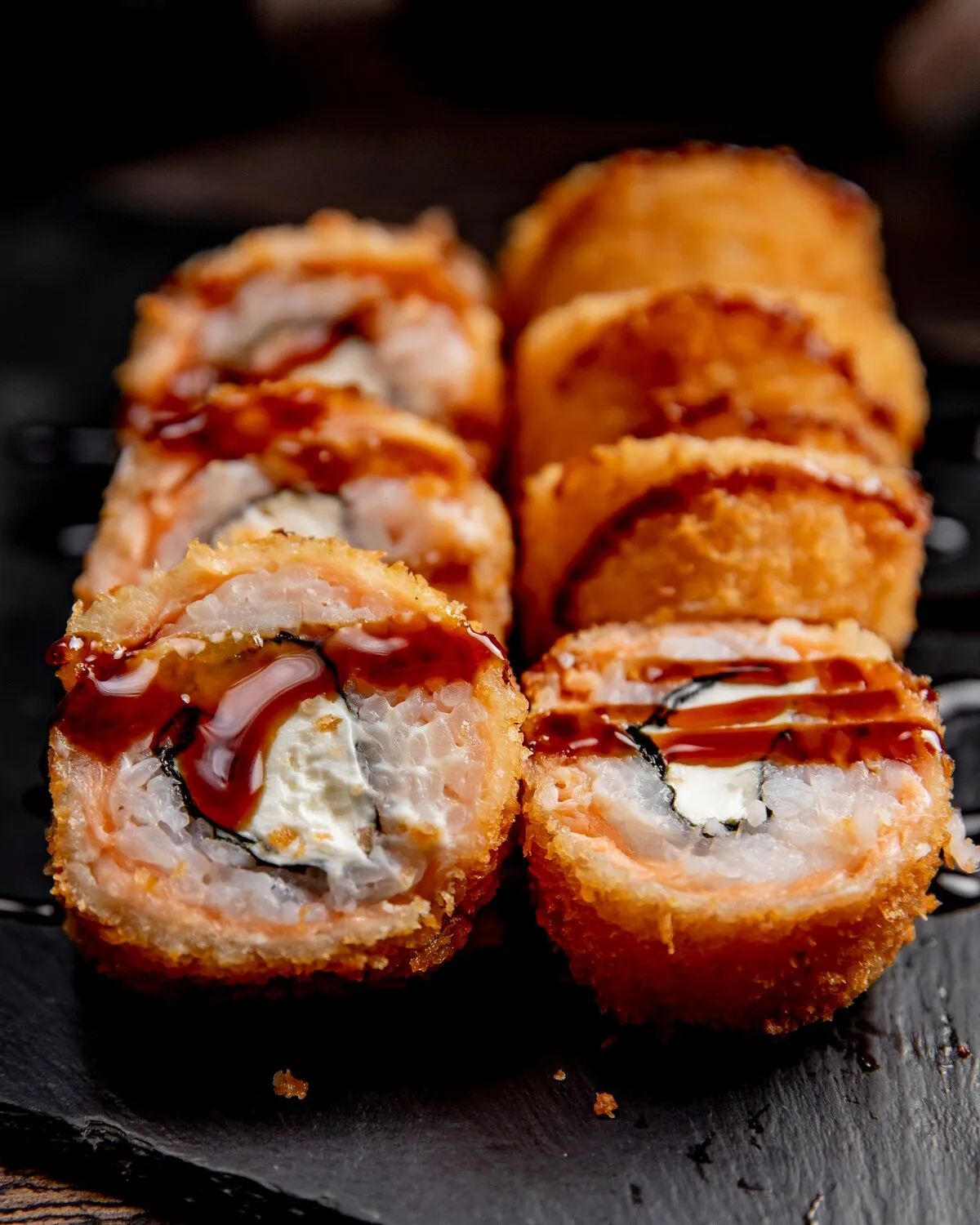

Hot Roll
Fried sushi roll with various fillings.
Tabela Nutricional
* O % do Valor Diário (VD) informa quanto um nutriente em uma porção de alimento contribui para uma dieta diária. 2.000 calorias por dia são usadas para conselhos nutricionais gerais.
Recurso Premium
IKI Culinária Japonesa
Recurso Premium
The hot roll is a distinctly American invention, emerging as part of the broader California cuisine sushi boom in the latter half of the 20th century. It represents a departure from traditional Japanese sushi, catering to American palates that were initially unfamiliar with raw fish and seaweed. The adaptation involved deep-frying sushi rolls, creating a warmer, more texturally contrasting, and often richer dish.
Recurso Premium
Hot rolls reflect American culinary innovation and adaptation of foreign cuisines. They are a testament to the evolving nature of sushi in a globalized world and its appeal to diverse tastes.
American Sushi Fusion
Hot rolls exemplify the fusion of Japanese techniques with American preferences. They showcase a willingness to experiment with ingredients and preparation methods to create dishes that appeal to local tastes.
Accessibility and Appeal
The cooked fillings and fried preparation of hot rolls make them a more accessible entry point to sushi for those who are hesitant to try raw fish. They are often seen as a 'gateway' to more traditional sushi offerings.
Restaurant Staple
Hot rolls are a common feature on the menus of American sushi restaurants, particularly those catering to a broader audience. They are often listed alongside more traditional sushi rolls and are considered a standard offering.
Recurso Premium
Hot rolls offer a combination of savory, sweet, and umami flavors, often with a creamy texture. The frying process adds a crispy exterior contrasting with the soft interior.
The main flavors come from the fillings, which typically include cooked seafood (like shrimp, crab, or imitation crab), cream cheese, avocado, and sometimes vegetables like cucumber. These are rolled in seaweed (nori) and sushi rice, then battered (often with tempura batter or a simple flour-based batter) and deep-fried. Sauces like eel sauce (unagi sauce), spicy mayonnaise, or sweet chili sauce are commonly drizzled on top, adding further depth and complexity.
Recurso Premium
Temperature Control
Maintain a consistent oil temperature (around 350-375°F) for even cooking and a crispy exterior without burning. Use a thermometer to monitor the oil temperature.
Batter Consistency
The batter should be thick enough to coat the roll evenly but not so thick that it becomes heavy and greasy. Experiment with different batter recipes (tempura batter, flour-based batter) to find your preferred texture.
Roll Tightness
Ensure the sushi roll is tightly rolled to prevent it from falling apart during frying. Use a bamboo rolling mat (makisu) to achieve a firm, compact roll.
Drying Time
Place the fried rolls on a wire rack to drain excess oil. This will help maintain their crispiness. You can also use paper towels to absorb any extra oil.
Sauce Selection
Choose sauces that complement the flavors of the fillings. Eel sauce, spicy mayonnaise, and sweet chili sauce are popular choices, but experiment with other sauces to create your own signature hot roll.
Recurso Premium
Explore pratos e restaurantes adicionais de Hot Roll
Explorar Hot RollDescubra os melhores restaurantes e experiências culinárias em Campinas.
Explorar CampinasSaiba mais sobre a cultura gastronômica, a cena de restaurantes e o patrimônio culinário de Brazil.
Explorar Brazil