
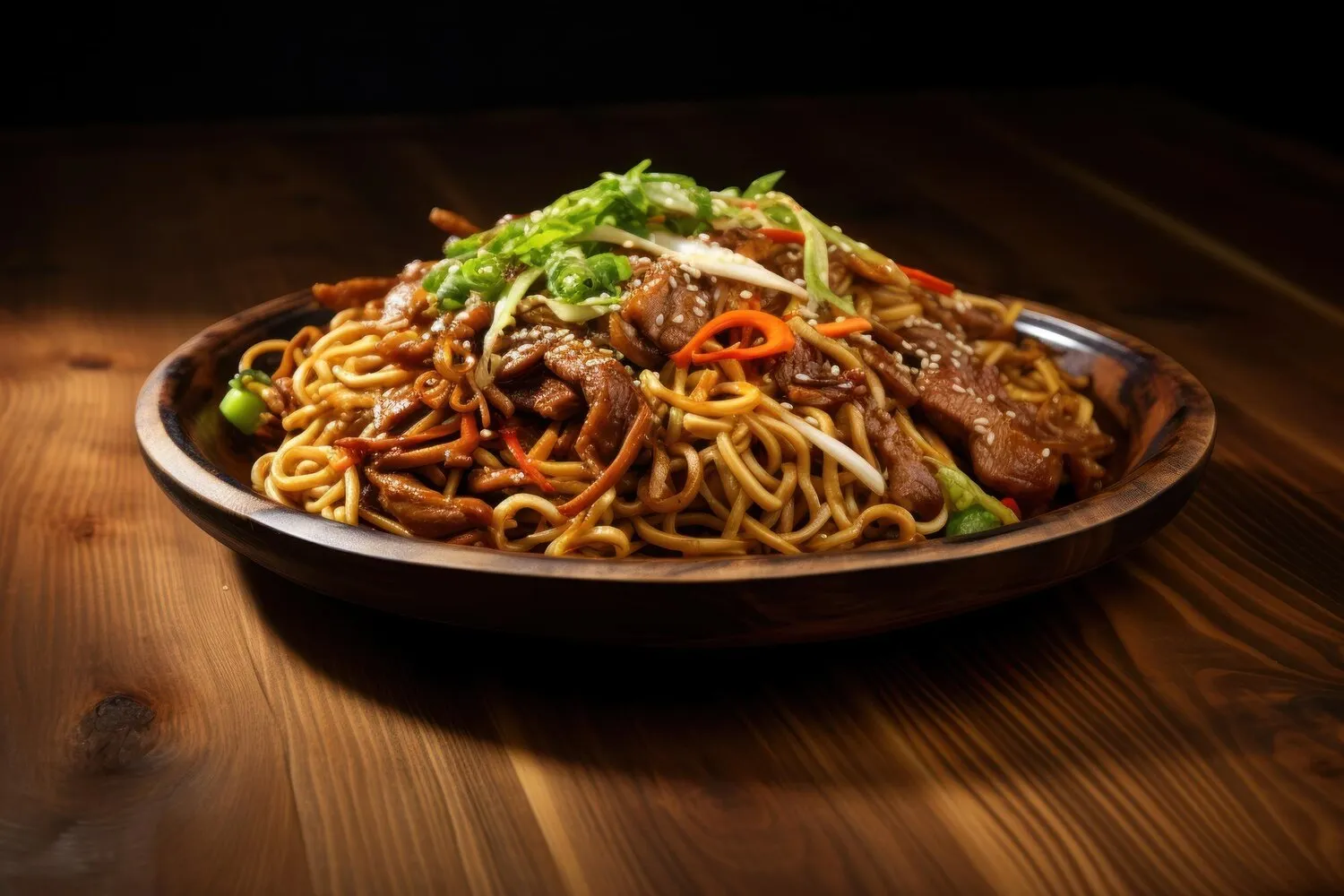

Yakisoba
Stir-fried wheat noodles with vegetables, meat (typically beef, chicken, or shrimp), and a savory sauce.
Tabela Nutricional
* O % do Valor Diário (VD) informa quanto um nutriente em uma porção de alimento contribui para uma dieta diária. 2.000 calorias por dia são usadas para conselhos nutricionais gerais.
Recurso Premium
Recurso Premium
Yakisoba's origins are somewhat debated, with some believing it evolved from Chinese chow mein introduced to Japan. However, it has been thoroughly adapted to Japanese tastes and ingredients, becoming a distinct dish in its own right. Post-World War II food shortages also influenced its development as an affordable and filling meal.
Recurso Premium
Yakisoba is deeply ingrained in Japanese popular culture, often associated with festivals, street food, and casual dining. It's a readily available and beloved comfort food that brings people together.
Festival Food Staple
Yakisoba is a quintessential festival food, sold at yatai (food stalls) during summer festivals and other celebrations. The sizzling sound and savory aroma attract crowds, making it a symbol of festive occasions.
Street Food Favorite
Yakisoba is a popular street food available at various vendors and food carts throughout Japan. It's a quick, affordable, and satisfying meal for people on the go.
Okonomiyaki Topping
In some regions, particularly the Kansai region, yakisoba is used as a filling or topping for okonomiyaki, a savory pancake, showcasing the versatility of the dish.
Home Cooking Staple
Yakisoba is also a common dish prepared at home, often using readily available ingredients and pre-made yakisoba sauce. It is simple, quick and delicious.
Recurso Premium
Yakisoba offers a delightful balance of savory, sweet, and umami flavors. The sauce is the star, contributing a rich and tangy taste, complemented by the textures of stir-fried noodles, vegetables, and protein.
The key flavor components include the yakisoba sauce, which is typically a blend of Worcestershire sauce, soy sauce, oyster sauce, ketchup, and sugar (or mirin) to achieve a complex flavor profile. The stir-fried wheat noodles (chukamen) have a slightly chewy texture. Common vegetables like cabbage, carrots, onions, and bean sprouts provide freshness and crunch. The protein, usually pork, chicken, beef, or shrimp, adds savory depth. Dried seaweed flakes (aonori), pickled ginger (beni shoga), and bonito flakes (katsuobushi) are often sprinkled on top as garnish and contribute additional layers of flavor.
Recurso Premium
Noodle Preparation
Loosen the noodles before stir-frying to prevent clumping and ensure even cooking. Some people pre-cook the noodles briefly.
Sauce Balance
Taste and adjust the sauce to your liking. The balance of sweetness, saltiness, and tanginess is crucial for the overall flavor profile.
High Heat
Stir-fry the ingredients over high heat to achieve a slightly charred flavor and prevent the vegetables from becoming soggy.
Vegetable Crispness
Add the vegetables in order of cooking time, with the harder vegetables going in first, to ensure they are cooked through but still retain some crunch.
Don't overcrowd the Pan
Stir-fry in batches if necessary to avoid overcrowding the pan, which will lower the temperature and steam the ingredients instead of stir-frying them.
Recurso Premium
Explore pratos e restaurantes adicionais de Noodle dish
Explorar Noodle dishDescubra os melhores restaurantes e experiências culinárias em Campinas.
Explorar CampinasSaiba mais sobre a cultura gastronômica, a cena de restaurantes e o patrimônio culinário de Brazil.
Explorar Brazil