
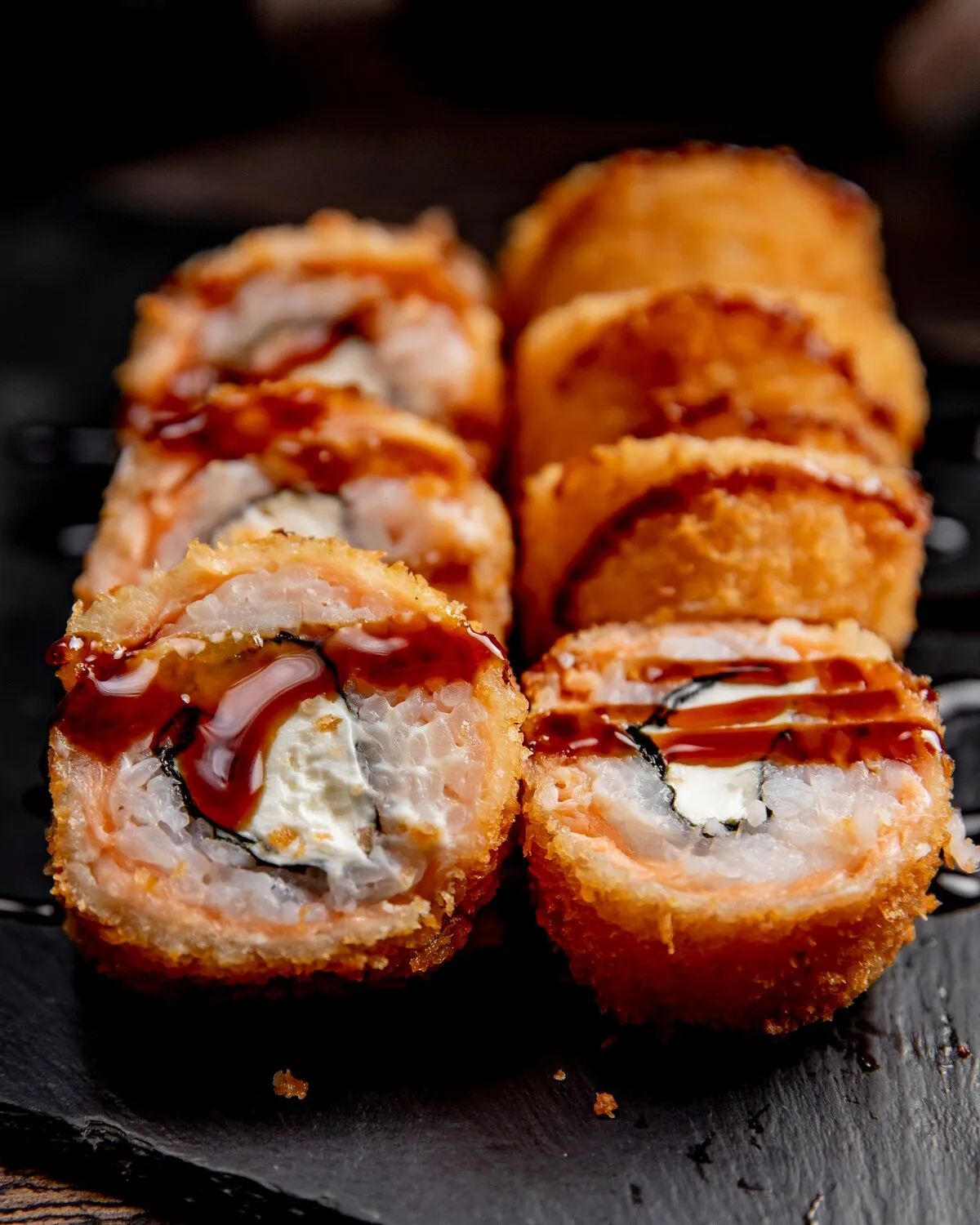

Hot Roll
Fried sushi roll, typically filled with salmon, cream cheese and/or other ingredients.
Tabela Nutricional
* O % do Valor Diário (VD) informa quanto um nutriente em uma porção de alimento contribui para uma dieta diária. 2.000 calorias por dia são usadas para conselhos nutricionais gerais.
Recurso Premium
Imakay
Recurso Premium
The Hot Roll, a type of fried sushi roll, is a relatively modern invention, likely originating in the United States. It reflects the adaptation of traditional Japanese sushi to Western tastes and preferences. The introduction of cream cheese and the frying technique are distinct departures from traditional Japanese sushi preparation, reflecting a fusion of culinary influences.
Recurso Premium
Hot Rolls represent a specific adaptation of sushi tailored to Western preferences, and it's largely associated with American sushi culture. It is commonly found in American-style sushi restaurants.
Fusion Cuisine
The Hot Roll embodies fusion cuisine, blending Japanese sushi techniques with American flavor preferences and cooking styles. It is a significant departure from traditional sushi and highlights the ongoing evolution and adaptation of culinary traditions.
Accessibility and Appeal
The fried nature and inclusion of familiar ingredients like cream cheese make Hot Rolls more accessible and appealing to individuals who may be hesitant to try traditional sushi with raw fish.
Popularity in Western Sushi Restaurants
Hot Rolls are a staple in many Western-style sushi restaurants, often featuring prominently on menus and enjoying widespread popularity among diners. Their prevalence reflects their successful integration into American culinary culture.
Recurso Premium
The Hot Roll offers a contrasting combination of textures and flavors. The crispy, warm exterior gives way to a creamy, savory interior.
The primary flavors come from the cooked salmon, offering a rich, slightly oily taste, combined with the tangy cream cheese which provides a smooth, cooling counterpoint. The nori seaweed wrapper imparts a subtle oceanic flavor. The frying process adds a crunchy texture and a deeper, more pronounced umami flavor. Additional ingredients like avocado, spicy mayo, or eel sauce can further enhance the flavor profile, introducing sweetness, heat, or a smoky element.
Recurso Premium
Oil Temperature
Maintain a consistent oil temperature (around 350-375°F or 175-190°C) during frying to ensure even cooking and a crispy exterior. Avoid overcrowding the fryer, which can lower the oil temperature and result in a soggy roll.
Batter Consistency
Use a light batter, such as tempura batter, to avoid a heavy, greasy crust. The batter should be thin enough to coat the roll evenly without becoming too thick during frying.
Rolling Technique
Roll the sushi tightly to prevent it from falling apart during frying. Use a bamboo sushi rolling mat to ensure a compact and even roll.
Draining Excess Oil
After frying, place the Hot Roll on a wire rack lined with paper towels to drain excess oil. This helps maintain the crispy texture and prevent a greasy mouthfeel.
Recurso Premium
Explore pratos e restaurantes adicionais de Sushi
Explorar SushiDescubra os melhores restaurantes e experiências culinárias em Campo Grande.
Explorar Campo GrandeSaiba mais sobre a cultura gastronômica, a cena de restaurantes e o patrimônio culinário de Brazil.
Explorar Brazil