
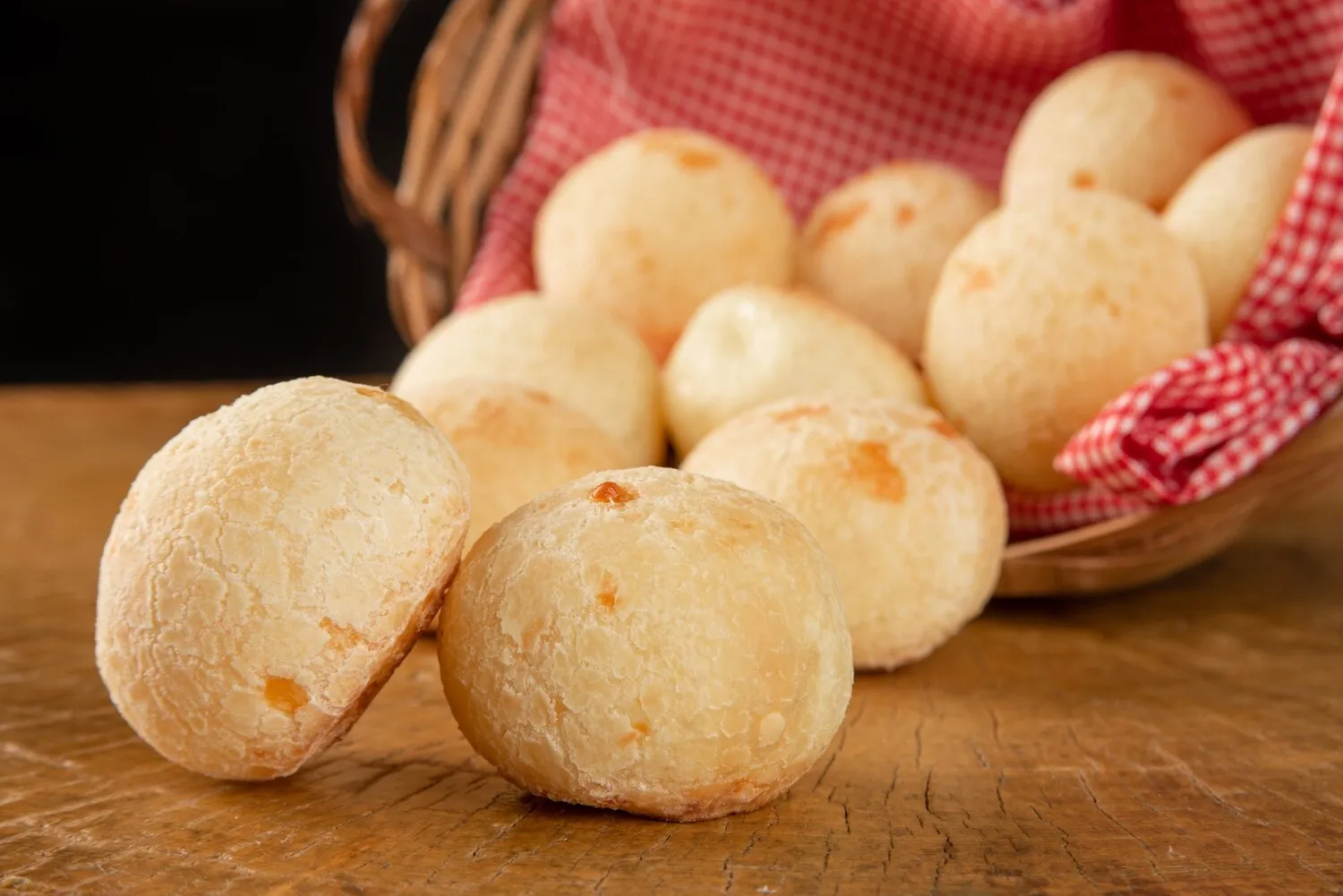

Pão de Queijo
Traditional Brazilian cheese bread, a staple and the namesake of the restaurant.
Tabela Nutricional
* O % do Valor Diário (VD) informa quanto um nutriente em uma porção de alimento contribui para uma dieta diária. 2.000 calorias por dia são usadas para conselhos nutricionais gerais.
Recurso Premium
Rainha do Pão de Queijo
Recurso Premium
The exact origins of Pão de Queijo are debated, but it's believed to have emerged in the state of Minas Gerais during the 18th century. Enslaved Africans likely played a key role in its development, utilizing leftover cassava starch (polvilho) as wheat was scarce. The introduction of cheese, primarily Minas cheese, solidified the recipe as we know it today.
Recurso Premium
Pão de Queijo is deeply ingrained in Brazilian culture, especially in Minas Gerais. It's more than just food; it represents hospitality, comfort, and a connection to family and tradition.
Breakfast Staple
Pão de Queijo is a common breakfast item throughout Brazil, often enjoyed with coffee. It is a quick and satisfying way to start the day.
Social Gathering Food
It's a popular snack served at social gatherings, parties, and family events. Its small size and delicious taste make it perfect for sharing.
Regional Pride
In Minas Gerais, Pão de Queijo is a source of regional pride, and many families have their own secret recipes passed down through generations. It is a symbol of the state's culinary heritage.
National Icon
Although regional, it has become a nationally loved and recognized food. It is widely available across the country, from bakeries to supermarkets.
Recurso Premium
Pão de Queijo boasts a savory, cheesy, and slightly tangy flavor profile, complemented by a uniquely chewy and airy texture.
The dominant flavor comes from the cheese, traditionally Minas cheese, which imparts a slightly sour and salty taste. Tapioca starch (polvilho doce or azedo) contributes a mild, slightly sweet, and subtly fermented flavor, also responsible for the distinct chewiness. Milk and oil add richness and moisture, while eggs bind the ingredients and contribute to the bread's structure.
Recurso Premium
Type of Polvilho
Using a combination of sweet (doce) and sour (azedo) tapioca starch (polvilho) is crucial for the characteristic chewy texture and slightly tangy flavor. Experiment with ratios to find your preferred balance.
Cheese Quality
The type of cheese used greatly affects the flavor. Authentic Pão de Queijo uses Minas cheese, but other cheeses like mozzarella, parmesan, or queijo canastra can be substituted or combined. Use good quality cheese for the best results.
Temperature Matters
Scalding the polvilho with hot milk and oil is essential for activating the starch and creating the proper dough consistency. Let it cool slightly before adding the eggs to prevent them from cooking.
Dough Consistency
The dough should be sticky and slightly wet. Avoid adding too much polvilho, as this can result in a dry and dense bread. If the dough is too dry, add a little more milk.
Baking Temperature
Baking at a high temperature (around 375-400°F or 190-200°C) ensures a crispy exterior and a soft, airy interior.
Recurso Premium
Explore pratos e restaurantes adicionais de Baked Goods
Explorar Baked GoodsDescubra os melhores restaurantes e experiências culinárias em Florianópolis.
Explorar FlorianópolisSaiba mais sobre a cultura gastronômica, a cena de restaurantes e o patrimônio culinário de Brazil.
Explorar Brazil