
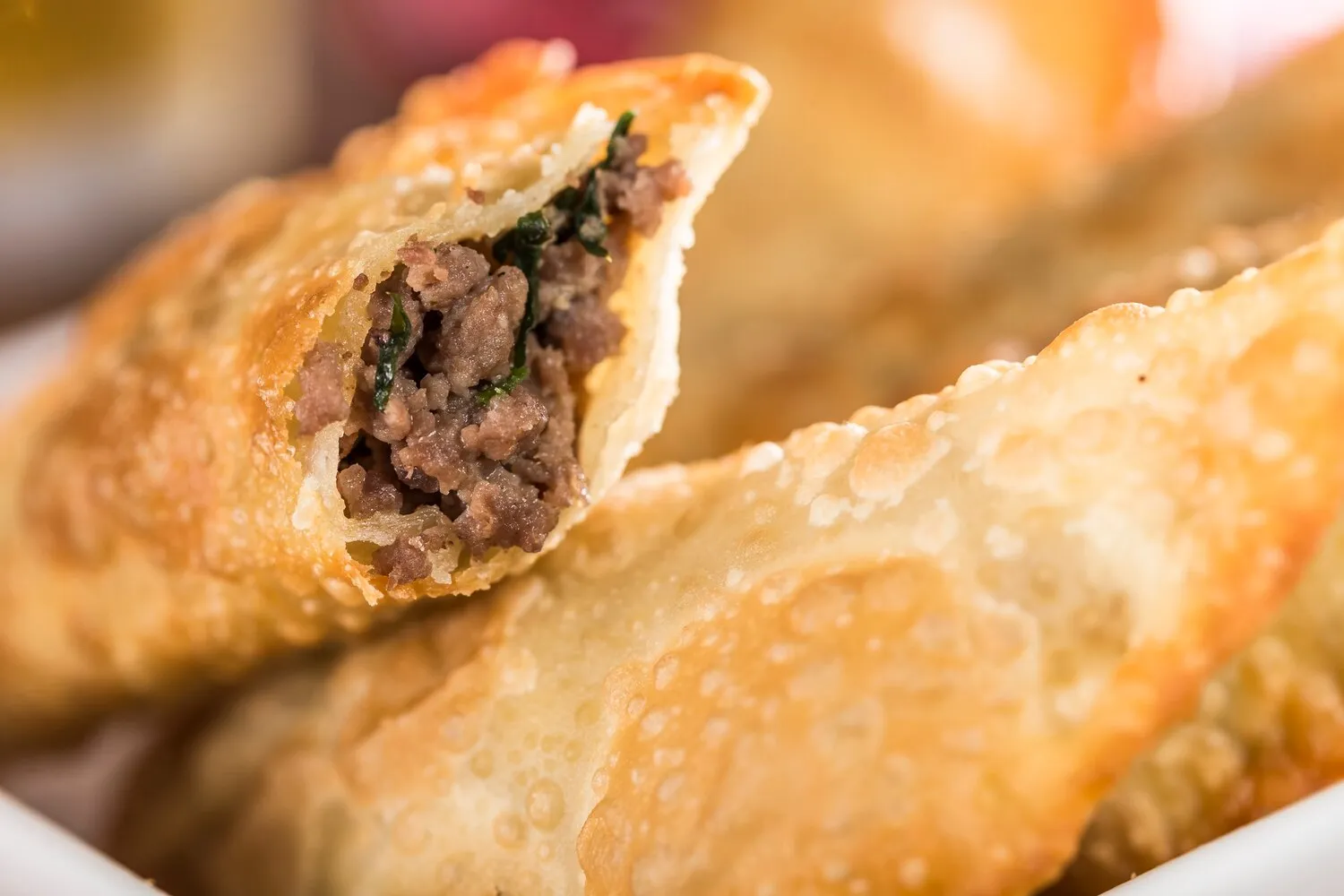

Pastel
Fried pastry with various fillings.
Tabela Nutricional
* O % do Valor Diário (VD) informa quanto um nutriente em uma porção de alimento contribui para uma dieta diária. 2.000 calorias por dia são usadas para conselhos nutricionais gerais.
Recurso Premium
Recurso Premium
The pastel's origins are somewhat debated, but it's widely believed to have been influenced by Asian immigrants, particularly those from China and Japan, who adapted their spring roll and fried wonton recipes to local Brazilian ingredients. These immigrants initially sold pastries in open-air markets, eventually leading to the pastel we know today.
Recurso Premium
Pastel holds a significant place in Brazilian street food culture, particularly in open-air markets (feiras) and casual eateries. It's a beloved and affordable snack or meal enjoyed by people of all ages and socioeconomic backgrounds.
Feiras (Open-air Markets)
Pastel is a staple offering at Brazilian feiras. These markets are vibrant community hubs where people gather to buy fresh produce, crafts, and, of course, delicious food like pastel. Eating a pastel at a feira is a quintessential Brazilian experience.
Lanches (Snacks/Light Meals)
Pastel is often enjoyed as a quick and satisfying lanche. It's a popular choice for a midday snack, a light lunch, or an after-work treat.
Regional Variations
While the basic concept of pastel remains the same, regional variations exist in terms of fillings and preparation methods. Certain regions may favor specific fillings or use unique spices and herbs.
Family Gatherings and Celebrations
Although mainly street food, pastel is often prepared at home for family gatherings and casual celebrations. It's a versatile dish that can be customized to suit different tastes and preferences.
Recurso Premium
Pastel's flavor profile is characterized by its savory fillings and crispy, deep-fried dough. The dominant flavors come from the ingredients used in the fillings, which can range from meat and cheese to vegetables and seafood.
The flavor profile of a pastel is heavily dependent on the filling. Common fillings include ground beef (carne), shredded chicken (frango), cheese (queijo, typically mozzarella or a creamy Brazilian cheese), heart of palm (palmito), and shrimp (camarão). These fillings are seasoned with various spices, herbs, and aromatics, such as garlic, onions, parsley, and black pepper. The dough itself is typically bland, providing a neutral base that allows the flavors of the filling to shine. The deep-frying process contributes a crispy texture and a slightly oily richness.
Recurso Premium
Dough Consistency
The dough should be thin and pliable, yet strong enough to hold the filling without tearing during frying. Resting the dough is crucial for gluten development.
Filling Preparation
Ensure the filling is not too wet, as this can cause the dough to become soggy. Cook the filling ingredients beforehand to prevent undercooked components inside the pastel.
Sealing Technique
Properly seal the edges of the pastel to prevent the filling from leaking during frying. Use a fork to crimp the edges firmly or a specific pastel-making tool.
Frying Temperature
Maintain the oil at a consistent temperature (around 350-375°F or 175-190°C) for optimal crispness. Avoid overcrowding the fryer to prevent the oil temperature from dropping.
Serving Suggestions
Pastel is best enjoyed hot and fresh. Pair it with molho de pimenta (hot sauce) or vinagrete (a tomato and onion relish) for added flavor.
Recurso Premium
Explore pratos e restaurantes adicionais de Brazilian Snacks
Explorar Brazilian SnacksDescubra os melhores restaurantes e experiências culinárias em Itú.
Explorar ItúSaiba mais sobre a cultura gastronômica, a cena de restaurantes e o patrimônio culinário de Brazil.
Explorar Brazil