
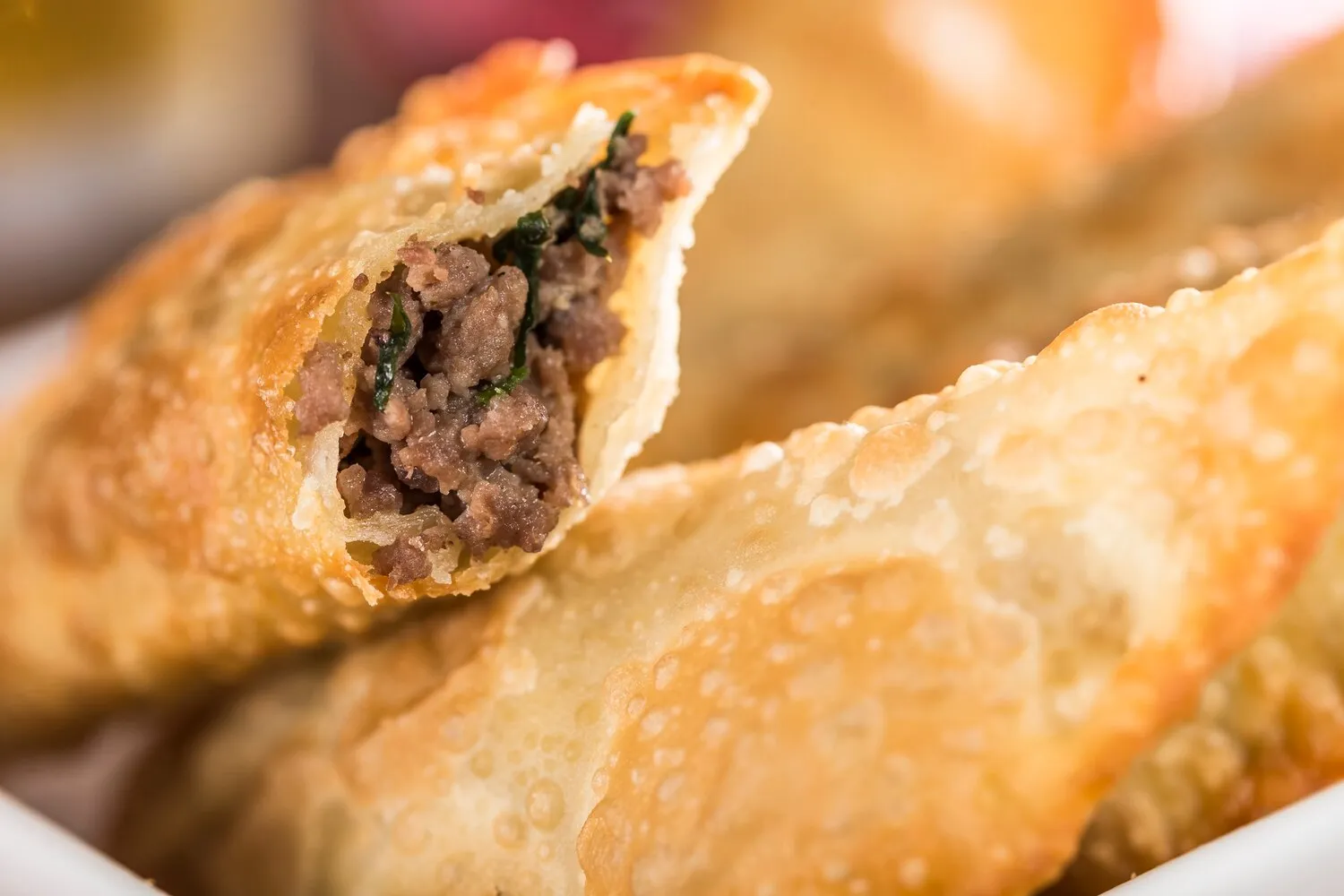

Pastel
Fried pastry filled with various savory ingredients (e.g., cheese, meat).
Tabela Nutricional
* O % do Valor Diário (VD) informa quanto um nutriente em uma porção de alimento contribui para uma dieta diária. 2.000 calorias por dia são usadas para conselhos nutricionais gerais.
Recurso Premium
Caldo de cana do Tuta
Recurso Premium
The pastel's origin can be traced to Chinese egg rolls brought to Brazil by Japanese immigrants. During World War II, many Japanese immigrants sought to disguise their identity due to anti-Japanese sentiment, and selling a familiar yet slightly altered version of the egg roll under a Portuguese name, 'pastel', proved successful.
Recurso Premium
Pastel is a ubiquitous street food in Brazil, deeply ingrained in Brazilian culture as a quick, affordable, and delicious snack enjoyed at fairs, markets, and 'pastelarias' (pastel shops). It's a social food, often shared with friends and family.
Feiras (Street Markets)
Pastel is a staple food at Brazilian street markets, known as 'feiras.' Vendors fry them fresh, offering a wide variety of fillings. The combination of pastel, caldo de cana (sugar cane juice), and lively market atmosphere is a classic Brazilian experience.
Family Gatherings
While often eaten on the go, pastel can also be part of informal family gatherings, especially when making them at home, turning the process into a social activity.
Variations and Regional Adaptations
Across different regions of Brazil, you'll find variations in fillings and even dough recipes, reflecting local ingredients and culinary preferences. This regional diversity adds to the cultural richness of the dish.
Recurso Premium
Pastel boasts a delightful combination of savory fillings encased in a crispy, flaky pastry. The overall flavor profile depends heavily on the filling, but the deep-fried dough contributes a rich, oily, and satisfying base.
Typical pastel fillings include seasoned ground beef (carne), melted cheese (queijo), shredded chicken (frango), heart of palm (palmito), and shrimp (camarão). Garlic, onions, herbs, and spices are commonly used to enhance the flavor of the fillings. The dough, made from flour, water, and often cachaça or vinegar for extra crispness, is neutral in flavor, allowing the filling to shine.
Recurso Premium
Dough Crispness
Adding a small amount of cachaça (Brazilian rum) or vinegar to the dough helps create a crispier, flakier texture when fried. Be careful not to overwork the dough, as this can make it tough.
Sealing the Edges
Ensure the edges of the pastel are tightly sealed to prevent the filling from leaking out during frying. A fork can be used to crimp the edges for a secure seal.
Frying Temperature
Maintain the correct frying temperature (around 350-375°F or 175-190°C) to ensure the pastel cooks quickly and evenly, becoming golden brown and crispy without absorbing too much oil.
Don't Overfill
Avoid overfilling the pastel, as this can cause it to burst open during frying. A moderate amount of filling ensures even cooking and prevents leaks.
Recurso Premium
Explore pratos e restaurantes adicionais de Snack
Explorar SnackDescubra os melhores restaurantes e experiências culinárias em Jaraguá do Sul.
Explorar Jaraguá do SulSaiba mais sobre a cultura gastronômica, a cena de restaurantes e o patrimônio culinário de Brazil.
Explorar Brazil