
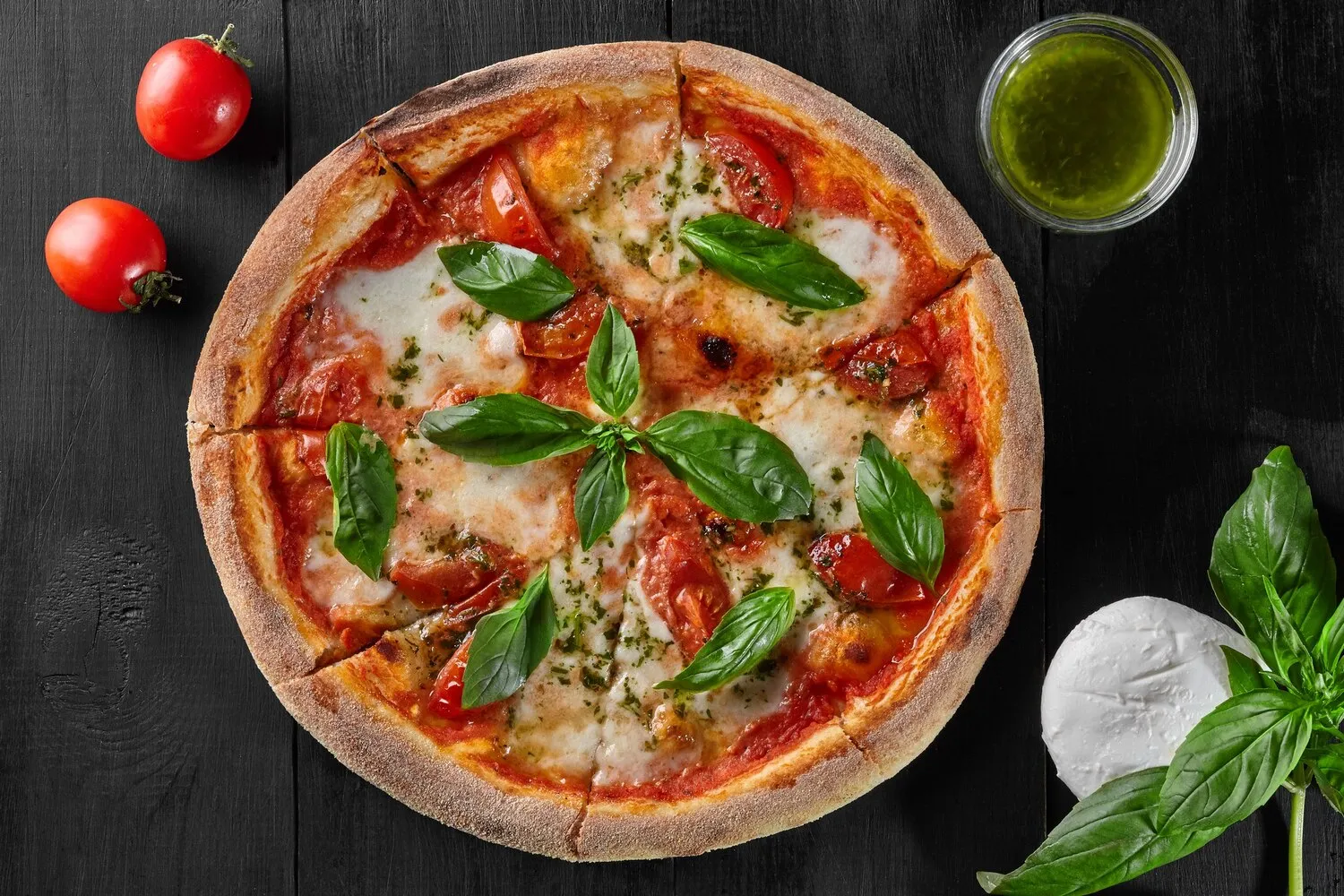

Margherita Pizza
Classic Neapolitan pizza with tomato sauce, mozzarella, basil, and olive oil.
Tabela Nutricional
* O % do Valor Diário (VD) informa quanto um nutriente em uma porção de alimento contribui para uma dieta diária. 2.000 calorias por dia são usadas para conselhos nutricionais gerais.
Recurso Premium
430gradi Pizza Di Napoli
Recurso Premium
Pizza, in its simplest form, has ancient roots, with flatbreads topped with various ingredients being common in several Mediterranean cultures. However, the modern pizza, and specifically the Margherita, evolved in Naples. The arrival of tomatoes from the Americas significantly impacted Neapolitan cuisine. The Margherita pizza is believed to have been created in 1889 to honor Queen Margherita of Savoy during a royal visit to Naples.
Recurso Premium
The Margherita pizza is more than just a dish; it's a symbol of Italian culture, particularly Neapolitan identity. Its simple design embodies the Italian appreciation for quality ingredients and straightforward preparation, highlighting the natural flavors of the components. It's often considered a quintessential representation of Italian cuisine globally.
National Colors
The Margherita pizza's colors—red (tomato), white (mozzarella), and green (basil)—mirror the colors of the Italian flag, contributing to its nationalistic appeal.
Neapolitan Tradition
In Naples, pizza making is considered an art form, with specific techniques and standards governed by the Associazione Verace Pizza Napoletana (AVPN). Margherita pizza prepared according to these standards is a source of local pride.
Family and Sharing
Pizza is typically enjoyed as a shared meal, fostering a sense of community and togetherness, especially within families.
Recurso Premium
The Margherita pizza is characterized by its simplicity and fresh, bright flavors. The key components are tomato, mozzarella, basil, and olive oil, each contributing distinct characteristics.
The tomato sauce provides a slightly acidic and sweet base, balanced by the creamy, milky flavor of the mozzarella. Fresh basil leaves add a fragrant, peppery note that complements the other ingredients beautifully. A drizzle of high-quality olive oil enriches the overall flavor profile, adding a subtle fruity and peppery touch. The crust, ideally Neapolitan-style, should be slightly charred and offer a subtly smoky flavour.
Recurso Premium
Tomato Selection
Use San Marzano tomatoes for the sauce, as they have a naturally sweet and slightly acidic flavor that complements the other ingredients. If using fresh tomatoes, roast them first to enhance their sweetness.
Mozzarella Choice
Fresh mozzarella, preferably buffalo mozzarella (mozzarella di bufala Campana), is ideal. It melts beautifully and has a richer, creamier flavor than processed mozzarella. Be sure to dry it slightly to prevent a soggy pizza.
Dough Preparation
Use a high-quality flour (tipo 00) and allow the dough to rise slowly over several hours or even days for optimal flavor development and texture. High heat is crucial for achieving a puffy crust.
Baking Technique
A pizza stone or steel is essential for creating a crispy crust. Preheat it to a high temperature (around 500-550°F or 260-290°C) before placing the pizza on it. Rotate the pizza during baking to ensure even cooking.
Recurso Premium
Explore pratos e restaurantes adicionais de Pizza
Explorar PizzaDescubra os melhores restaurantes e experiências culinárias em Jundiaí.
Explorar JundiaíSaiba mais sobre a cultura gastronômica, a cena de restaurantes e o patrimônio culinário de Brazil.
Explorar Brazil