
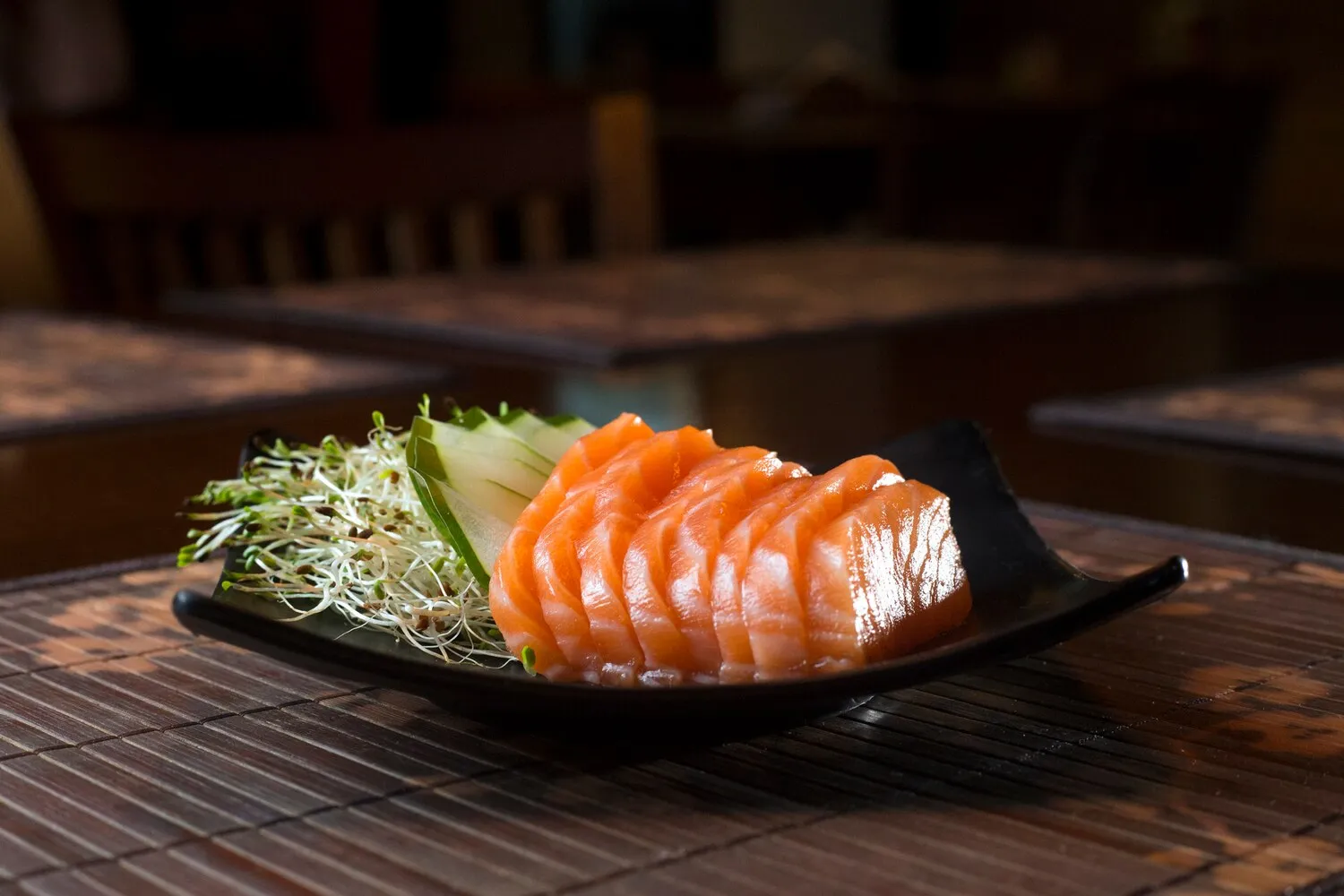

Sashimi Salmão
Fatias de salmão cru.
Tabela Nutricional
* O % do Valor Diário (VD) informa quanto um nutriente em uma porção de alimento contribui para uma dieta diária. 2.000 calorias por dia são usadas para conselhos nutricionais gerais.
Recurso Premium
Recurso Premium
While the practice of eating raw fish dates back centuries in Japan, salmon sashimi is a relatively modern adaptation. Traditionally, concerns about parasites meant that salmon wasn't widely consumed raw. Improvements in aquaculture and freezing techniques in the 20th century, particularly in Norway, made high-quality, safe salmon accessible, leading to its popularity in Japanese cuisine and worldwide.
Recurso Premium
Sashimi Salmão, while a relatively recent addition to the Japanese culinary landscape, has become deeply ingrained in Japanese food culture as a symbol of freshness, quality, and sophistication.
Presentation and Aesthetics
Sashimi is meticulously arranged on the plate, reflecting the Japanese emphasis on visual appeal in dining. The knife skills used to slice the salmon are considered an art form. Garnishes such as daikon radish, shiso leaves, and edible flowers are thoughtfully placed to complement the color and texture of the salmon.
Freshness and Quality
The freshness and quality of the salmon are paramount. Only the highest-grade salmon, specifically raised and processed for raw consumption, is used. The dish is often served in upscale restaurants and sushi bars, where chefs take pride in sourcing the best ingredients.
Etiquette
There are specific etiquette guidelines associated with eating sashimi. It's generally considered polite to dip the salmon sparingly in soy sauce, focusing on the fish rather than saturating it. Using chopsticks to pick up the sashimi is customary, and it's considered respectful to appreciate the presentation before eating.
Recurso Premium
Sashimi Salmão offers a clean, delicate, and buttery flavor profile, complemented by subtle oceanic notes and a slightly sweet finish.
The inherent flavor of high-quality salmon is the star. It should taste fresh and clean, without any fishy or muddy aftertaste. The texture is smooth and almost melts in your mouth, contributing to the overall flavor experience. Soy sauce, wasabi, and ginger (gari) are typical accompaniments that enhance and balance the richness of the salmon. The soy sauce provides umami and saltiness, wasabi adds a spicy kick that cuts through the fattiness, and ginger cleanses the palate between bites.
Recurso Premium
Soy Sauce Use
Avoid over-soaking the sashimi in soy sauce. Use just a small amount to enhance the flavor without overpowering the delicate taste of the salmon.
Wasabi Application
Instead of mixing wasabi into the soy sauce, apply a small amount of wasabi directly to the salmon slice. This allows you to control the level of spiciness and avoid diluting the soy sauce.
Palate Cleansing
Use the pickled ginger (gari) between bites to cleanse your palate and prepare your taste buds for the next piece of salmon. This helps you fully appreciate the subtle nuances of the dish.
Serving Temperature
Sashimi is best served chilled. Ensure the salmon is properly refrigerated until serving to maintain its freshness and texture.
Recurso Premium
Explore pratos e restaurantes adicionais de Sashimi
Explorar SashimiDescubra os melhores restaurantes e experiências culinárias em Jundiaí.
Explorar JundiaíSaiba mais sobre a cultura gastronômica, a cena de restaurantes e o patrimônio culinário de Brazil.
Explorar Brazil