
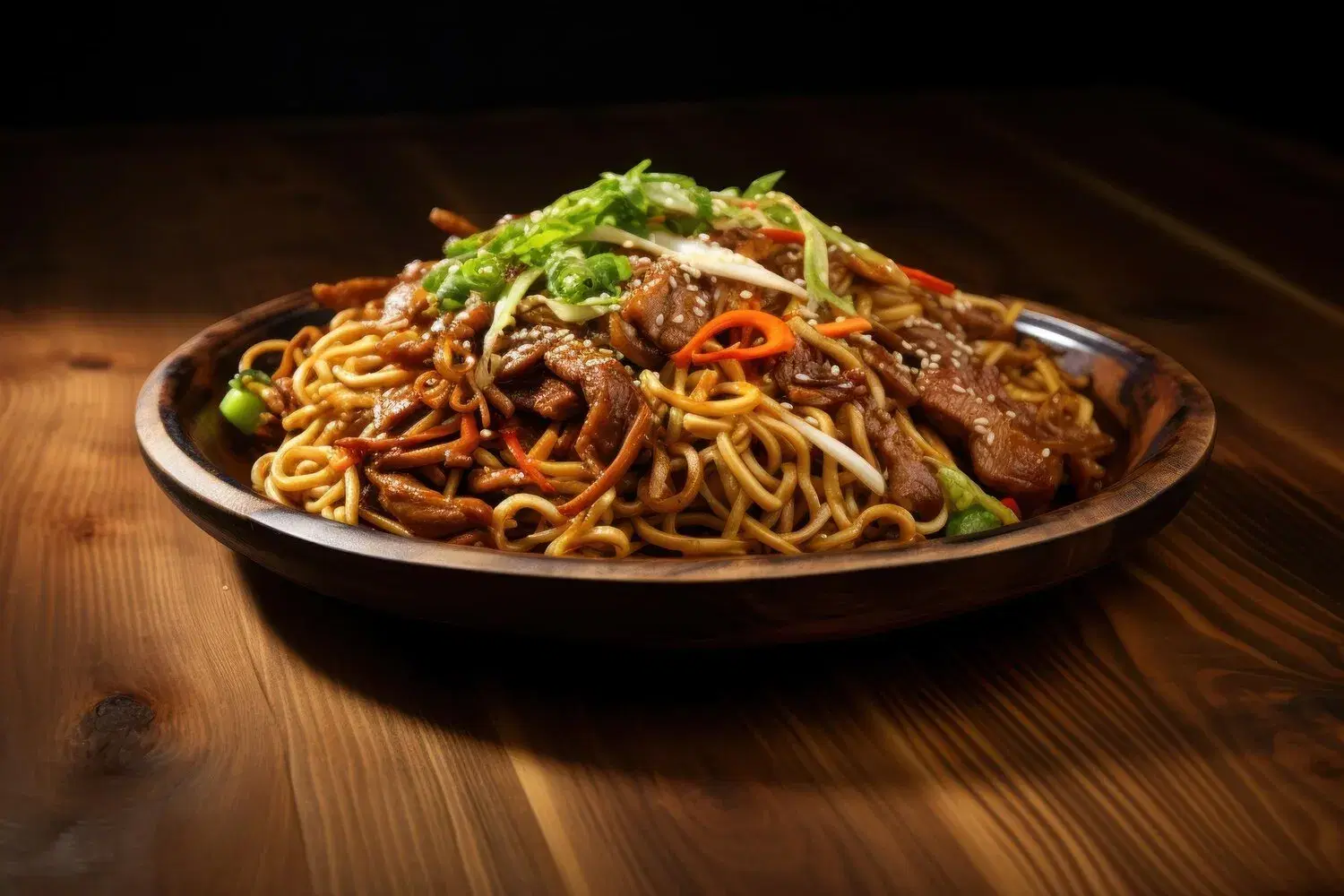

Yakisoba
Stir-fried noodles with vegetables and meat (chicken or beef).
Tabela Nutricional
* O % do Valor Diário (VD) informa quanto um nutriente em uma porção de alimento contribui para uma dieta diária. 2.000 calorias por dia são usadas para conselhos nutricionais gerais.
Recurso Premium
Aquarium Cozinha Oriental
Recurso Premium
Yakisoba's origins can be traced back to the early 20th century in Japan, influenced by Chinese stir-fried noodle dishes. It gained popularity as a quick and affordable meal, particularly after World War II, becoming a staple at festivals and street food stalls.
Recurso Premium
Yakisoba is deeply ingrained in Japanese food culture, representing a casual, communal, and accessible dish often enjoyed at festivals, street stalls, and family gatherings.
Festival Food
Yakisoba is a quintessential festival food in Japan, commonly sold at yatai (food stalls) during matsuri (festivals). Its portability and ease of preparation make it ideal for serving large crowds.
Teppanyaki Restaurants
Yakisoba is a popular menu item in teppanyaki restaurants, where it is cooked on a large iron griddle in front of the customers, adding an element of entertainment to the dining experience.
Home Cooking
Yakisoba is also a common homemade dish in Japan, appreciated for its simplicity and versatility. Families often adapt the recipe to their own preferences, using whatever vegetables and proteins they have on hand.
Recurso Premium
Yakisoba boasts a savory and slightly sweet flavor profile, balanced by the umami richness of the sauce and the freshness of the vegetables.
The dish is characterized by the distinctive Yakisoba sauce, which typically includes Worcestershire sauce, soy sauce, oyster sauce, ketchup, and sugar. This sauce coats the chewy wheat noodles and infuses them with a complex savory-sweet flavor. The addition of vegetables like cabbage, onions, and carrots provides a fresh counterpoint. The protein, whether it be pork, chicken, beef, or shrimp, adds another layer of savory depth. Benishoga (pickled ginger), aonori (dried seaweed flakes), and katsuobushi (dried bonito flakes) are often sprinkled on top to enhance the overall flavor and texture.
Recurso Premium
Noodle Preparation
To prevent the noodles from sticking together, loosen them before stir-frying by briefly microwaving or blanching them in hot water. This ensures they cook evenly and absorb the sauce properly.
Sauce Consistency
Adjust the sauce to your liking. Some prefer a sweeter sauce, while others prefer a more savory one. The key is to achieve a balance that complements the other ingredients.
High Heat
Stir-fry the ingredients over high heat to create a slightly charred and flavorful crust. This technique, known as 'wok hei' in Chinese cooking, enhances the overall taste of the dish.
Don't overcrowd the pan
Make sure you don't overcrowd your pan when stir-frying Yakisoba. Add ingredients in batches, to ensure the noodles can cook through completely.
Recurso Premium
Explore pratos e restaurantes adicionais de Noodles
Explorar NoodlesDescubra os melhores restaurantes e experiências culinárias em Laguna.
Explorar LagunaSaiba mais sobre a cultura gastronômica, a cena de restaurantes e o patrimônio culinário de Brazil.
Explorar Brazil