
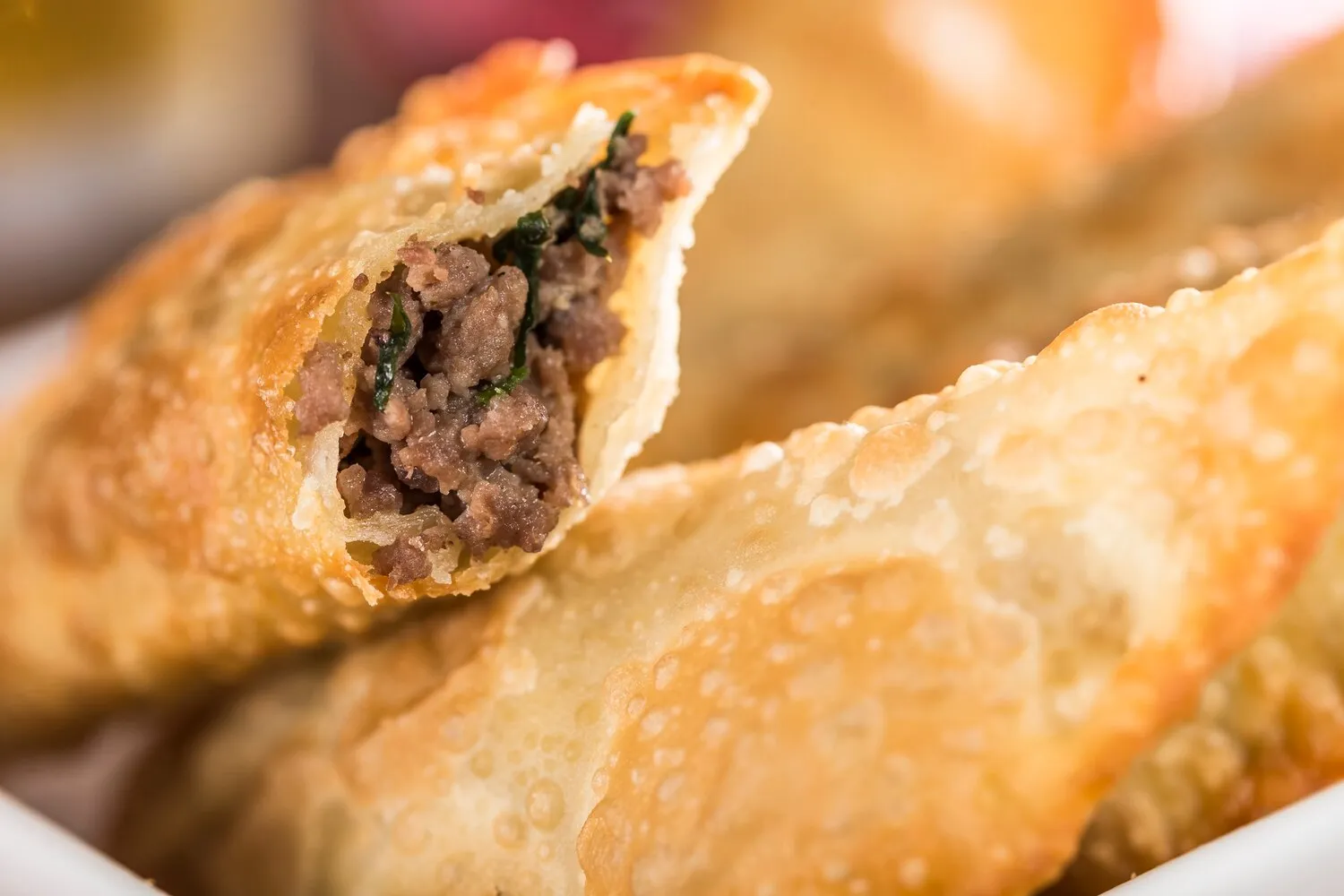

Pastel
Variety of flavours
Tabela Nutricional
* O % do Valor Diário (VD) informa quanto um nutriente em uma porção de alimento contribui para uma dieta diária. 2.000 calorias por dia são usadas para conselhos nutricionais gerais.
Recurso Premium
Recurso Premium
The pastel, a deep-fried pastry, has roots in Asian cuisine, particularly the spring rolls brought to Brazil by Japanese immigrants in the early 20th century. Adapting to local ingredients and tastes, the pastel evolved into a distinctively Brazilian street food.
Recurso Premium
Pastel is deeply embedded in Brazilian street food culture, commonly found in open-air markets (feiras) and lanchonetes (snack bars). It's a popular and affordable snack enjoyed by people of all ages and backgrounds.
Feiras and Lanchonetes
Pastel is a staple at Brazilian feiras (street markets) and lanchonetes, providing a quick, affordable, and flavorful meal or snack. The aroma of frying pastels is a characteristic element of these environments.
A Social Food
Eating pastel is often a social experience, shared with friends and family while strolling through a market or watching a football game. It's a quintessential part of Brazilian urban life.
Regional Variations
While the basic concept remains the same, regional variations in fillings and seasonings exist. Some regions might favor seafood fillings, while others are known for specific meat preparations.
Recurso Premium
Pastels offer a diverse range of flavors, from savory fillings like meat and cheese to sweet variations with fruit and chocolate. The defining characteristic is the crispy, blistered crust achieved through deep-frying.
Typical savory fillings include ground beef (carne), shredded chicken (frango), cheese (queijo, often mozzarella), heart of palm (palmito), and shrimp (camarão). Some variations incorporate catupiry (a creamy Brazilian cheese), vegetables, or a combination of ingredients. Sweet pastels often feature chocolate, banana, or guava paste (goiabada) and cheese (romeu e julieta).
Recurso Premium
Dough Preparation
The dough should be very thin and even to ensure a crispy, light texture. Some prefer to buy pre-made dough for convenience.
Oil Temperature
Maintaining the correct oil temperature (around 350-375°F or 175-190°C) is crucial. Too low, and the pastel will be greasy; too high, and it will burn before the filling is heated through.
Sealing the Pastel
Properly sealing the edges of the pastel is important to prevent the filling from leaking out during frying. Using a fork to crimp the edges is a common technique.
Serving Immediately
Pastel is best enjoyed hot and fresh, immediately after frying, when the crust is at its crispiest. Serve with a variety of sauces like hot sauce or chimichurri for extra flavor.
Recurso Premium
Explore pratos e restaurantes adicionais de Brazilian
Explorar BrazilianDescubra os melhores restaurantes e experiências culinárias em Limeira.
Explorar LimeiraSaiba mais sobre a cultura gastronômica, a cena de restaurantes e o patrimônio culinário de Brazil.
Explorar Brazil