
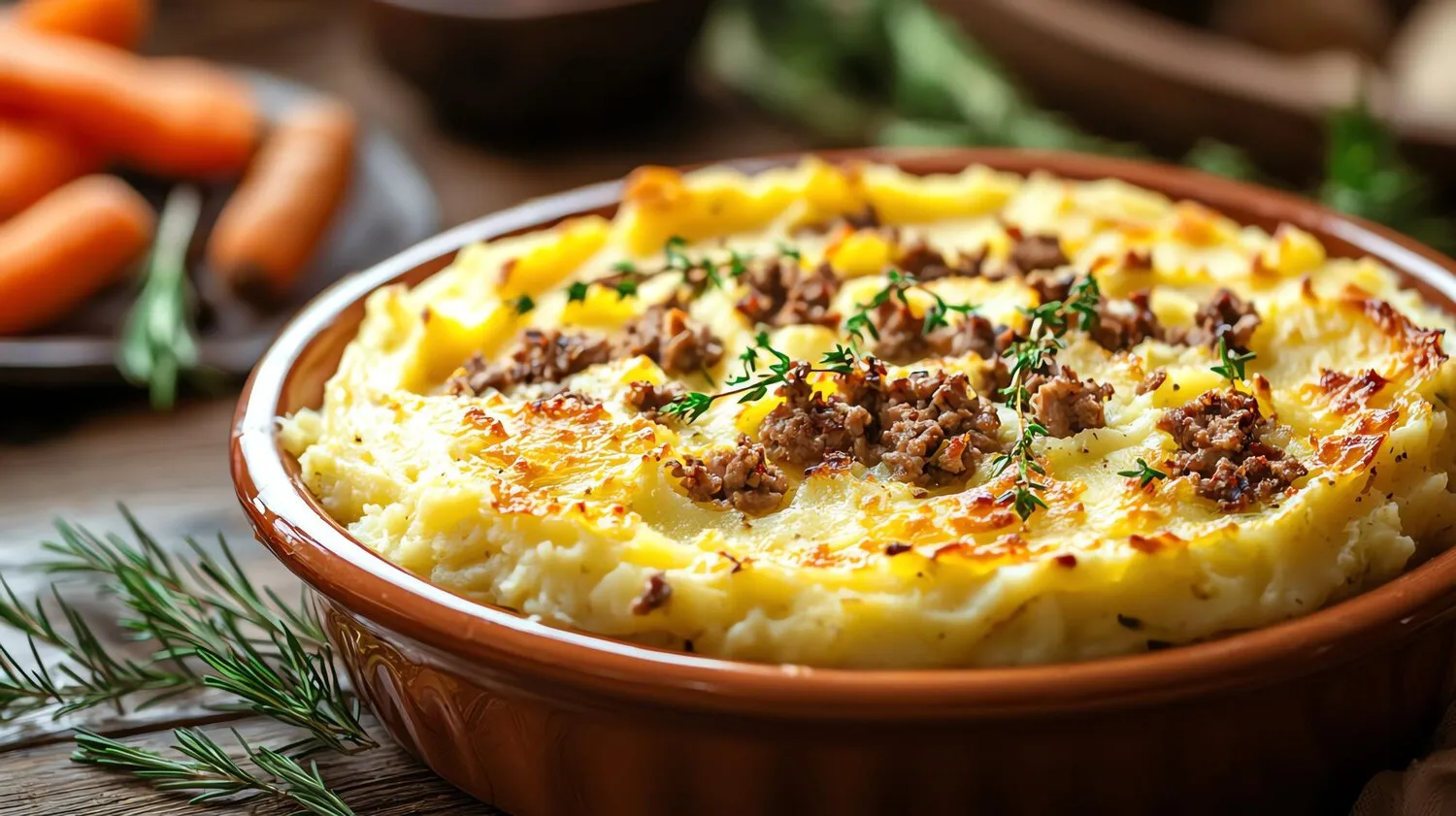

Escondidinho de Carne Seca
Creamy mashed cassava topped with shredded dried beef, baked to perfection. A classic Brazilian comfort food.
Tabela Nutricional
* O % do Valor Diário (VD) informa quanto um nutriente em uma porção de alimento contribui para uma dieta diária. 2.000 calorias por dia são usadas para conselhos nutricionais gerais.
Recurso Premium
Cozinha da Mari
Recurso Premium
Escondidinho, meaning 'little hidden one,' likely emerged from resourceful home cooking, blending indigenous ingredients like cassava (mandioca) with preserved meats brought by Portuguese colonizers. The dish reflects a fusion of culinary traditions, adapting to the availability of ingredients and techniques across different regions of Brazil. The use of 'carne seca' (dried beef) points to regions where meat preservation was crucial due to climate and limited refrigeration.
Recurso Premium
Escondidinho de Carne Seca is deeply embedded in Brazilian culture as a comforting and hearty dish, often associated with family meals and celebrations. Its simplicity and adaptability make it a popular choice across different regions and social classes.
Regional Variations
Different regions of Brazil may have their own variations of Escondidinho. Some might use sweet potatoes or plantains instead of cassava for the mash, while others might add cheese, vegetables, or different types of meat to the filling.
Celebratory Dish
Escondidinho is often served during special occasions and family gatherings, showcasing the warmth and hospitality of Brazilian culture. Its comforting nature makes it a popular choice for bringing people together.
Symbol of Resourcefulness
The dish reflects the ingenuity of Brazilian cuisine, utilizing readily available ingredients and techniques to create a satisfying and flavorful meal. It highlights the ability to adapt and innovate in the kitchen.
Recurso Premium
Escondidinho de Carne Seca presents a delightful balance of savory, creamy, and slightly sweet flavors. The saltiness of the dried beef contrasts beautifully with the mild sweetness of the creamy cassava mash. The baked top adds a layer of rich, comforting warmth.
The main flavor profile revolves around the intensely savory and salty 'carne seca', which is shredded and often sautéed with onions, garlic, and sometimes peppers. This flavorful beef is then 'hidden' under a layer of creamy mashed cassava (also known as mandioca or yuca), enriched with butter, milk, and sometimes cream cheese for extra richness. The baking process caramelizes the top layer, adding a subtle sweetness and browned butter notes.
Recurso Premium
Desalting the Carne Seca
Properly desalting the 'carne seca' is crucial. Soak the beef in several changes of water for at least 24 hours, or even longer, to remove excess salt. Taste the beef after each soak to ensure it's not too salty.
Creamy Cassava Mash
For a smooth and creamy cassava mash, boil the cassava until very tender. Use a potato ricer or food mill for a lump-free texture. Incorporate butter, milk, and cream cheese while the cassava is still hot for optimal melting and blending.
Browning the Top
To achieve a beautiful golden-brown top, broil the Escondidinho for a few minutes at the end of baking. Keep a close eye on it to prevent burning.
Adding Catupiry Cheese
For an extra creamy texture, a layer of Catupiry cheese (a Brazilian cream cheese) can be added on top of the carne seca and under the cassava mash. This adds a fantastic tangy and creamy element.
Recurso Premium
Explore pratos e restaurantes adicionais de Brazilian comfort food
Explorar Brazilian comfort foodDescubra os melhores restaurantes e experiências culinárias em Macaé.
Explorar MacaéSaiba mais sobre a cultura gastronômica, a cena de restaurantes e o patrimônio culinário de Brazil.
Explorar Brazil