
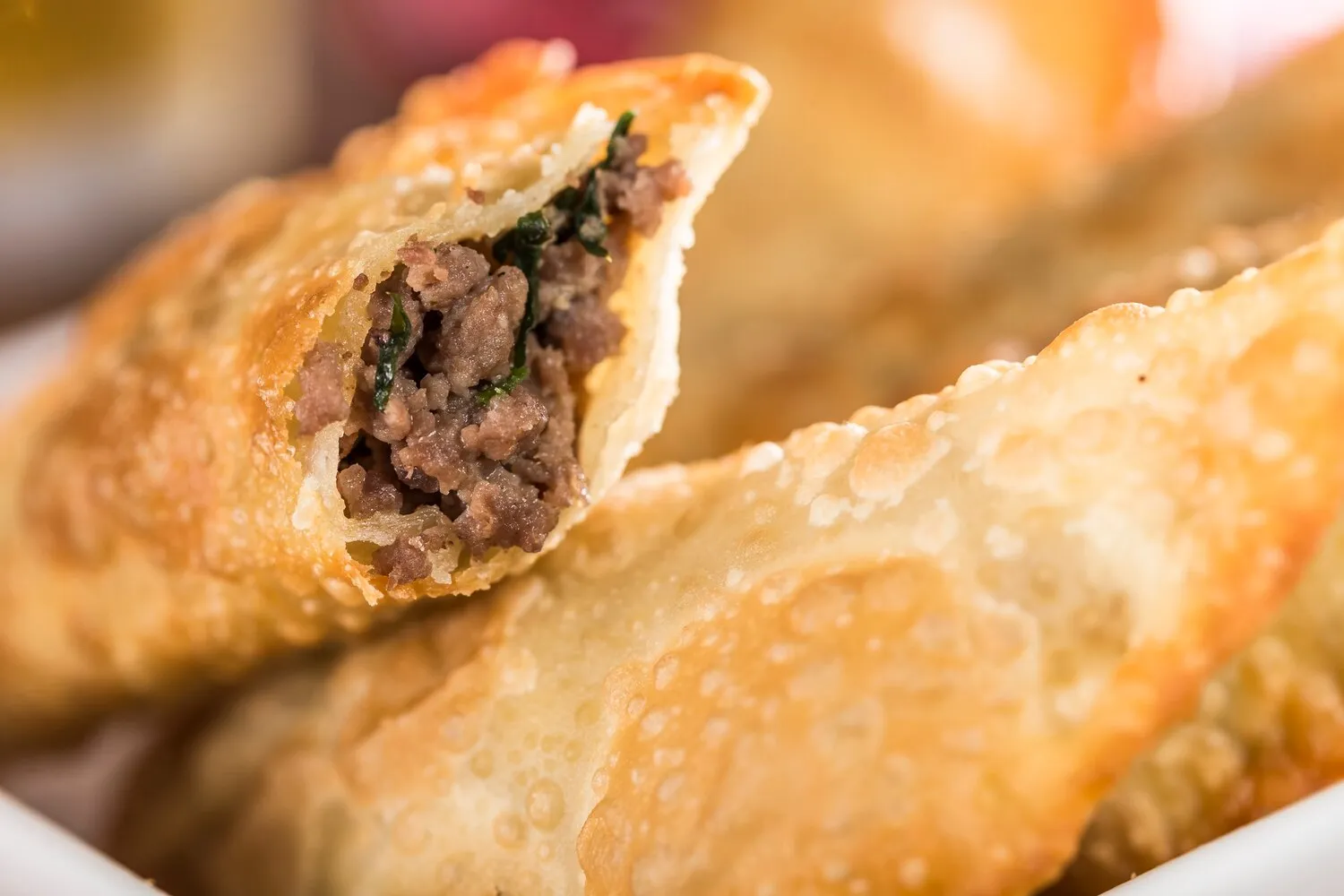

Pastel
Fried pastry filled with various ingredients (meat, cheese, etc.)
Tabela Nutricional
* O % do Valor Diário (VD) informa quanto um nutriente em uma porção de alimento contribui para uma dieta diária. 2.000 calorias por dia são usadas para conselhos nutricionais gerais.
Recurso Premium
100 Maneiras Restaurante e Café
Recurso Premium
The pastel in Brazil is believed to have originated with Asian immigrants, primarily from China and Japan, who adapted recipes for fried pastries to local ingredients and tastes. These immigrants initially sold pastels in street markets and fairs, popularizing the dish throughout the country.
Recurso Premium
Pastel is deeply ingrained in Brazilian street food culture, representing a readily accessible, affordable, and delicious snack enjoyed by people from all walks of life.
Street Food Staple
Pastel is commonly found at street fairs (feiras), markets, and small establishments called 'pastelarias'. It's a convenient and quick meal option for busy individuals.
Feiras (Street Markets)
Feiras are vibrant social hubs where pastel vendors often compete for customers, offering a variety of fillings and sizes. The aroma of freshly fried pastels is a defining characteristic of these markets.
Social Gathering
Sharing pastels with friends and family is a common practice, particularly during social events and casual gatherings. It's considered a communal food.
Recurso Premium
The pastel offers a delightful mix of savory and satisfying flavors, achieved through the combination of crispy, flaky dough and a wide variety of fillings. Common fillings include seasoned ground beef, cheese, heart of palm, and even sweet options like banana and chocolate.
The flavor profile largely depends on the chosen filling. Beef pastels typically feature a savory, slightly spiced flavor, often with notes of cumin, garlic, and onions. Cheese pastels provide a creamy and salty experience. Heart of palm offers a more subtle, earthy, and slightly sweet taste. The dough itself is relatively neutral, allowing the filling to take center stage. Frying the pastel imparts a crispy texture and rich, savory flavor from the oil.
Recurso Premium
Oil Temperature
Maintaining the correct oil temperature is crucial for achieving a crispy, golden-brown crust without burning the pastel. The ideal temperature is typically around 350-375°F (175-190°C).
Dough Thickness
The dough should be rolled out thinly but not so thin that it tears easily. A slightly thicker dough can help prevent the filling from leaking during frying.
Sealing the Edges
Ensure the edges of the pastel are securely sealed to prevent the filling from escaping during frying. A fork can be used to crimp the edges tightly.
Filling Moisture
Avoid using fillings that are too moist, as this can make the dough soggy. Drain excess liquid from fillings before assembling the pastels.
Recurso Premium
Explore pratos e restaurantes adicionais de Street Food
Explorar Street FoodDescubra os melhores restaurantes e experiências culinárias em Maringá.
Explorar MaringáSaiba mais sobre a cultura gastronômica, a cena de restaurantes e o patrimônio culinário de Brazil.
Explorar Brazil