
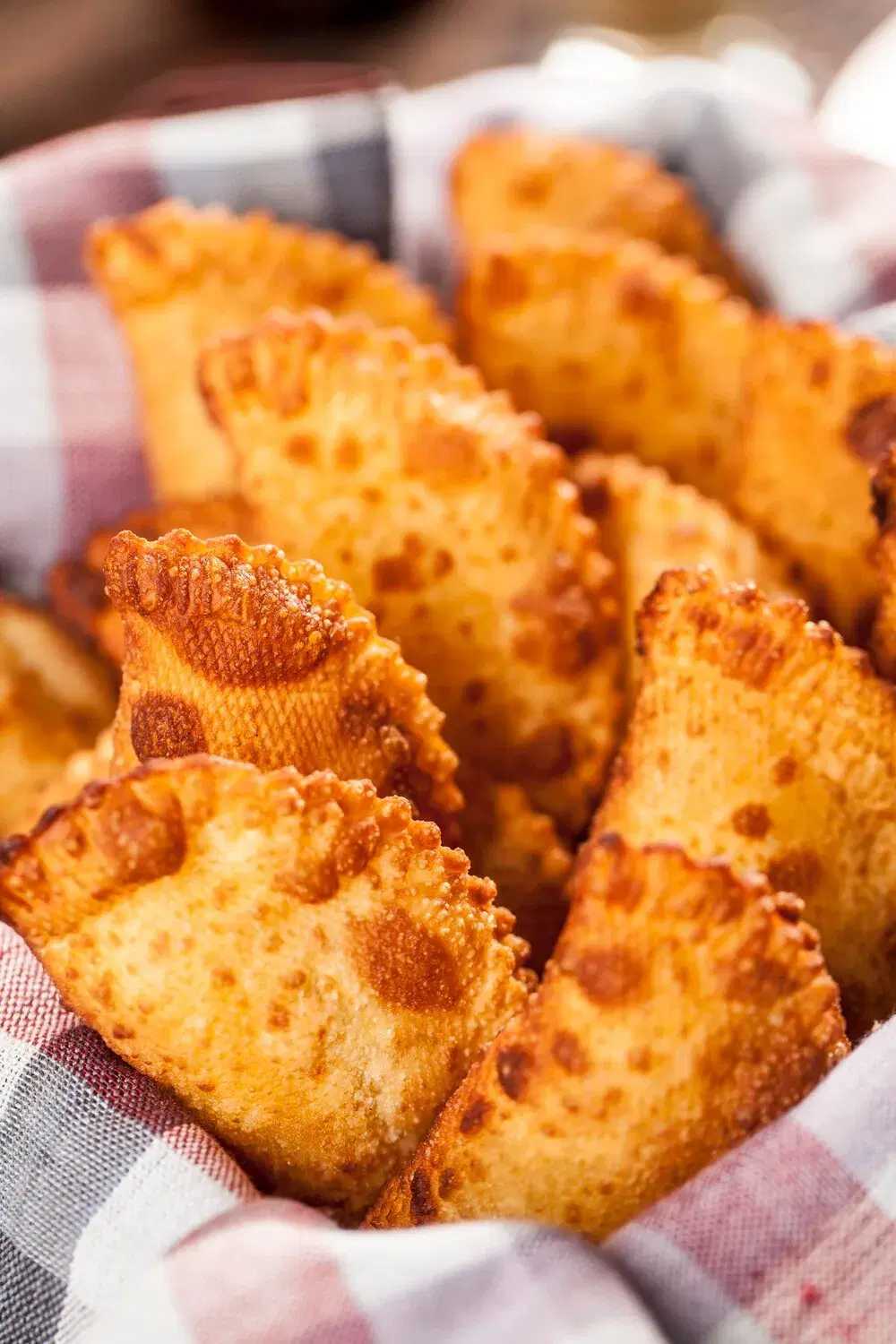

Pastel de Camarão
Shrimp pastry
Tabela Nutricional
* O % do Valor Diário (VD) informa quanto um nutriente em uma porção de alimento contribui para uma dieta diária. 2.000 calorias por dia são usadas para conselhos nutricionais gerais.
Recurso Premium
Porto Pani
Recurso Premium
Pastel de Camarão reflects a blend of culinary influences in Brazil. The 'pastel' itself, a fried pastry, likely has Portuguese origins, adapted and embraced by Brazilian cuisine. The shrimp filling reflects the abundance of seafood along Brazil's extensive coastline, with indigenous and African culinary traditions influencing the seasoning and preparation methods.
Recurso Premium
Pastel de Camarão is a popular snack and street food in Brazil, deeply ingrained in Brazilian culinary culture. It's a common sight at fairs, markets, and beachside vendors.
Street Food Staple
Pastel de Camarão is a ubiquitous street food, often enjoyed on the go. Vendors selling 'pasteis' are a common sight in cities and towns across Brazil.
Fair and Market Favorite
Fairs and markets throughout Brazil feature Pastel de Camarão as a popular food option. They are considered a quick, affordable, and tasty snack.
Beach Culture
Near the coast, Pastel de Camarão is often sold by vendors on the beach, providing a delicious and convenient snack for beachgoers.
Recurso Premium
Pastel de Camarão offers a delightful combination of savory, slightly salty, and subtly sweet flavors, enhanced by the crispy, golden-fried pastry.
The primary flavor comes from the shrimp filling, seasoned with garlic, onions, tomatoes, and herbs like cilantro and parsley. The dough, typically made from wheat flour, contributes a neutral, slightly doughy flavor. Frying the pastel in oil creates a rich, savory taste and a satisfying crunch. Some variations may include spices like paprika or cumin for added depth. A squeeze of lime is often added as a final touch, brightening the flavors.
Recurso Premium
Dough Consistency
The dough should be thin and pliable enough to be stretched without tearing. Resting the dough allows the gluten to relax, making it easier to work with.
Filling Preparation
Avoid overcooking the shrimp in the filling, as it can become rubbery. Sauté the shrimp lightly with aromatics and herbs for maximum flavor.
Frying Temperature
Maintain a consistent oil temperature (around 350°F or 175°C) for even cooking and a crispy crust. Avoid overcrowding the fryer to prevent the oil temperature from dropping.
Serving
Serve immediately after frying for the best texture and flavor. A squeeze of lime juice is a classic accompaniment, adding brightness and acidity to the dish.
Recurso Premium
Explore pratos e restaurantes adicionais de Snack
Explorar SnackDescubra os melhores restaurantes e experiências culinárias em Morretes.
Explorar MorretesSaiba mais sobre a cultura gastronômica, a cena de restaurantes e o patrimônio culinário de Brazil.
Explorar Brazil