

Salgados
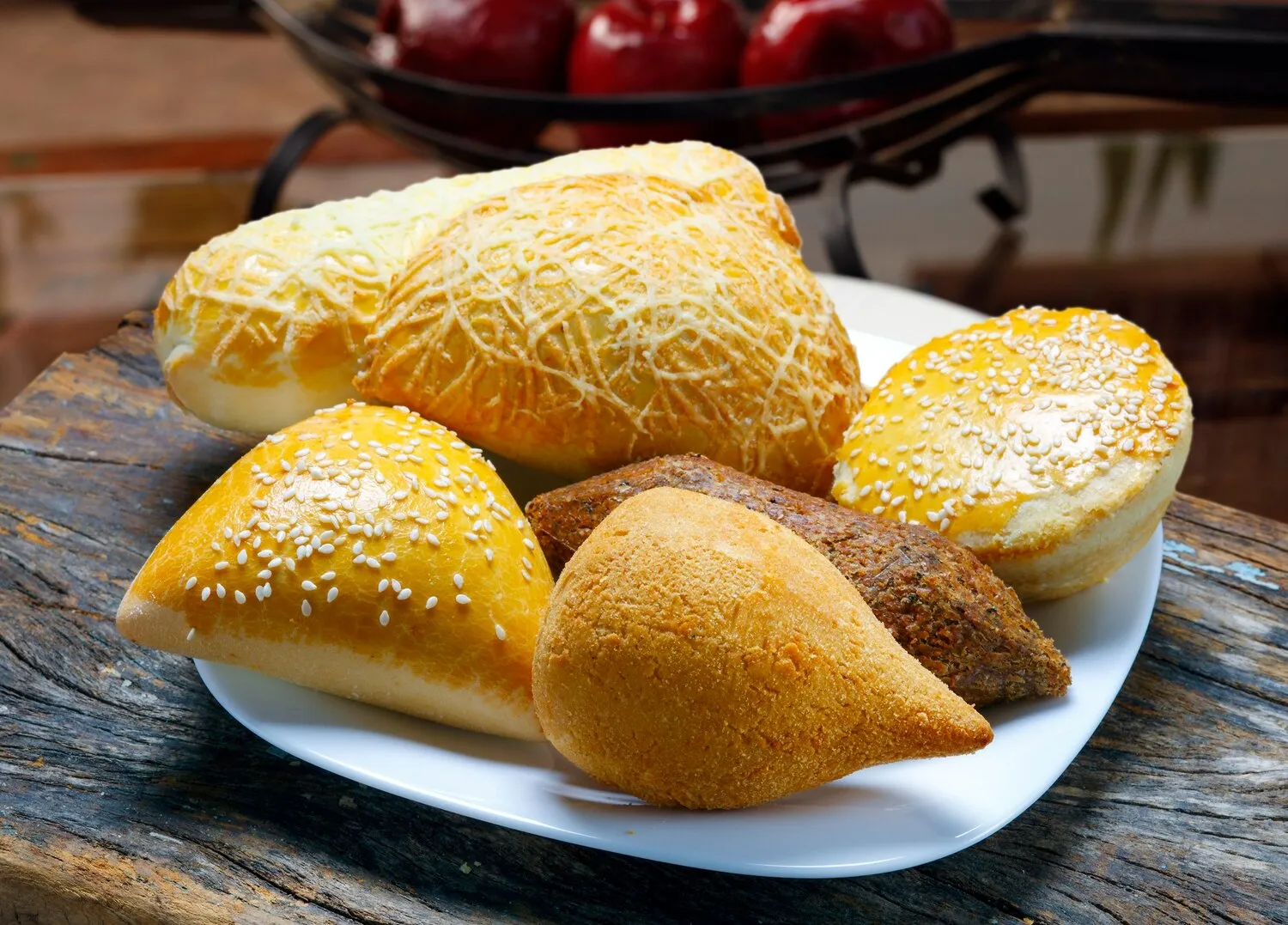
A variety of Brazilian savory snacks, like coxinha, risole and other fried pastries.
Tabela Nutricional
* O % do Valor Diário (VD) informa quanto um nutriente em uma porção de alimento contribui para uma dieta diária. 2.000 calorias por dia são usadas para conselhos nutricionais gerais.
Recurso Premium
Recurso Premium
Salgados evolved in Brazil from European culinary influences, particularly Portuguese and French. As Brazil developed its own culinary identity, these snacks were adapted using local ingredients and techniques, becoming a staple in Brazilian cuisine. They were initially popular among the upper classes but gradually became accessible and enjoyed by everyone.
Recurso Premium
Salgados are deeply ingrained in Brazilian culture, appearing at celebrations, parties, and as everyday snacks. They represent a sense of community and are often enjoyed with friends and family.
Street Food Staple
Salgados are a very popular street food. They're sold in bakeries, 'lanchonetes' (snack bars), and by street vendors all over Brazil.
Party Food Essential
No Brazilian party is complete without a platter of assorted salgados. They are considered a must-have for birthdays, weddings, and other special occasions.
Quick and Convenient Snack
Brazilians often grab a salgado as a quick and satisfying snack during the day. They are readily available and relatively inexpensive.
Regional Variations
While the core types of salgados are widespread, regional variations exist with different fillings and dough preparations. For example, some regions may use manioc flour in the dough.
Recurso Premium
Salgados offer a savory and diverse flavor profile, ranging from creamy and cheesy to meaty and spicy. The fried dough provides a satisfying crunch, complementing the flavorful fillings.
Common flavors include chicken (often shredded and creamy, as in coxinha), ground beef, cheese (catupiry is a popular choice), and shrimp. Herbs like parsley and scallions are frequently used to enhance the fillings. Some salgados may also incorporate spices like paprika or chili for a touch of heat. The dough itself is usually seasoned lightly with salt and sometimes garlic or onion powder.
Recurso Premium
Dough Consistency
Ensure the dough is smooth and pliable but not too sticky. If it's too sticky, add a little more flour. Let it rest for the suggested amount of time to make it easier to handle.
Filling Temperature
Make sure the filling is cooled down before assembling the salgados. This will prevent the dough from becoming soggy.
Frying Temperature
Maintain the oil temperature at a consistent 350-375°F (175-190°C) for optimal frying. If the oil is not hot enough, the salgados will absorb too much oil and become greasy. If it's too hot, they will burn on the outside before the inside is cooked through.
Don't Overcrowd the Pan
Fry the salgados in batches to prevent overcrowding the pan, which will lower the oil temperature and result in uneven cooking.
Drain Well
After frying, place the salgados on a wire rack or paper towels to drain excess oil. This will help them stay crispy.
Freezing for Later
Salgados can be frozen before frying. Freeze them individually on a baking sheet and then transfer them to a freezer bag. Fry them directly from frozen, adding a few minutes to the cooking time.
Recurso Premium
Explore pratos e restaurantes adicionais de Snack
Explorar SnackDescubra os melhores restaurantes e experiências culinárias em Nova Iguaçu.
Explorar Nova IguaçuSaiba mais sobre a cultura gastronômica, a cena de restaurantes e o patrimônio culinário de Brazil.
Explorar Brazil