
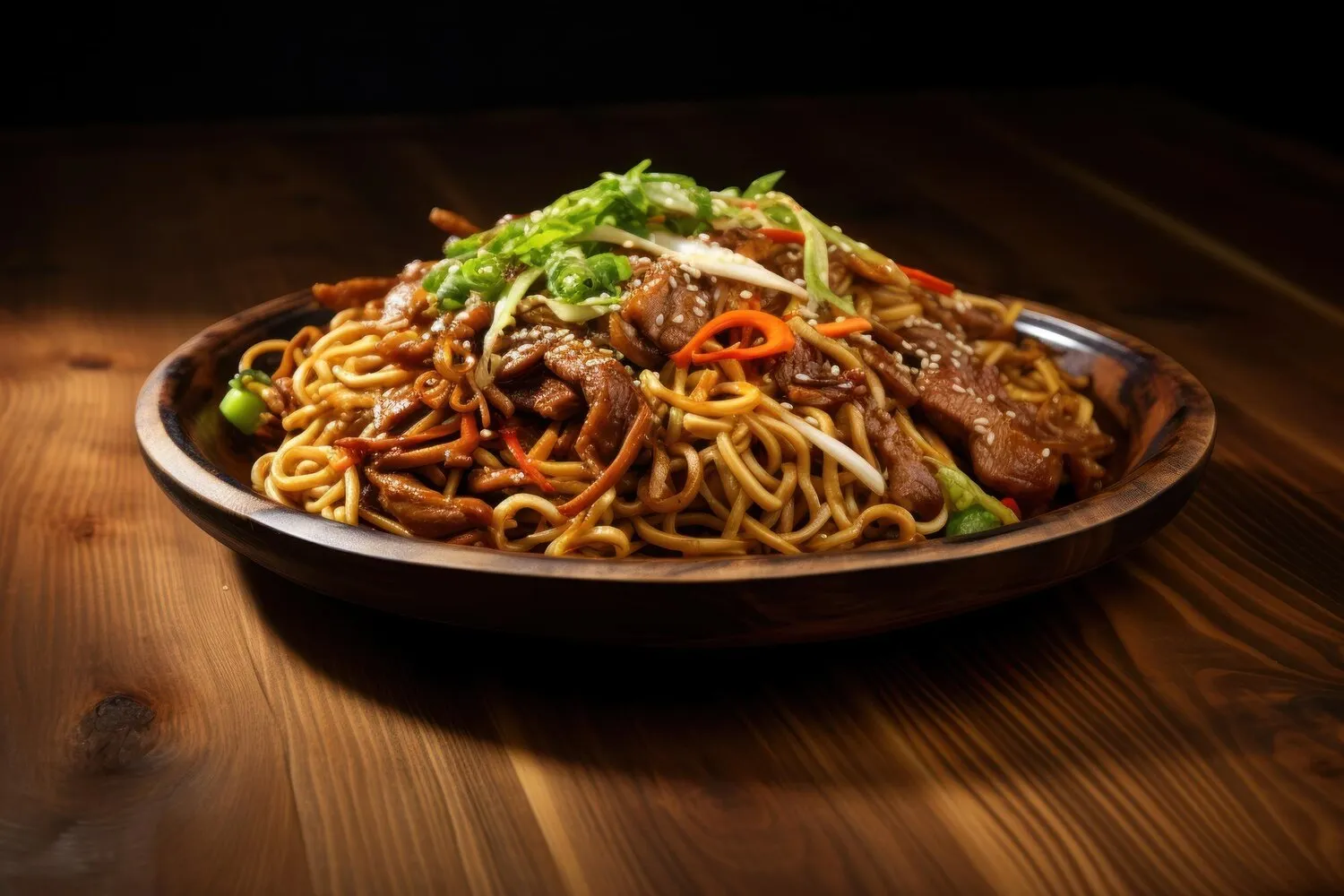

Yakisoba
A popular Japanese noodle stir-fry dish with vegetables and meat.
Tabela Nutricional
* O % do Valor Diário (VD) informa quanto um nutriente em uma porção de alimento contribui para uma dieta diária. 2.000 calorias por dia são usadas para conselhos nutricionais gerais.
Recurso Premium
Recurso Premium
Yakisoba's origins can be traced back to Chinese-inspired noodle dishes that became popular in Japan during the early 20th century. It evolved as a convenient and affordable street food, adapting to Japanese tastes and ingredients.
Recurso Premium
Yakisoba is deeply ingrained in Japanese popular culture, widely enjoyed at festivals, street stalls, and casual eateries.
Festival Food Staple
Yakisoba is a quintessential festival food, often sold at yatai (food stalls) during matsuri (festivals) throughout Japan. The aroma of sizzling yakisoba is synonymous with festive occasions.
Everyday Meal
Beyond festivals, yakisoba is a common and convenient everyday meal, often prepared at home or found in casual restaurants and supermarkets. It's considered an affordable and satisfying dish.
Regional Variations
While the basic recipe remains consistent, regional variations exist. For example, some regions might incorporate different seafood, vegetables, or sauces, reflecting local preferences.
Recurso Premium
Yakisoba offers a savory and slightly sweet flavor profile, achieved through a combination of stir-fried ingredients and a signature umami-rich sauce.
The primary flavor components include the savory notes from the meat (typically pork, but sometimes beef or chicken), the sweetness from the Yakisoba sauce (which usually contains Worcestershire sauce, soy sauce, oyster sauce, ketchup, and sugar), the earthy taste of the vegetables (such as cabbage, onions, and carrots), and the richness from the noodles (usually steamed Chinese-style wheat flour noodles). The sauce often provides a tangy, slightly vinegary finish.
Recurso Premium
Noodle Preparation
Separate and loosen the noodles before stir-frying to ensure even cooking and prevent clumping. Pre-cooking the noodles slightly can also help.
High Heat Cooking
Use high heat to stir-fry the ingredients quickly, allowing them to caramelize and develop deeper flavors. This also helps prevent the noodles from becoming soggy.
Sauce Timing
Add the Yakisoba sauce towards the end of the cooking process to prevent it from burning and to allow it to coat the noodles evenly.
Toppings and Garnishes
Enhance the flavor and presentation of Yakisoba with toppings such as aonori (dried green seaweed flakes), beni shoga (pickled ginger), katsuobushi (dried bonito flakes), and Japanese mayonnaise.
Recurso Premium
Explore pratos e restaurantes adicionais de Noodle Dish
Explorar Noodle DishDescubra os melhores restaurantes e experiências culinárias em Rio Claro.
Explorar Rio ClaroSaiba mais sobre a cultura gastronômica, a cena de restaurantes e o patrimônio culinário de Brazil.
Explorar Brazil