
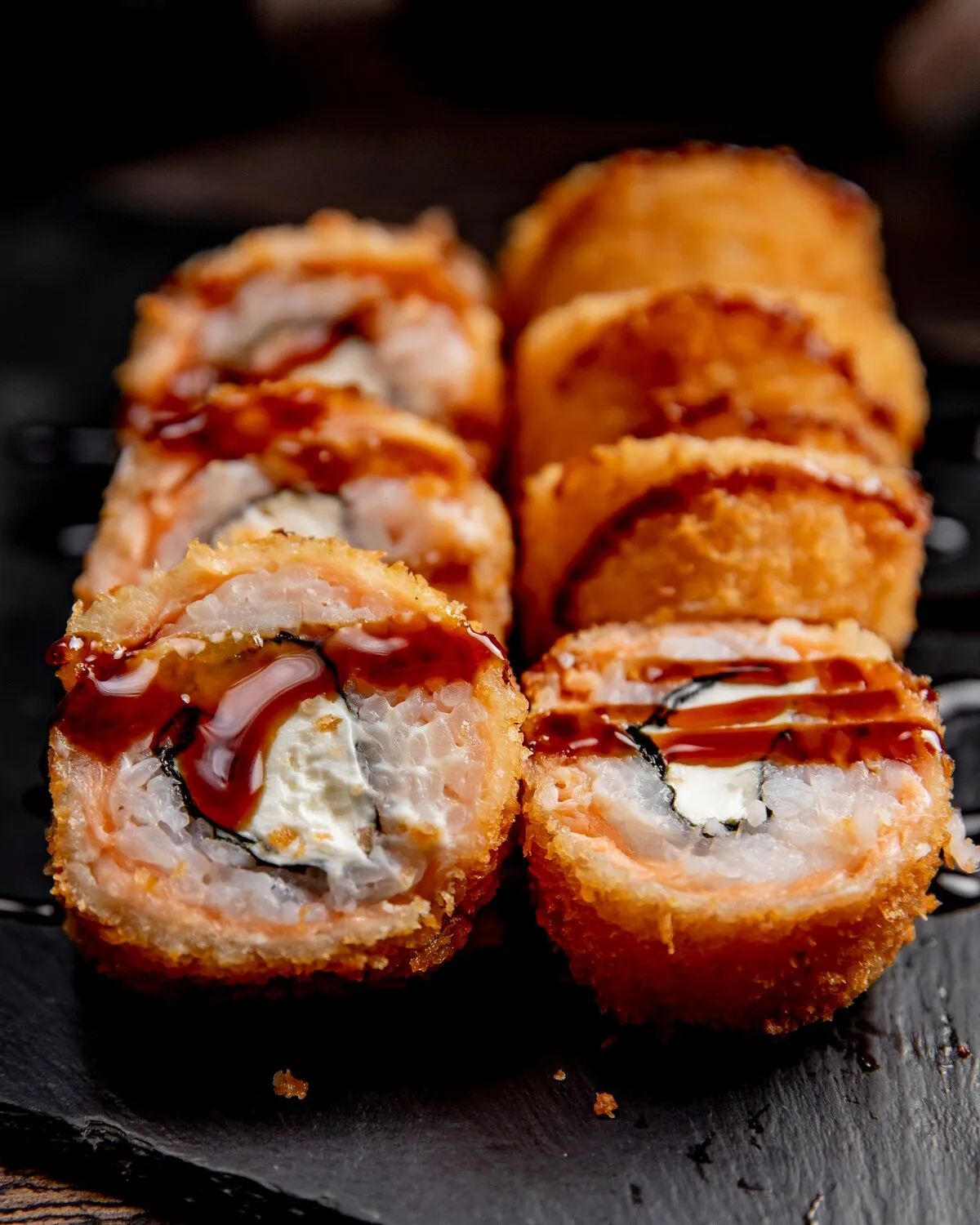

Hot Roll
Fried sushi roll with various fillings. Likely includes cream cheese.
Tabela Nutricional
* O % do Valor Diário (VD) informa quanto um nutriente em uma porção de alimento contribui para uma dieta diária. 2.000 calorias por dia são usadas para conselhos nutricionais gerais.
Recurso Premium
Recurso Premium
Hot rolls, or fried sushi rolls, are a modern adaptation of traditional Japanese sushi that emerged in the United States, likely influenced by the American palate's preference for cooked foods and bolder flavors. It represents a fusion of Japanese techniques with American culinary creativity.
Recurso Premium
Hot rolls are generally viewed as a more casual and approachable form of sushi, often enjoyed by those new to sushi or those who prefer cooked ingredients. They reflect the Americanization of sushi and its adaptation to suit local tastes.
Americanized Sushi
Hot rolls are a prime example of how sushi has been adapted and localized in the United States. They prioritize cooked ingredients and bolder flavors, catering to a broader audience.
Casual Dining
Hot rolls are generally considered a less formal sushi option compared to traditional nigiri or sashimi, making them suitable for casual dining and takeout.
Recurso Premium
Hot rolls present a combination of creamy, savory, and often slightly sweet flavors, contrasting textures, and warm, inviting experience.
The dominant flavors in a hot roll typically come from the creamy filling (often cream cheese), the savory fish or other protein (e.g., imitation crab, shrimp, tuna), the slightly sweet sushi rice, and the salty nori seaweed. The frying process imparts a crispy texture and a deeper, richer flavor, while sauces like spicy mayo or eel sauce can add further complexity.
Recurso Premium
Rice Temperature
Ensure the sushi rice has cooled sufficiently before assembling the roll. Warm rice can make the nori soggy during frying.
Frying Temperature
Maintain a consistent oil temperature (around 350-375°F) for even cooking and crispiness. Overcrowding the fryer will lower the oil temperature.
Batter Consistency
Use a light and airy tempura batter to avoid a heavy, greasy coating. Some chefs prefer a simple cornstarch dusting or a panko breading for extra crispness.
Drying After Frying
Place fried rolls on a wire rack or paper towels to drain excess oil, ensuring a less greasy final product.
Recurso Premium
Explore pratos e restaurantes adicionais de Sushi Roll
Explorar Sushi RollDescubra os melhores restaurantes e experiências culinárias em Rio Preto.
Explorar Rio PretoSaiba mais sobre a cultura gastronômica, a cena de restaurantes e o patrimônio culinário de Brazil.
Explorar Brazil