
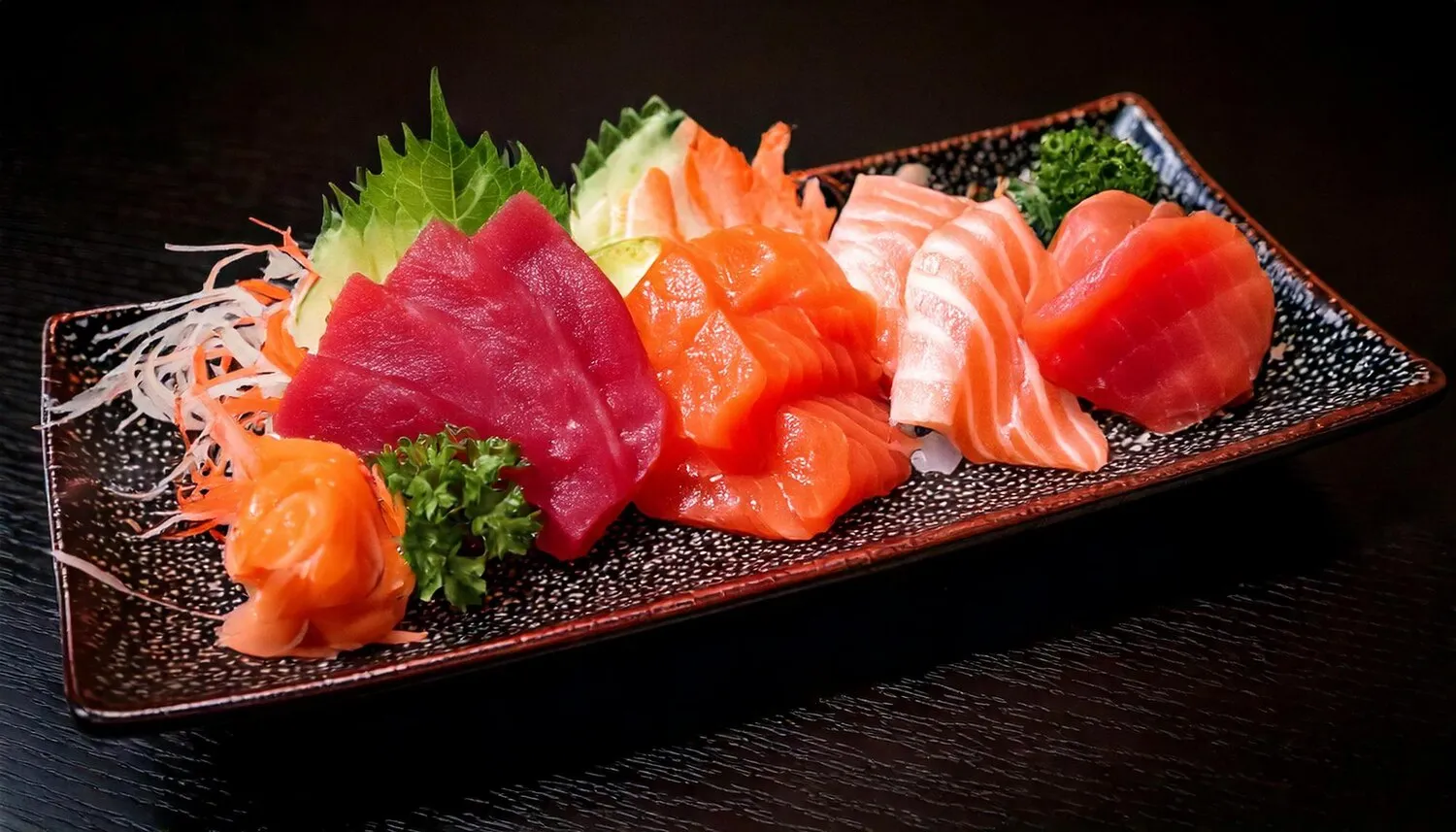

Sashimi
Thinly sliced raw fish.
Tabela Nutricional
* O % do Valor Diário (VD) informa quanto um nutriente em uma porção de alimento contribui para uma dieta diária. 2.000 calorias por dia são usadas para conselhos nutricionais gerais.
Recurso Premium
Recurso Premium
The origins of sashimi can be traced back to ancient Japan, predating the widespread availability of refrigeration. To ensure freshness and distinguish different types of fish, chefs began slicing fish in specific ways. Early forms of sashimi were often consumed with vinegar and soy sauce as preservatives.
Recurso Premium
Sashimi is deeply ingrained in Japanese culinary culture, representing a respect for freshness, seasonality, and the natural flavors of the sea. It's often served at special occasions and is considered a refined dining experience.
Presentation
The arrangement of sashimi on the plate is an art form, carefully considering color, texture, and shape to create an aesthetically pleasing and balanced presentation. Garnishes like shiso leaves, daikon radish, and edible flowers are often used.
Seasonality
Certain types of fish are best enjoyed during specific seasons when their flavor and texture are at their peak. Japanese cuisine emphasizes using seasonal ingredients to appreciate the natural cycles and variations in taste.
Respect for Ingredients
Sashimi is a celebration of the purity and freshness of the fish. Chefs take great care in selecting and preparing the fish, minimizing handling to preserve its delicate flavors.
Recurso Premium
The primary flavor profile of sashimi is clean and delicate, emphasizing the natural taste of the fish itself. Umami, saltiness, and subtle sweetness are all present, complemented by the accompanying condiments.
The inherent flavors vary greatly depending on the type of fish. Tuna (Maguro) offers a rich, buttery flavor. Salmon (Sake) provides a milder, fattier taste. Yellowtail (Hamachi) is known for its clean and slightly sweet flavor. Sea bream (Tai) has a delicate and firm texture with a subtle sweetness. The dipping sauce, typically soy sauce, adds saltiness and umami, while wasabi provides a pungent kick and antibacterial properties. Pickled ginger (Gari) serves as a palate cleanser between different types of sashimi.
Recurso Premium
Soy Sauce Etiquette
Avoid saturating the sashimi in soy sauce. A light dip is sufficient to enhance the flavor without overpowering the fish's natural taste. Some purists believe that high-quality fish does not need soy sauce at all.
Wasabi Usage
Use wasabi sparingly. A small amount placed directly on the fish, rather than mixed into the soy sauce, is the preferred method. This allows you to control the level of heat and appreciate the wasabi's unique flavor.
Order of Consumption
Traditionally, sashimi is eaten from light to rich flavors. Start with milder white fish and progress to richer, fattier varieties like tuna. This allows you to fully appreciate the nuances of each type of fish.
Freshness is Key
Always ensure that the sashimi is sourced from a reputable establishment with high standards of hygiene and handling of raw fish. Freshness is paramount for both flavor and safety.
Recurso Premium
Explore pratos e restaurantes adicionais de Raw Fish
Explorar Raw FishDescubra os melhores restaurantes e experiências culinárias em Rio Preto.
Explorar Rio PretoSaiba mais sobre a cultura gastronômica, a cena de restaurantes e o patrimônio culinário de Brazil.
Explorar Brazil