
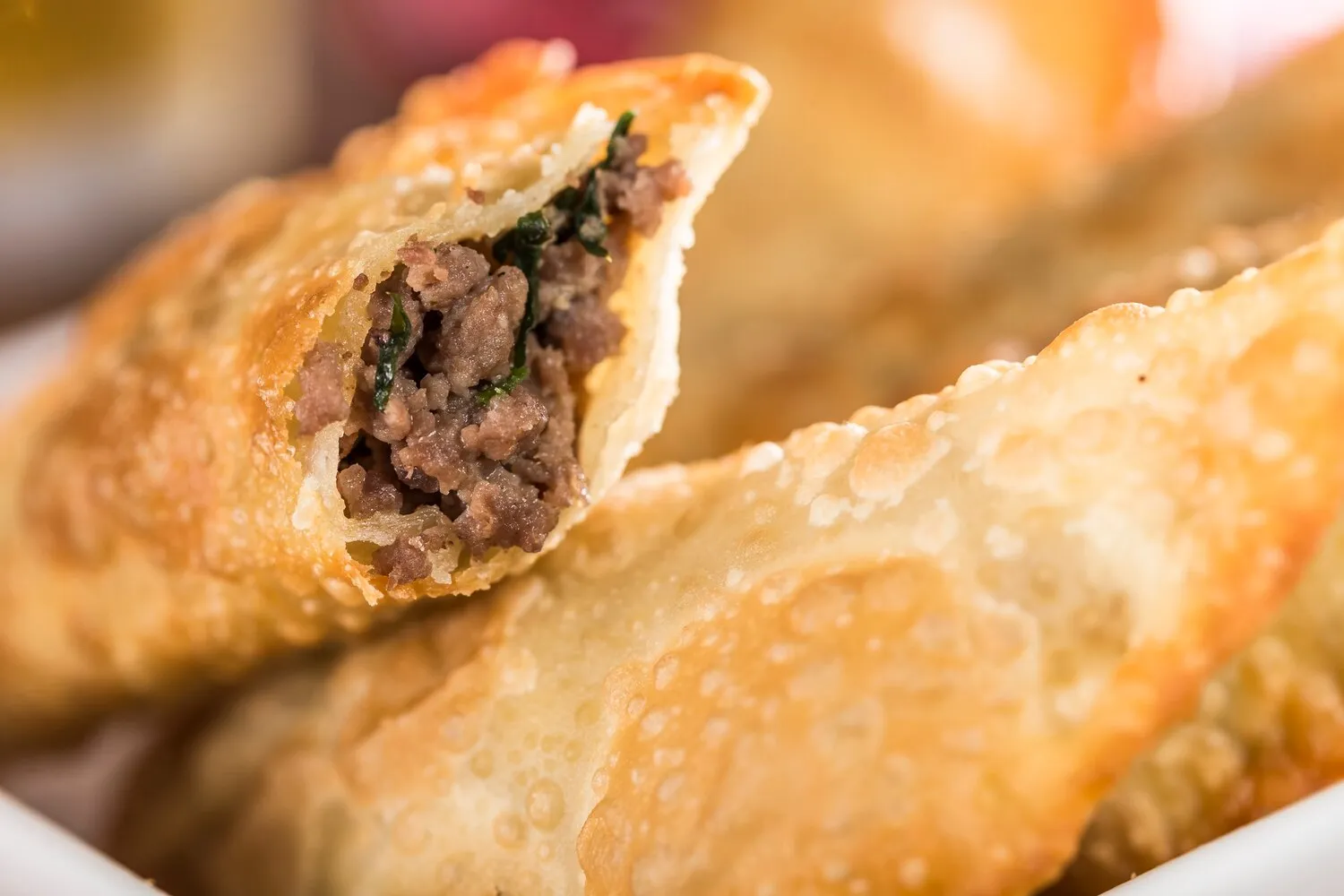

Pastel
Fried pastry filled with various savory ingredients.
Tabela Nutricional
* O % do Valor Diário (VD) informa quanto um nutriente em uma porção de alimento contribui para uma dieta diária. 2.000 calorias por dia são usadas para conselhos nutricionais gerais.
Recurso Premium
Boteco Casarão
Recurso Premium
The Pastel's origins are linked to Chinese spring rolls and Japanese gyoza brought to Brazil by immigrants in the late 19th and early 20th centuries. The pastry was adapted to local ingredients and flavors, evolving into the distinct Brazilian street food we know today.
Recurso Premium
Pastel is a ubiquitous and beloved street food in Brazil, deeply ingrained in the country's culinary culture. It is commonly found at street fairs (feiras), markets, and lanchonetes (snack bars), serving as a quick, affordable, and satisfying meal or snack.
Feiras (Street Fairs)
Pastel is a staple at Brazilian street fairs. These fairs are vibrant social gatherings, and grabbing a pastel while browsing the stalls is a common experience.
Lanchonetes (Snack Bars)
Many lanchonetes serve pastel as a quick and easy meal option, often alongside other Brazilian snacks and drinks.
Family Gatherings
While primarily a street food, pastel is sometimes homemade and served at family gatherings, especially when a simple and crowd-pleasing dish is desired.
Recurso Premium
Pastel offers a delightful combination of savory fillings encased in a crispy, golden-brown fried dough. The flavor profile is largely determined by the filling, ranging from cheesy and meaty to vegetarian and sweet.
Common savory fillings include ground beef (often seasoned with onions, garlic, and various spices), cheese (such as mozzarella or requeijão), shredded chicken, hearts of palm (palmito), shrimp, and codfish (bacalhau). Some variations may include additions like olives, hard-boiled eggs, or vegetables. The dough itself is typically neutral in flavor, allowing the filling to shine. The frying process contributes a satisfying crispy texture and a slightly oily richness.
Recurso Premium
Dough Consistency
The dough should be thin and elastic enough to stretch without tearing, but not so thin that it becomes soggy during frying. A well-rested dough is easier to work with.
Filling Moisture
Avoid fillings that are too wet, as this can cause the pastel to become soggy. Drain excess moisture from the filling before enclosing it in the dough.
Frying Temperature
Maintain a consistent oil temperature (around 350-375°F or 175-190°C) for optimal crispiness. Overcrowding the fryer can lower the oil temperature and result in soggy pastels.
Serving Immediately
Pastel is best enjoyed fresh and hot, right after frying, when the crust is at its crispiest.
Recurso Premium
Explore pratos e restaurantes adicionais de Snack
Explorar SnackDescubra os melhores restaurantes e experiências culinárias em Santo André.
Explorar Santo AndréSaiba mais sobre a cultura gastronômica, a cena de restaurantes e o patrimônio culinário de Brazil.
Explorar Brazil