
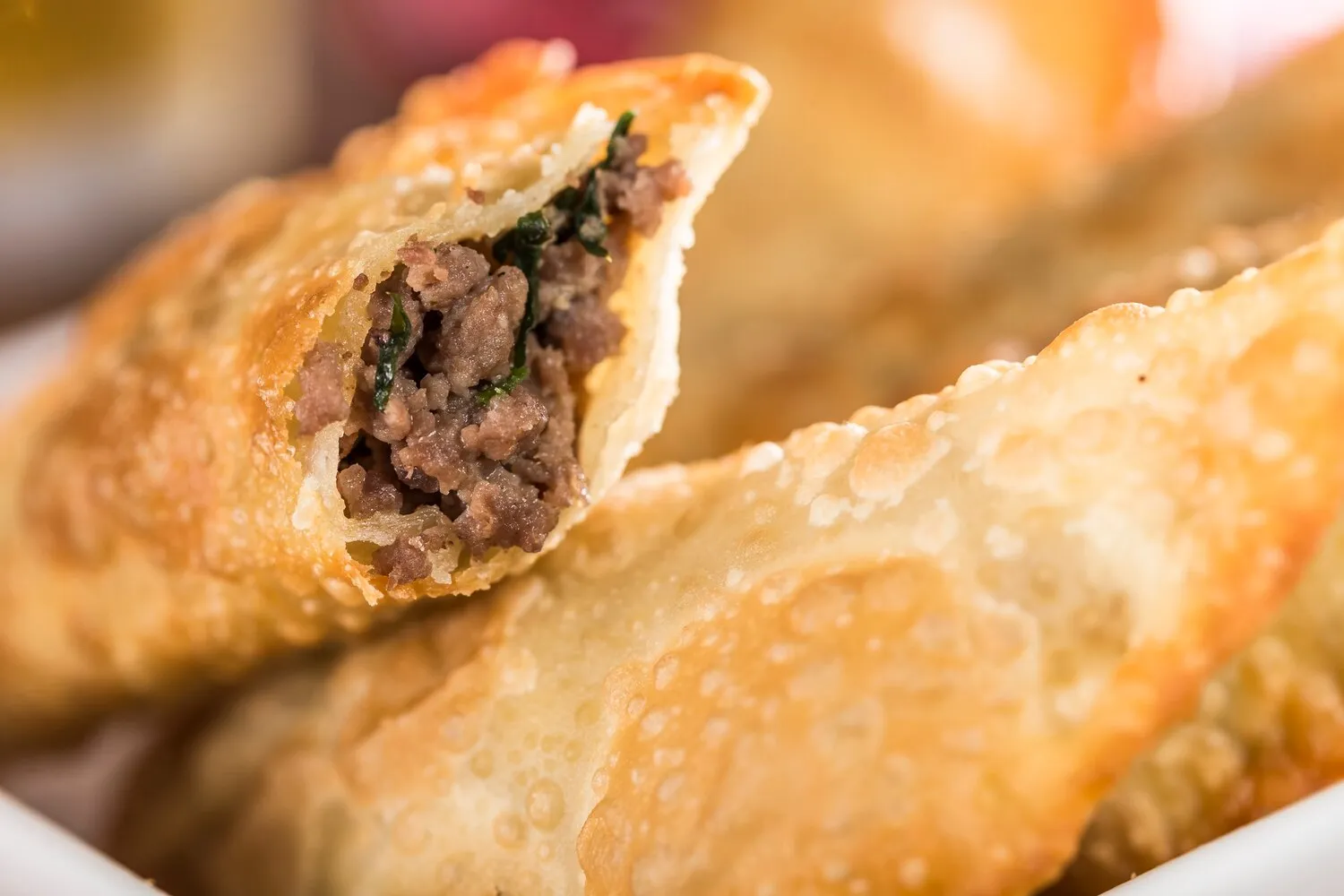

Pastel
Fried pastries with a variety of fillings, like cheese or meat. A popular Brazilian snack.
Tabela Nutricional
* O % do Valor Diário (VD) informa quanto um nutriente em uma porção de alimento contribui para uma dieta diária. 2.000 calorias por dia são usadas para conselhos nutricionais gerais.
Recurso Premium
Boteco Amélia
Recurso Premium
Pastel's origins are debated, with theories pointing towards influences from Asian immigrants, specifically Chinese and Japanese. During World War II, many Japanese immigrants opened pastelarias to disguise their ethnicity due to anti-Japanese sentiment. They adapted Chinese spring rolls, offering a familiar yet uniquely Brazilian snack. Others believe it was introduced by Polish immigrants during the same period, who were also trying to assimilate.
Recurso Premium
Pastel is a quintessential Brazilian street food, deeply ingrained in the country's culinary culture. It's readily available at street markets (feiras), fairs, and casual eateries.
Street Market Staple
Pastel is a must-have at Brazilian street markets, where it's typically enjoyed with a cup of sugarcane juice (caldo de cana). The combination is a beloved and iconic Brazilian experience.
Family Gatherings and Celebrations
While mostly enjoyed as a quick snack, pastel can also be found at casual family gatherings and celebrations. They are easy to make in large batches, making them perfect for feeding a crowd.
Regional Variations
Different regions of Brazil have their own unique pastel fillings and variations. For example, in some coastal areas, seafood fillings are more common, while inland regions might favor local meats or vegetables.
Recurso Premium
Pastéis offer a delightful combination of savory and crispy flavors, with a wide range of fillings to suit every palate.
The key flavors come from the crispy, deep-fried pastry dough which is traditionally made from wheat flour, vegetable oil or lard, salt, and sometimes cachaça. Common fillings include ground beef (carne), cheese (queijo), shredded chicken (frango), hearts of palm (palmito), codfish (bacalhau), and shrimp (camarão). Vegetarian options with vegetables are also popular. Seasoning typically involves garlic, onions, parsley, oregano, and various regional spices. The frying process provides a rich, oily crispiness that complements the savory fillings.
Recurso Premium
Dough Preparation
The dough should be thin and elastic, allowing it to puff up and become crispy during frying. Resting the dough for at least 30 minutes helps relax the gluten, making it easier to roll out thinly.
Filling Precautions
Avoid overfilling the pastel, as this can cause it to burst during frying. Also, ensure that the filling is not too wet, as excess moisture can make the pastry soggy.
Frying Temperature
Maintain a consistent frying temperature of around 350-375°F (175-190°C) to ensure the pastel cooks evenly and becomes golden brown and crispy. Avoid overcrowding the fryer, as this can lower the oil temperature and result in soggy pastéis.
Serving Suggestions
Pastel is best served immediately after frying, while it's still hot and crispy. Popular accompaniments include hot sauce (molho de pimenta), vinegar, and sugarcane juice.
Recurso Premium
Explore pratos e restaurantes adicionais de Brazilian
Explorar BrazilianDescubra os melhores restaurantes e experiências culinárias em São Bernardo do Campo.
Explorar São Bernardo do CampoSaiba mais sobre a cultura gastronômica, a cena de restaurantes e o patrimônio culinário de Brazil.
Explorar Brazil