
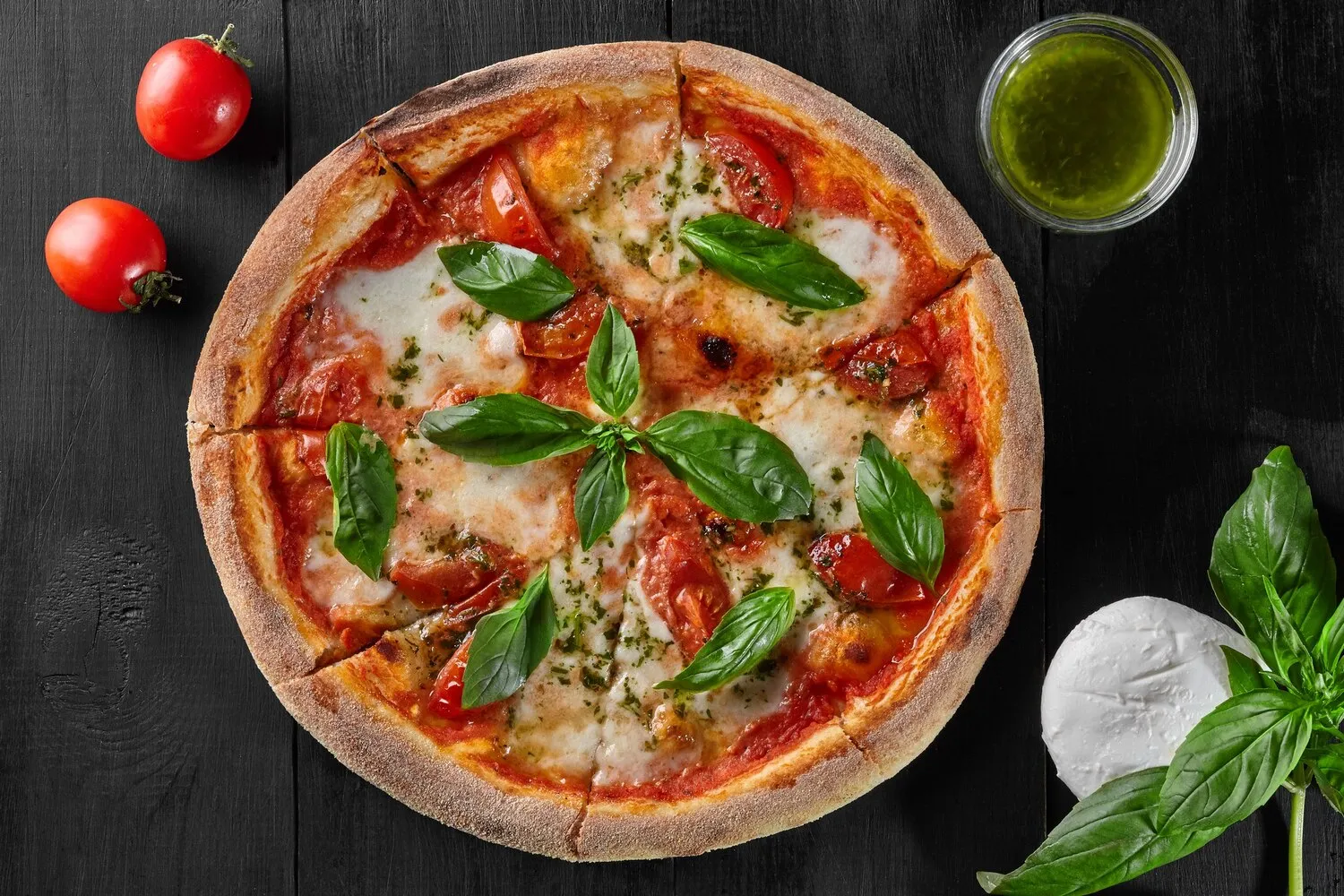

Margherita Pizza
Simple yet classic pizza with tomato sauce, mozzarella, and basil.
Tabela Nutricional
* O % do Valor Diário (VD) informa quanto um nutriente em uma porção de alimento contribui para uma dieta diária. 2.000 calorias por dia são usadas para conselhos nutricionais gerais.
Recurso Premium
Recurso Premium
Pizza, in its rudimentary forms, has existed for centuries in the Mediterranean. However, the Margherita pizza, as we know it, is said to have originated in Naples in 1889. Legend claims that it was created by Raffaele Esposito of Pizzeria Brandi in honor of Queen Margherita of Savoy's visit. The pizza's colors – red (tomato), white (mozzarella), and green (basil) – were chosen to represent the Italian flag.
Recurso Premium
The Margherita pizza is more than just a dish; it's a symbol of Italian culinary pride and national identity. It embodies simplicity, quality ingredients, and regional tradition.
Symbol of Naples
The Margherita pizza is intrinsically linked to the city of Naples, considered the birthplace of pizza. It represents Neapolitan culinary heritage and craftsmanship.
Italian Flag
The pizza's colors intentionally represent the Italian flag, making it a patriotic symbol and a source of national pride.
Simplicity and Quality
The Margherita pizza highlights the Italian culinary philosophy of using few, high-quality ingredients to create a delicious and satisfying dish.
Popularity and Adaptation
Its immense popularity worldwide has led to countless variations, yet the classic Margherita remains a benchmark of pizza excellence.
Recurso Premium
The Margherita pizza is celebrated for its simple yet harmonious blend of fresh flavors.
The flavor profile is primarily dictated by the sweet acidity of the tomato sauce, the creamy richness of the mozzarella, and the fragrant, slightly peppery notes of fresh basil. The crust provides a neutral, slightly charred base, allowing the other ingredients to shine. A high-quality olive oil often adds a subtle fruitiness and richness.
Recurso Premium
Tomato Sauce Quality
Use San Marzano tomatoes for the sauce, as they have a naturally sweet and low-acid flavor. Avoid overly processed or sweetened sauces.
Mozzarella Choice
Fresh mozzarella (fior di latte) is preferred for its creamy texture and mild flavor. Avoid pre-shredded mozzarella, as it contains cellulose that can hinder melting.
Basil Freshness
Use fresh basil leaves, added after baking to preserve their aroma and prevent them from burning.
Oven Temperature
A very high oven temperature (ideally 800-900°F or 425-480°C) is crucial for achieving a crispy crust and properly melted cheese. A pizza stone or steel can help retain heat.
Dough Hydration
A well-hydrated dough, around 65-70% hydration, creates a light and airy crust. Allowing the dough to proof properly develops flavor and texture.
Recurso Premium
Explore pratos e restaurantes adicionais de Pizza
Explorar PizzaDescubra os melhores restaurantes e experiências culinárias em São Gonçalo.
Explorar São GonçaloSaiba mais sobre a cultura gastronômica, a cena de restaurantes e o patrimônio culinário de Brazil.
Explorar Brazil