
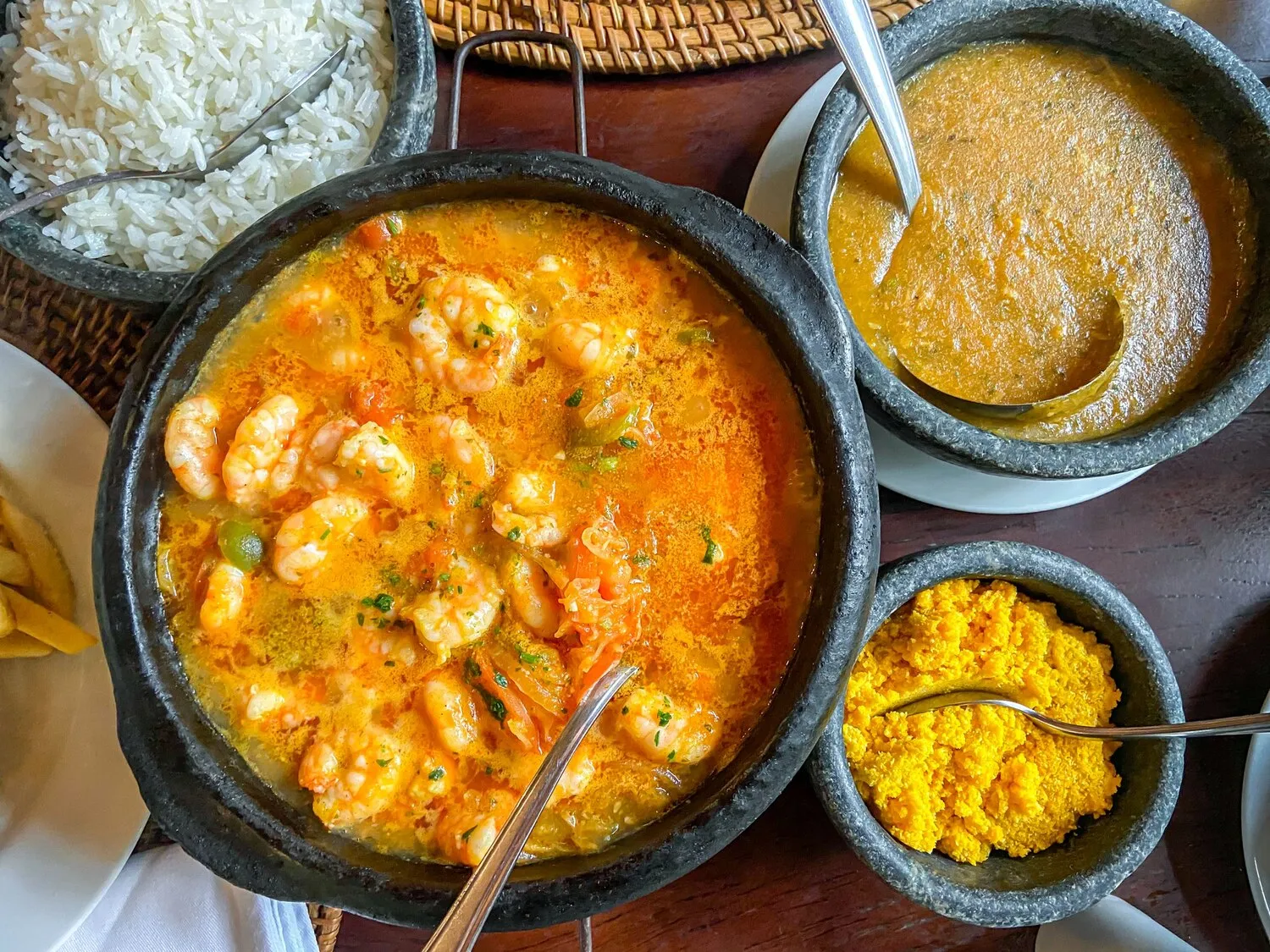

Moqueca Capixaba
Traditional Brazilian seafood stew, cooked in a clay pot with fish, tomatoes, onions, garlic, cilantro, and annatto (urucum), giving it a distinctive orange color. Often served with pirão (a creamy cassava porridge) and rice.
Tabela Nutricional
* O % do Valor Diário (VD) informa quanto um nutriente em uma porção de alimento contribui para uma dieta diária. 2.000 calorias por dia são usadas para conselhos nutricionais gerais.
Recurso Premium
Taberna do Peixe
Recurso Premium
Moqueca Capixaba's origins are rooted in the Indigenous, African, and Portuguese influences that have shaped Brazilian cuisine. Indigenous populations used clay pots for cooking fish stews, while African culinary traditions brought ingredients like palm oil (dendê, though not used in Capixaba moqueca) and specific cooking techniques. Portuguese colonization further influenced the dish with ingredients like tomatoes, onions, and garlic.
Recurso Premium
Moqueca Capixaba is a symbol of Espírito Santo state's culinary identity and is deeply intertwined with its coastal culture. It is a dish shared among family and friends, representing hospitality and tradition.
Family Gatherings
Moqueca Capixaba is often prepared for special occasions and family gatherings, serving as a centerpiece of the meal and symbolizing unity and togetherness.
Clay Pot Tradition
The use of a traditional clay pot (panela de barro) is integral to the preparation of Moqueca Capixaba. The clay pot imparts a unique flavor to the dish and helps to retain heat, keeping the stew warm for a longer period.
Regional Pride
Moqueca Capixaba is a source of regional pride for the people of Espírito Santo. They consider it to be a distinct and superior version of moqueca compared to the Moqueca Baiana.
Recurso Premium
Moqueca Capixaba boasts a light, fresh, and subtly sweet flavor profile derived from fresh seafood and aromatic vegetables. The urucum (annatto) adds a mild earthy note and characteristic color.
The predominant flavor is that of the fresh fish (typically a white fish such as sea bass or grouper) which is enhanced by the sweetness of tomatoes and onions. Garlic and cilantro contribute aromatic depth and a refreshing herbal note. Annatto (urucum) seeds infuse a subtle, earthy flavor and vibrant orange color, but they do not contribute any heat. This moqueca avoids the use of dendê oil and coconut milk, common in Moqueca Baiana, resulting in a lighter, cleaner taste.
Recurso Premium
Quality of Ingredients
Use the freshest possible fish and ripe, flavorful tomatoes for the best results. The quality of the ingredients directly impacts the final taste of the moqueca.
Clay Pot Seasoning
If using a new clay pot, it is crucial to season it properly before the first use. This usually involves soaking the pot in water for several hours and then simmering it with oil to prevent cracking and impart a subtle flavor.
Layering Ingredients
Layer the ingredients carefully in the pot, starting with onions, then tomatoes, garlic, and finally the fish. This layering technique allows the flavors to infuse into the fish evenly.
Gentle Simmering
Cook the moqueca over low heat to allow the flavors to meld without overcooking the fish. Avoid stirring vigorously to prevent the fish from breaking apart.
Recurso Premium
Explore pratos e restaurantes adicionais de Traditional Brazilian Stew
Explorar Traditional Brazilian StewDescubra os melhores restaurantes e experiências culinárias em São Gonçalo.
Explorar São GonçaloSaiba mais sobre a cultura gastronômica, a cena de restaurantes e o patrimônio culinário de Brazil.
Explorar Brazil