
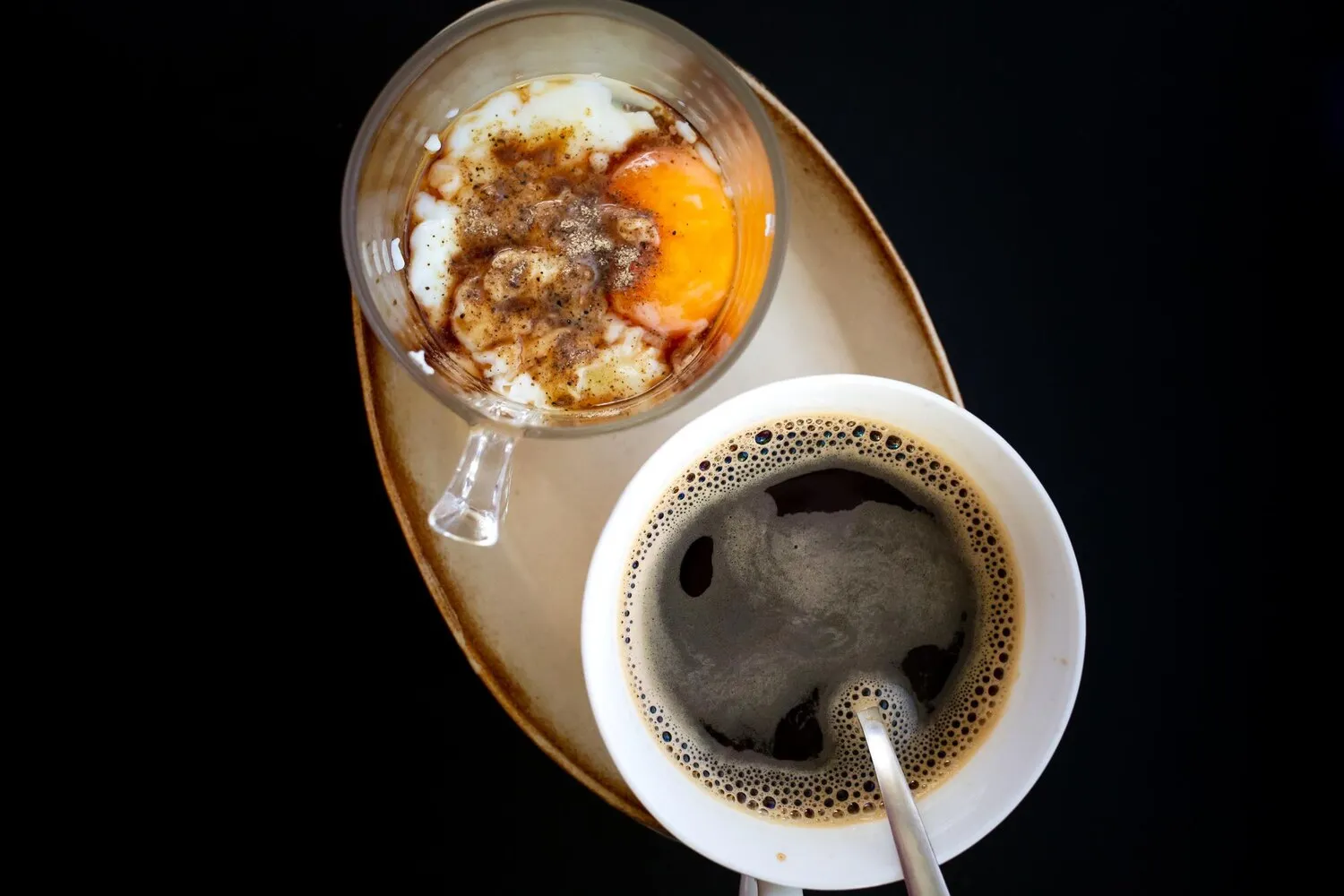

Espresso
Concentrated coffee brewed by forcing hot water through finely-ground coffee beans.
Tabela Nutricional
* O % do Valor Diário (VD) informa quanto um nutriente em uma porção de alimento contribui para uma dieta diária. 2.000 calorias por dia são usadas para conselhos nutricionais gerais.
Recurso Premium
Café Raphaella
Recurso Premium
Espresso's origins trace back to late 19th-century Italy, driven by a desire for faster coffee preparation to meet the demands of the industrial era. Angelo Moriondo patented a 'new steam machinery for the economic and instantaneous confection of coffee beverage' in 1884, but it was Luigi Bezzera's improvements and subsequent patent in 1903 that truly laid the foundation for modern espresso machines. Desiderio Pavoni partnered with Bezzera and further refined the design, introducing the first commercial espresso machine at the 1906 Milan Fair.
Recurso Premium
Espresso is deeply ingrained in Italian culture, serving as a daily ritual and a social cornerstone. It extends beyond Italy and is globally cherished.
Italian Coffee Culture
In Italy, espresso is typically consumed quickly at the bar, often standing. It's a fast and efficient way to enjoy a caffeine boost and socialize briefly. Ordering 'un caffè' will almost always get you an espresso.
Social Ritual
Coffee breaks, particularly espresso breaks, are common throughout the workday and provide opportunities for people to connect and chat. Espresso bars serve as community hubs.
Global Popularity
Espresso has become the foundation for countless coffee drinks worldwide, including lattes, cappuccinos, macchiatos, and Americanos. Its influence on coffee culture is undeniable.
Recurso Premium
Espresso boasts an intense and complex flavor profile, characterized by a balance of bitterness, sweetness, acidity, and body.
The primary flavors in espresso derive from the coffee beans themselves, the roasting process, and the brewing method. Bitterness comes from quinic acids and phenylindanes that are created during roasting, and it's balanced by the sweetness derived from caramelized sugars. Acidity adds brightness and complexity, showcasing fruity or floral notes depending on the bean origin. The body refers to the mouthfeel, ranging from light and delicate to rich and syrupy. Crema, the foamy layer on top, contributes to the overall aroma and texture. Flavor defects include sourness (under-extraction), excessive bitterness (over-extraction), and lack of sweetness.
Recurso Premium
Grind Size
The grind size is crucial for proper extraction. It should be fine enough to create resistance but not so fine as to cause channeling or over-extraction. Experiment with grind settings to find the sweet spot for your machine and beans.
Tamping
Consistent and even tamping is essential for creating a uniform puck of coffee grounds. Apply approximately 30 pounds of pressure to ensure even water flow.
Water Temperature
The ideal water temperature for espresso is around 195-205°F (90-96°C). Too hot, and the espresso will be bitter; too cold, and it will be sour.
Extraction Time
A standard double shot of espresso (about 2 ounces) should extract in around 25-30 seconds. Monitor the extraction time and adjust grind size accordingly.
Freshness
Use freshly roasted coffee beans and grind them just before brewing for the best flavor. Store beans in an airtight container away from heat and light.
Recurso Premium
Explore pratos e restaurantes adicionais de Coffee
Explorar CoffeeDescubra os melhores restaurantes e experiências culinárias em Sao Joao Batista.
Explorar Sao Joao BatistaSaiba mais sobre a cultura gastronômica, a cena de restaurantes e o patrimônio culinário de Brazil.
Explorar Brazil