
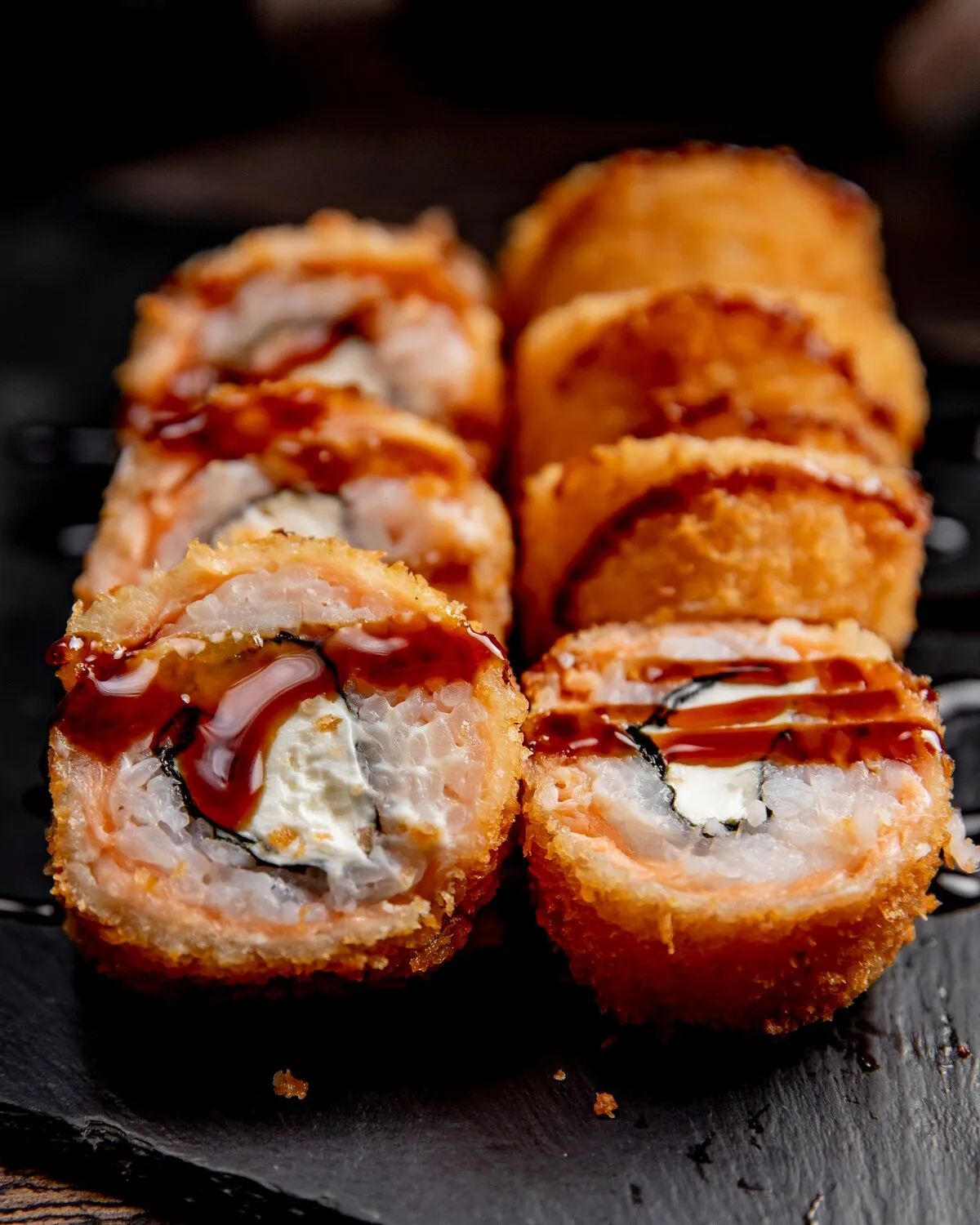

Hot Roll
Deep-fried sushi roll, a popular choice. The fillings and toppings vary.
Tabela Nutricional
* O % do Valor Diário (VD) informa quanto um nutriente em uma porção de alimento contribui para uma dieta diária. 2.000 calorias por dia são usadas para conselhos nutricionais gerais.
Recurso Premium
Recurso Premium
The hot roll, or deep-fried sushi roll, is a relatively modern adaptation of traditional sushi. It likely emerged in the United States as a way to appeal to a wider audience by incorporating familiar cooking techniques and flavors. The desire to make sushi more accessible and less intimidating led to innovations like the California roll and, subsequently, deep-fried variations.
Recurso Premium
The hot roll represents a fusion of Japanese culinary traditions with American preferences. It reflects a cultural exchange where traditional dishes are adapted and modified to suit local tastes and ingredients.
Accessibility and Familiarity
Deep-frying makes sushi more approachable for those unfamiliar with raw fish. The cooked filling and crispy texture can be more appealing to a broader audience.
Americanized Sushi
Hot rolls are often considered a form of 'Americanized sushi,' highlighting the adaptation and evolution of Japanese cuisine in the United States.
Restaurant Staple
Hot rolls are a common fixture on the menus of many American sushi restaurants, demonstrating their popularity and acceptance.
Recurso Premium
The flavor profile of a hot roll is a combination of savory, umami, and often sweet elements, with a contrasting crispy exterior and a soft, warm interior.
The specific flavors depend heavily on the fillings and toppings. Common fillings include imitation crab, avocado, cream cheese, and shrimp. The deep-frying process imparts a crispy, slightly oily texture and a richer flavor. Sauces like eel sauce (a sweet and savory glaze), spicy mayonnaise, or sriracha add layers of sweetness, spice, and umami. Sesame seeds are often sprinkled on top for added flavor and texture.
Recurso Premium
Temperature Control
Maintain a consistent oil temperature (around 350°F or 175°C) to ensure even cooking and a crispy crust without burning. A deep fryer or a heavy-bottomed pot with a thermometer is ideal.
Batter Consistency
Use a light batter (tempura batter or a similar mixture) to avoid a heavy, greasy coating. A thin coating allows the flavor of the filling to shine through.
Drying the Roll
Pat the sushi roll dry before battering to help the batter adhere properly and prevent splattering during frying. This also ensures a crispier finished product.
Don't Overcrowd
Fry the rolls in batches to prevent the oil temperature from dropping too low, which can result in a soggy roll.
Sauce Pairing
Consider the flavors of the filling when choosing sauces. Sweet and savory sauces like eel sauce complement many hot rolls, while spicy mayonnaise adds a kick.
Recurso Premium
Explore pratos e restaurantes adicionais de Hot Roll
Explorar Hot RollDescubra os melhores restaurantes e experiências culinárias em Taubaté.
Explorar TaubatéSaiba mais sobre a cultura gastronômica, a cena de restaurantes e o patrimônio culinário de Brazil.
Explorar Brazil