
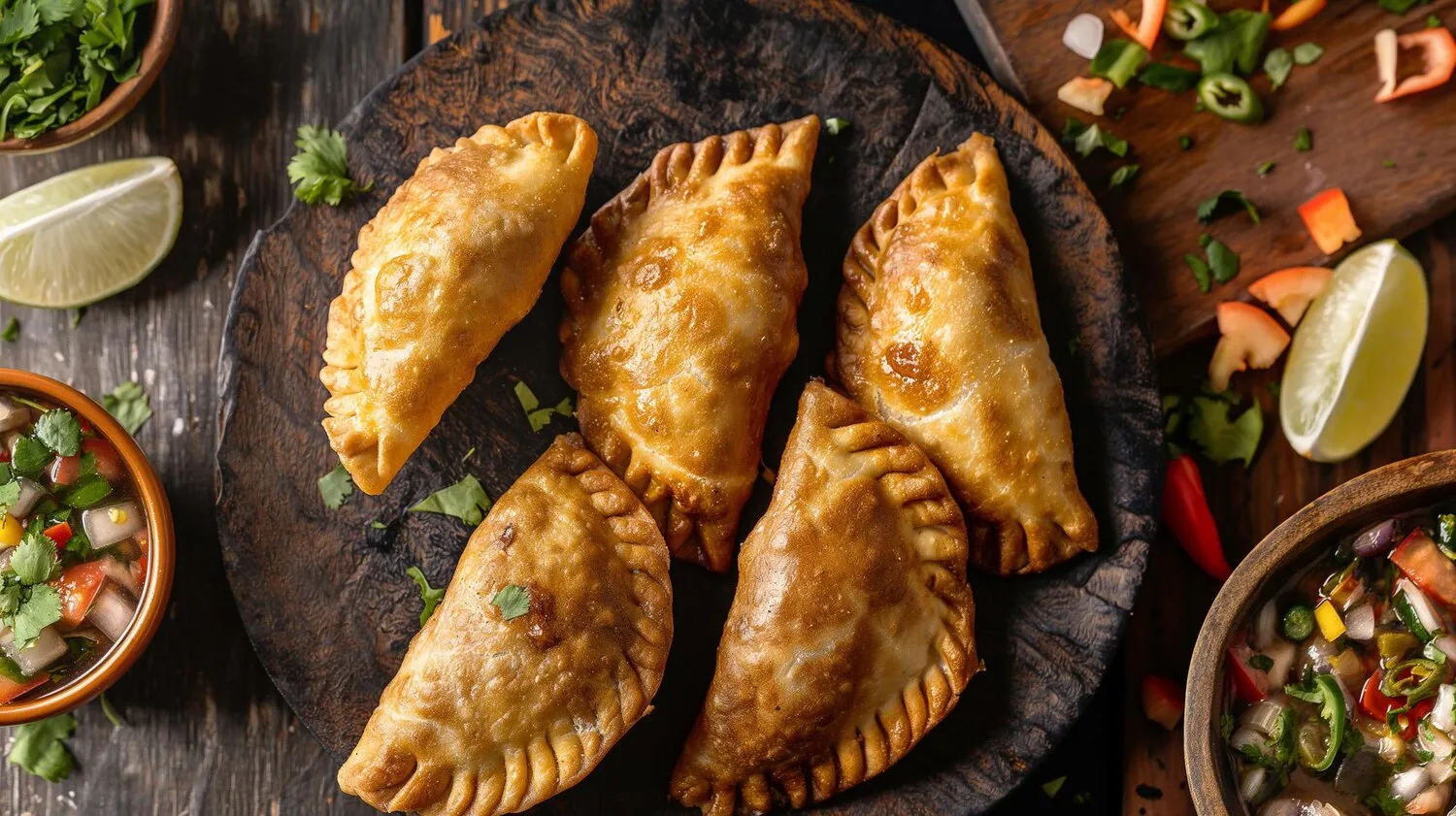

Empanadas
Savory pastries filled with meat, cheese, or vegetables.
Tabela Nutricional
* O % do Valor Diário (VD) informa quanto um nutriente em uma porção de alimento contribui para uma dieta diária. 2.000 calorias por dia são usadas para conselhos nutricionais gerais.
Recurso Premium
Recurso Premium
Empanadas have a long history, with roots tracing back to Galicia, Spain. The concept of filling pastry with savory ingredients likely evolved from similar dishes in Persia and the Middle East, brought to Spain during the Moorish conquests. From Spain, empanadas spread to Latin America during the colonial era, evolving and adapting to local ingredients and tastes.
Recurso Premium
Empanadas are deeply ingrained in the cultures of Spain and Latin America, representing comfort food, celebration, and a shared culinary heritage. They are often enjoyed as snacks, appetizers, or even a light meal.
Regional Variations
Each region in Latin America and Spain boasts its own unique empanada recipes, reflecting local ingredients and culinary traditions. Fillings, dough types, and cooking methods vary widely, showcasing the diversity of the dish.
Social Gatherings
Empanadas are a popular choice for parties, picnics, and family gatherings. They are easy to eat, transport, and share, making them a convenient and crowd-pleasing option.
Symbolic Food
In some cultures, empanadas hold symbolic significance, representing hospitality, abundance, and family bonds. They are often prepared for special occasions, such as holidays and celebrations.
Recurso Premium
Empanadas offer a delightful combination of savory and satisfying flavors, largely dependent on the filling. The crust provides a buttery or flaky canvas for the flavorful ingredients within.
The flavor profile of an empanada hinges on its filling. Common fillings include seasoned ground beef (often with onions, peppers, olives, and sometimes hard-boiled eggs), shredded chicken or pork, cheese (such as mozzarella, queso fresco, or Oaxaca), vegetables (like spinach, corn, mushrooms, or potatoes), and seafood (like shrimp or tuna). The pastry itself, typically made from wheat flour, butter or lard, and water or milk, offers a rich, slightly buttery, and sometimes flaky counterpoint to the savory filling. Spices such as cumin, paprika, oregano, and garlic are frequently used to enhance the flavors of the filling.
Recurso Premium
Perfecting the Dough
Use cold butter or lard when making the dough to achieve a flaky crust. Avoid overworking the dough, as this can result in a tough pastry. Allow the dough to rest in the refrigerator for at least 30 minutes before rolling it out.
Flavorful Fillings
Don't be afraid to experiment with different fillings and flavor combinations. Season the filling generously to ensure a flavorful result. Allow the filling to cool slightly before assembling the empanadas to prevent the dough from becoming soggy.
Sealing and Baking
Properly seal the empanadas to prevent the filling from leaking out during baking. Crimp the edges with a fork or use a special empanada press. Brush the empanadas with an egg wash before baking to create a golden-brown crust.
Recurso Premium
Explore pratos e restaurantes adicionais de Venezuelan
Explorar VenezuelanDescubra os melhores restaurantes e experiências culinárias em Willemstad.
Explorar WillemstadSaiba mais sobre a cultura gastronômica, a cena de restaurantes e o patrimônio culinário de Curacao.
Explorar Curacao