
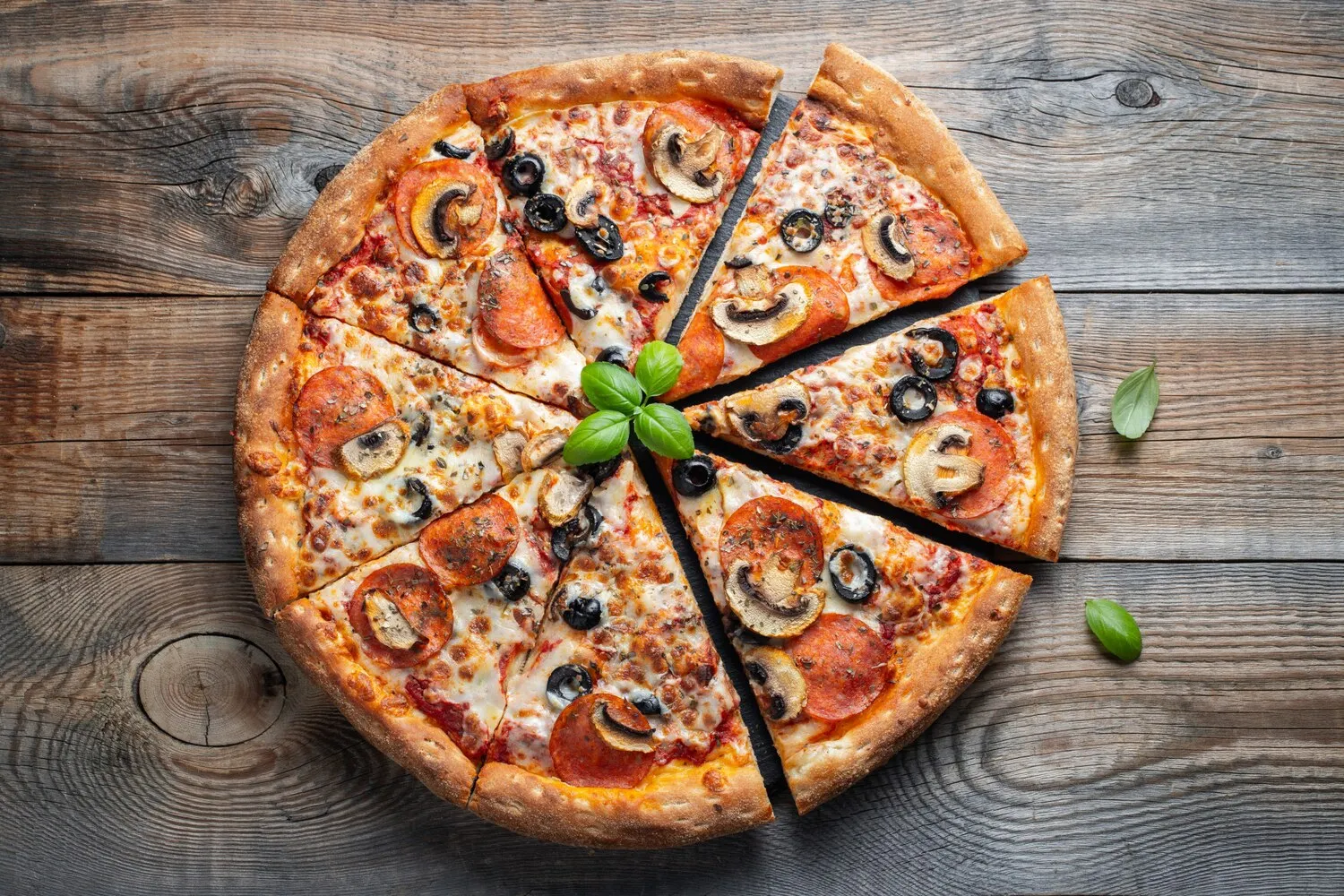

Pizza
Farinando offers a variety of pizzas.
Tabela Nutricional
* O % do Valor Diário (VD) informa quanto um nutriente em uma porção de alimento contribui para uma dieta diária. 2.000 calorias por dia são usadas para conselhos nutricionais gerais.
Recurso Premium
Recurso Premium
Pizza's history traces back to ancient flatbreads consumed in various cultures. However, the modern pizza, with its tomato base and mozzarella cheese, originated in Naples, Italy, in the 18th or early 19th century. It evolved from simple flatbreads sold by street vendors to a culinary staple, particularly among the working class.
Recurso Premium
Pizza holds immense cultural significance, particularly in Italy and the United States. It represents family meals, casual gatherings, and comfort food. The act of sharing a pizza is often associated with social bonding and celebration.
Italian Tradition
In Italy, pizza is often seen as a simple, affordable meal, deeply rooted in regional traditions and ingredients. Different regions boast unique pizza styles, reflecting local culinary preferences and available produce.
American Adaptation
In the United States, pizza has been significantly adapted and commercialized. Regional variations like New York-style, Chicago deep-dish, and California-style pizzas have emerged, each with distinct characteristics and loyal followings.
Global Phenomenon
Pizza has become a global phenomenon, with countless variations adapted to local tastes and ingredients. It's a ubiquitous food found in nearly every country, often modified to suit regional palates and preferences.
Recurso Premium
Pizza offers a versatile flavor profile, generally a combination of savory, tangy, and sometimes sweet, depending on the toppings. The base flavor comes from the dough, tomato sauce, and cheese, which are complemented by a wide array of ingredients.
The core flavors are built upon a simple base: dough, tomato sauce, and cheese (typically mozzarella). The dough provides a slightly yeasty and chewy foundation. The tomato sauce contributes acidity and sweetness. Mozzarella adds a mild, milky, and slightly salty flavor. The addition of toppings like pepperoni brings spice and saltiness, mushrooms add earthiness, onions offer pungency, peppers provide sweetness or heat, and herbs like basil contribute freshness and aromatic complexity. The overall flavor profile is highly customizable and can range from simple and comforting to complex and bold.
Recurso Premium
Dough Preparation
Use high-quality flour and allow sufficient time for the dough to rise properly. A slow fermentation process develops flavor and texture. Don't overwork the dough; gentle handling results in a lighter, airier crust.
Sauce Selection
Opt for high-quality tomato sauce or create your own from fresh, ripe tomatoes. Seasoning is key; a simple sauce with garlic, basil, and oregano can be incredibly flavorful.
Oven Temperature
A high oven temperature (ideally 450-500°F or 230-260°C) is crucial for achieving a crispy crust. Consider using a pizza stone or steel to retain heat and promote even cooking.
Topping Strategy
Don't overload the pizza with toppings; too many ingredients can lead to a soggy crust. Distribute toppings evenly for a balanced flavor profile in every bite.
Recurso Premium
Explore pratos e restaurantes adicionais de Pizza
Explorar PizzaDescubra os melhores restaurantes e experiências culinárias em Ancona.
Explorar AnconaSaiba mais sobre a cultura gastronômica, a cena de restaurantes e o patrimônio culinário de Italy.
Explorar Italy