
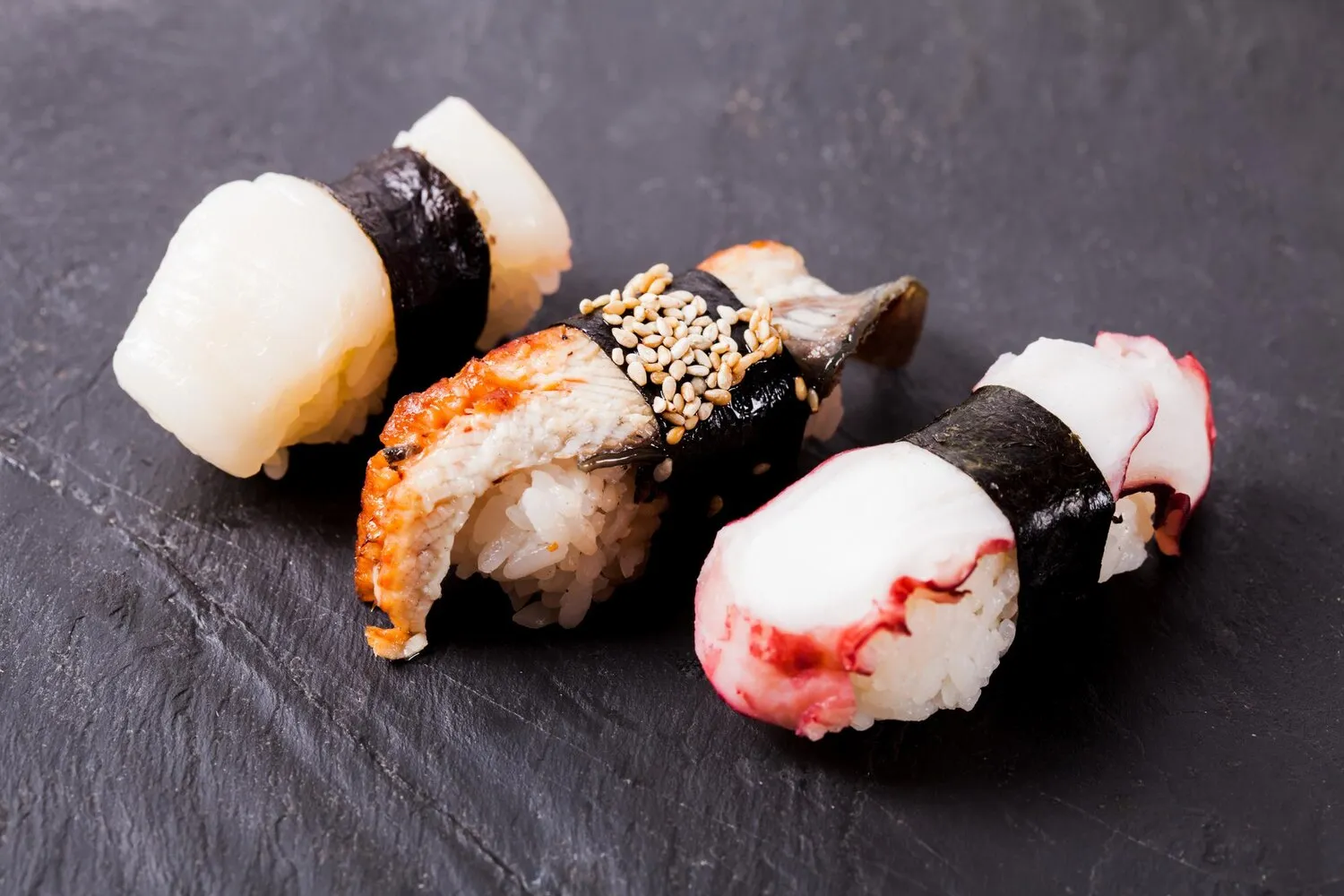

Nigiri
Nigiri is another classic Japanese dish consisting of a slice of raw fish over vinegared rice. It's a staple offering at most sushi restaurants like Insushi.
Tabela Nutricional
* O % do Valor Diário (VD) informa quanto um nutriente em uma porção de alimento contribui para uma dieta diária. 2.000 calorias por dia são usadas para conselhos nutricionais gerais.
Recurso Premium
Recurso Premium
Nigiri sushi's origins can be traced back to the Edo period (1603-1868) in Japan, when food preservation techniques were limited. Originally, fish was fermented with rice to extend its shelf life. Over time, this process evolved into the quicker, more palatable preparation of fresh fish served atop vinegared rice that we know as nigiri today.
Recurso Premium
Nigiri is deeply ingrained in Japanese culinary culture and etiquette. It represents a respect for the ingredients, particularly the freshness and quality of the fish, and the craftsmanship of the sushi chef.
Sushi Etiquette
There are specific ways to eat nigiri in Japan. It's best to dip the fish side into the soy sauce rather than the rice, to avoid making the rice too soggy. It's also considered polite to eat nigiri in one or two bites.
Omakase
Many sushi restaurants offer an 'omakase' experience, where the chef selects the nigiri and other dishes based on the freshest seasonal ingredients. This demonstrates trust in the chef's expertise.
Seasonal Fish
The type of fish used in nigiri often varies depending on the season, with certain species being considered more flavorful and desirable at different times of the year.
Recurso Premium
The flavor profile of nigiri is a delicate balance of umami, sweetness, and acidity. The fresh, clean taste of the fish is complemented by the slightly sour and subtly sweet vinegared rice.
The main flavor components include the clean, oceanic taste of raw fish (such as tuna, salmon, or yellowtail), the vinegared rice (shari), which provides a slightly sweet and tangy base, and optional additions like wasabi for a spicy kick, or soy sauce for added umami and saltiness. The flavor varies greatly depending on the type of fish used. Some fish, like tuna, have a rich, buttery flavor, while others, like snapper, are more delicate and mild.
Recurso Premium
Rice Temperature
The rice should be slightly warm (around body temperature) when forming the nigiri. This helps the rice bind together and enhances the overall texture.
Fish Quality
The freshness and quality of the fish are paramount. Look for fish that is vibrant in color, firm to the touch, and has a clean, fresh smell.
Wasabi Usage
Use wasabi sparingly. A small dab under the fish can enhance the flavor without overpowering the delicate taste of the fish.
Soy Sauce
High-quality soy sauce is crucial. Look for naturally brewed soy sauce with a rich, complex flavor. Avoid overly salty or artificial-tasting soy sauces.
Recurso Premium
Explore pratos e restaurantes adicionais de Nigiri
Explorar NigiriDescubra os melhores restaurantes e experiências culinárias em Bolzano.
Explorar BolzanoSaiba mais sobre a cultura gastronômica, a cena de restaurantes e o patrimônio culinário de Italy.
Explorar Italy