
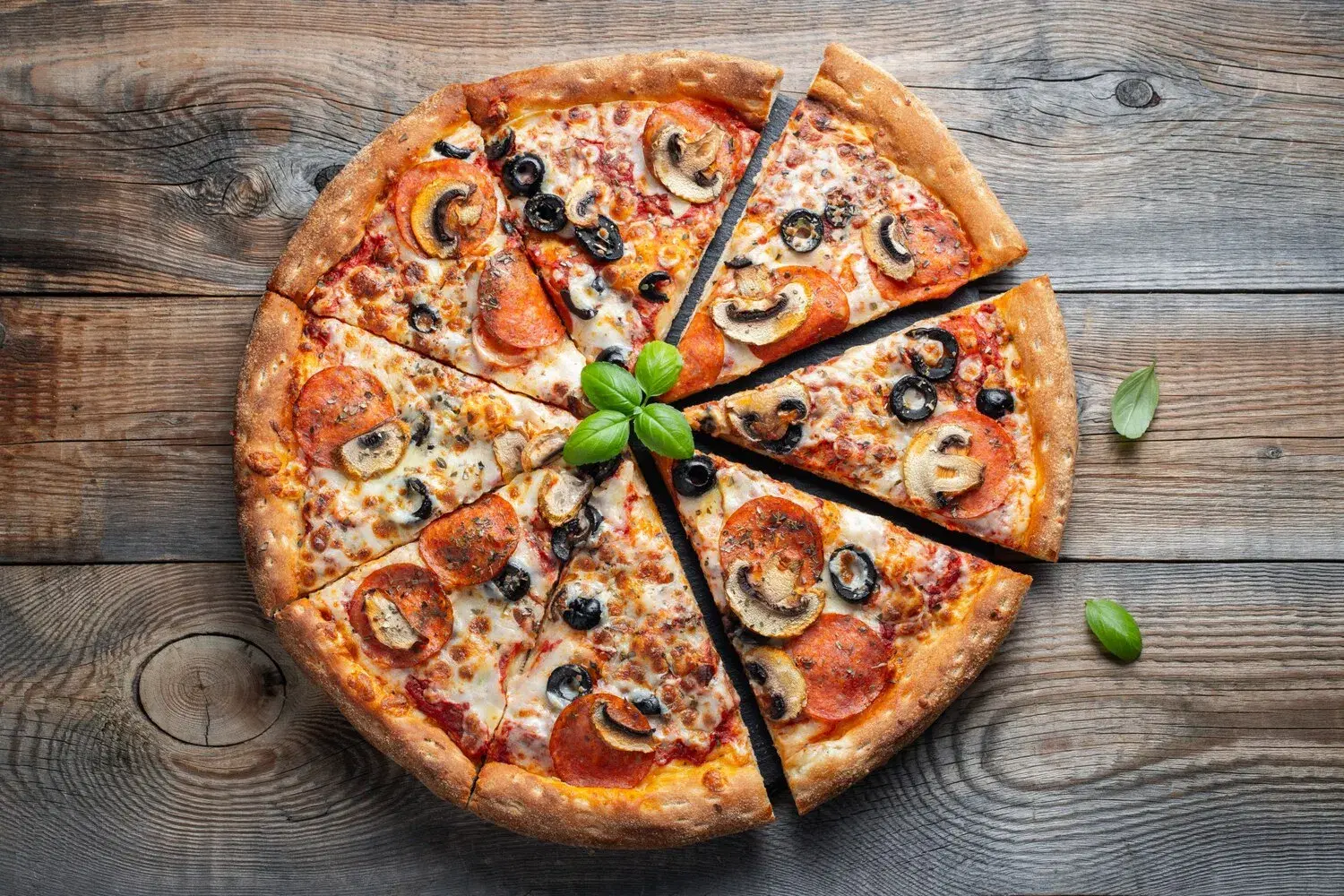

Pizza
DRAW Food offers a variety of pizzas. Specific types and descriptions are best found on their in-house menu or delivery platform menus.
Tabela Nutricional
* O % do Valor Diário (VD) informa quanto um nutriente em uma porção de alimento contribui para uma dieta diária. 2.000 calorias por dia são usadas para conselhos nutricionais gerais.
Recurso Premium
Recurso Premium
Pizza's origins can be traced back to ancient civilizations, with flatbreads topped with various ingredients being common in cultures across the Mediterranean. The modern pizza, however, evolved in Naples, Italy, during the 18th and 19th centuries, with the addition of tomatoes and mozzarella cheese.
Recurso Premium
Pizza is deeply ingrained in Italian culture and has become a global phenomenon, adapted and enjoyed in countless variations around the world. It represents a casual and communal dining experience.
Regional Variations
Different regions of Italy boast unique pizza styles. Neapolitan pizza is known for its thin, soft crust and simple toppings, while Roman pizza often features a crispier, thinner crust. Sicilian pizza (Sfincione) is thick and rectangular, and topped with breadcrumbs.
Social Gathering
Pizza is often associated with social gatherings, celebrations, and family meals. It's a food that is easy to share and enjoyed by people of all ages.
Pizza as a Symbol
Beyond its culinary appeal, pizza has become a cultural symbol, representing Italian heritage, comfort food, and the globalization of food culture.
Recurso Premium
Pizza offers a diverse range of flavors depending on the toppings used. However, the core flavors generally include savory, tangy, and sometimes sweet notes.
The foundational flavor profile consists of the slightly sweet and acidic tomato sauce, the creamy and mild mozzarella cheese (or other cheeses like provolone, parmesan or ricotta), and the savory, yeasty dough. Additional toppings like pepperoni, sausage, mushrooms, onions, peppers, olives, and herbs such as basil and oregano contribute a wide spectrum of tastes, from spicy and salty to earthy and sweet. Olive oil adds richness and enhances the other flavors.
Recurso Premium
Dough Preparation
Allow the dough to rise properly for the best texture. Cold fermentation (allowing the dough to rise slowly in the refrigerator) can enhance flavor and create a more complex crust.
Oven Temperature
A high oven temperature (around 450-500°F or 230-260°C) is crucial for achieving a crispy crust and melting the cheese evenly. Using a pizza stone or steel helps retain heat and create a professional result.
Topping Balance
Avoid overloading the pizza with toppings, as this can make the crust soggy. Use quality ingredients and strive for a balance of flavors.
Ordering Pizza
When ordering, consider the crust type (thin, thick, Neapolitan), sauce options, and topping combinations. Read online reviews for the best pizzerias in your area and don't be afraid to try unique topping combinations.
Recurso Premium
Explore pratos e restaurantes adicionais de Pizza
Explorar PizzaDescubra os melhores restaurantes e experiências culinárias em Trieste.
Explorar TriesteSaiba mais sobre a cultura gastronômica, a cena de restaurantes e o patrimônio culinário de Italy.
Explorar Italy