
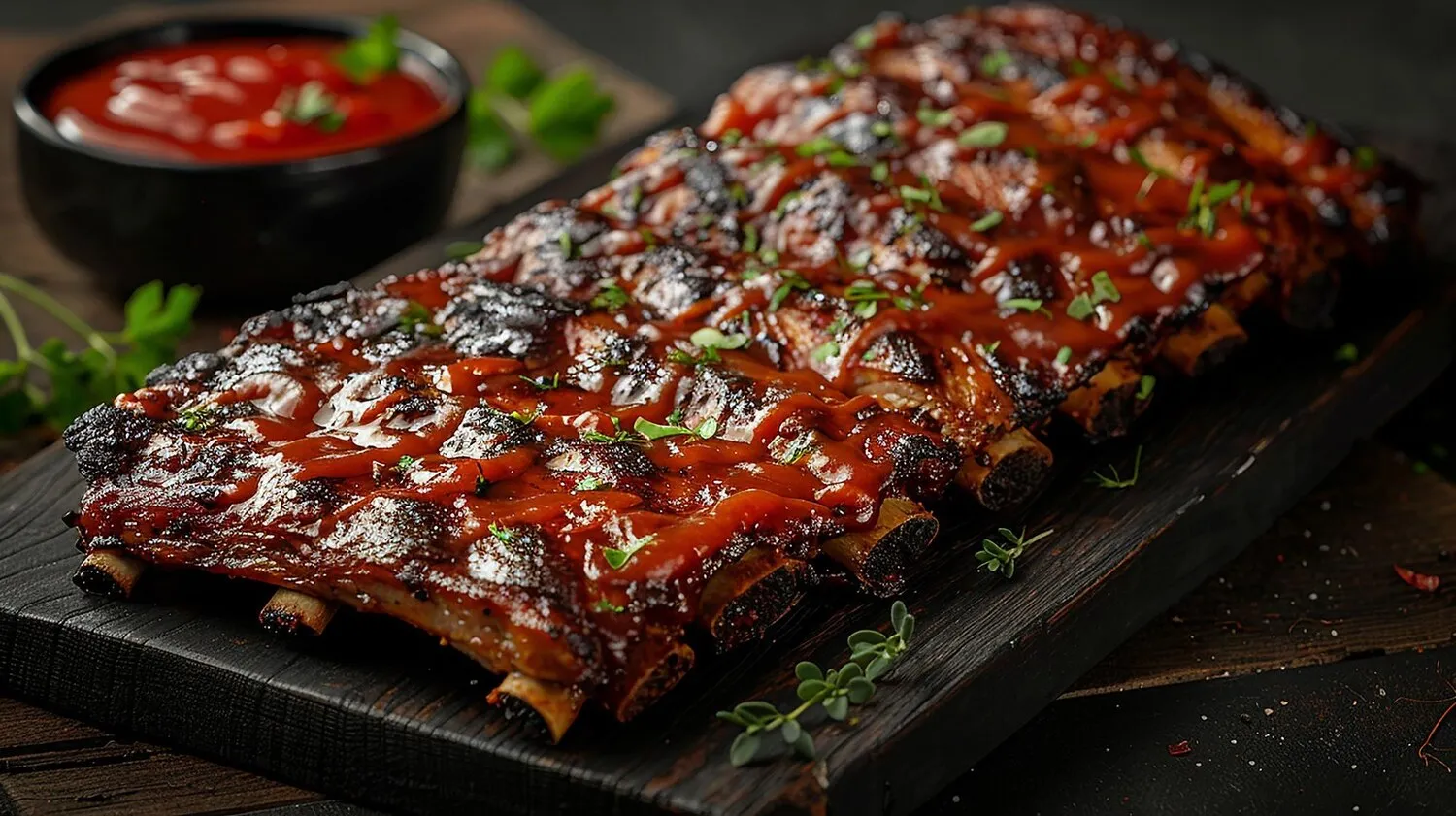

Spareribs
Spareribs are mentioned in several reviews as a popular and delicious choice.
Tabela Nutricional
* O % do Valor Diário (VD) informa quanto um nutriente em uma porção de alimento contribui para uma dieta diária. 2.000 calorias por dia são usadas para conselhos nutricionais gerais.
Recurso Premium
Recurso Premium
The concept of cooking ribs over fire is ancient, found in many cultures. Spareribs, as a specific cut and preparation, evolved in the United States, drawing influences from European barbecue techniques, particularly those brought by German and other European immigrants. Chinese cuisine also significantly impacted the development of spareribs, especially the use of sweet and savory sauces.
Recurso Premium
Spareribs are a staple of barbecue culture in the United States, particularly in the South and Midwest, and are a common dish at cookouts, family gatherings, and restaurants. They also hold cultural significance in Chinese cuisine, frequently served during celebrations and family meals.
American Barbecue Culture
Spareribs are central to barbecue traditions in regions like Kansas City, Memphis, and Texas, each with its own unique style of rubs, sauces, and cooking methods. Competitions are held showcasing the best ribs.
Chinese Culinary Traditions
In Chinese cuisine, spareribs are prepared with a variety of sauces and cooking techniques, often involving steaming, braising, or stir-frying. They symbolize prosperity and are frequently enjoyed during holidays and special occasions.
Recurso Premium
Spareribs offer a complex interplay of smoky, savory, and often sweet flavors, achieved through marinating, rubbing with spices, and slow cooking.
The primary flavor comes from the pork itself, a rich and fatty cut. Marinades typically include a base of soy sauce, vinegar (apple cider, rice wine, or balsamic), brown sugar or honey, garlic, ginger, and spices such as chili powder, paprika, cumin, and black pepper. The cooking process, often involving smoking or grilling, imparts a smoky flavor. Sauces, ranging from tangy barbecue sauces to sweet and sticky Asian-inspired glazes, further enhance the taste profile, adding layers of sweetness, acidity, and spice.
Recurso Premium
Membrane Removal
Removing the thin membrane on the underside of the ribs allows for better smoke penetration and more tender meat. Use a butter knife to loosen the membrane, then grip it with a paper towel and pull it off.
Low and Slow Cooking
Cooking spareribs at a low temperature (around 225-250°F) for several hours is crucial for breaking down the connective tissue and rendering the fat, resulting in tender, juicy ribs. Consider using the '3-2-1' method for baby back ribs, or a similar process for spareribs.
Moisture Control
Maintaining moisture during cooking is essential to prevent the ribs from drying out. Use a water pan in your smoker or grill, or spritz the ribs with apple juice or other liquids periodically.
Internal Temperature
The ideal internal temperature for spareribs is around 195-205°F. At this temperature, the collagen will have broken down, and the meat will be tender and pull away from the bone easily. Use a meat thermometer to check the temperature.
Recurso Premium
Explore pratos e restaurantes adicionais de Meat
Explorar MeatDescubra os melhores restaurantes e experiências culinárias em Oss.
Explorar OssSaiba mais sobre a cultura gastronômica, a cena de restaurantes e o patrimônio culinário de Netherlands.
Explorar Netherlands