
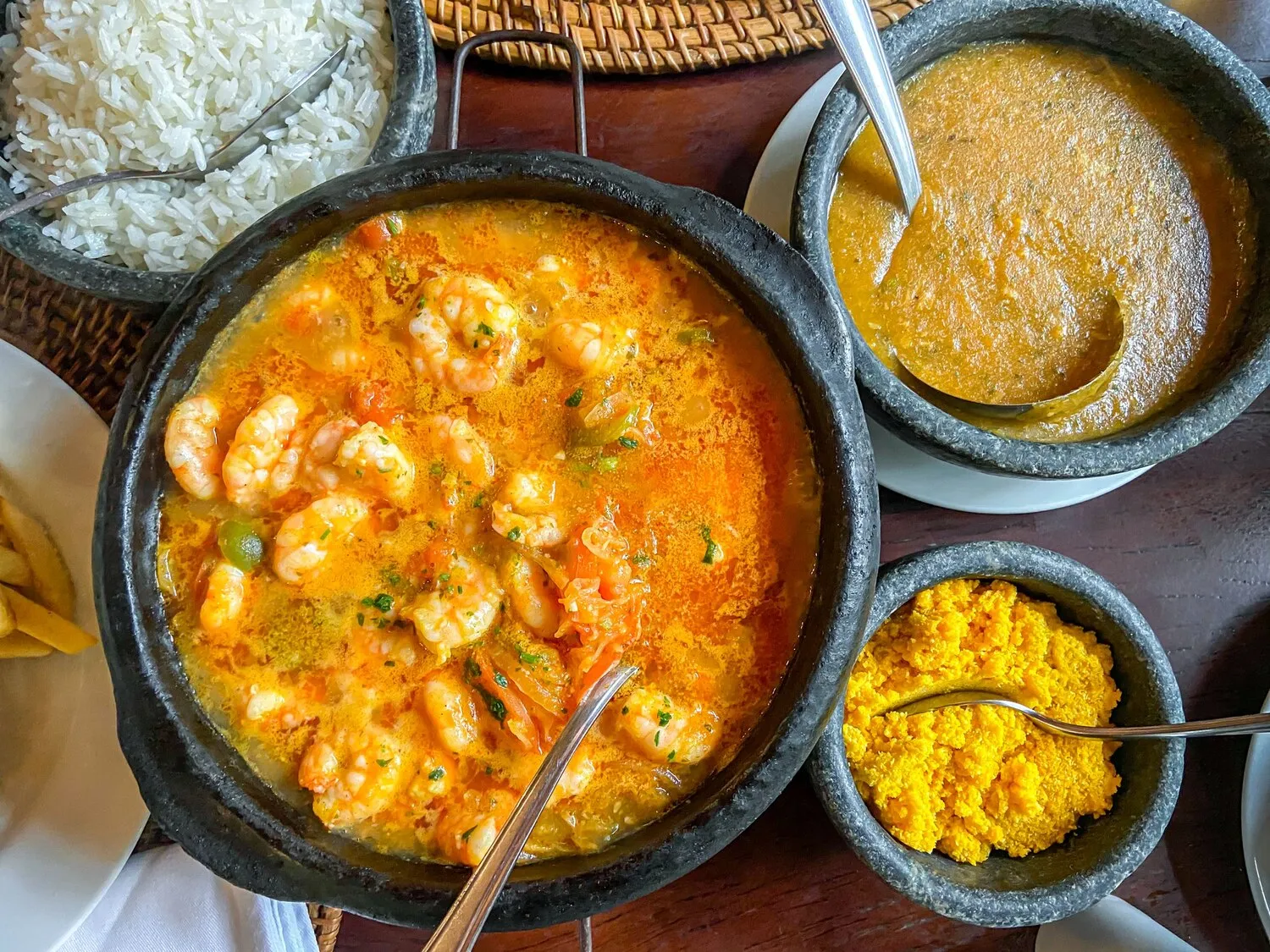

Moqueca Capixaba
Traditional Brazilian seafood stew with fish, tomatoes, onions, garlic, cilantro, and annatto oil, simmered in a clay pot. Likely contains other seafood components as well.
Tabela Nutricional
* O % do Valor Diário (VD) informa quanto um nutriente em uma porção de alimento contribui para uma dieta diária. 2.000 calorias por dia são usadas para conselhos nutricionais gerais.
Recurso Premium
Recurso Premium
Moqueca Capixaba's origins are intertwined with the indigenous peoples of Espírito Santo, Brazil, who used clay pots to cook fish stews long before European colonization. Over time, African and Portuguese influences were incorporated, particularly with ingredients like dendê oil (palm oil) and coconut milk in other regional variations (Moqueca Baiana), but the Capixaba version notably excludes these. The simplicity of the ingredients and the clay pot cooking method reflect a historical reliance on readily available resources.
Recurso Premium
Moqueca Capixaba is deeply ingrained in the culinary identity of Espírito Santo, Brazil. It's more than just a dish; it's a symbol of regional pride, family tradition, and a connection to the sea. Sharing a Moqueca is a communal experience, often enjoyed with family and friends.
Regional Identity
Moqueca Capixaba is considered a defining dish of Espírito Santo, setting it apart from other Brazilian regional cuisines. It is fiercely protected as a unique culinary heritage.
Family Gatherings
Preparing and enjoying Moqueca is often a central part of family celebrations and gatherings. Recipes are passed down through generations, each family adding their own personal touch.
Clay Pot Tradition
The use of a clay pot (panela de barro) is essential for authentic Moqueca Capixaba. The porous nature of the clay helps to retain heat and distribute it evenly, enhancing the flavors of the ingredients.
Seafood Significance
Given Espírito Santo's coastal location, fresh seafood plays a vital role in the region's cuisine. Moqueca Capixaba is a testament to the abundance and quality of the seafood available.
Recurso Premium
Moqueca Capixaba presents a delicate and savory flavor profile, emphasizing the freshness of the seafood and the subtle sweetness of tomatoes and onions. The dish is aromatic, with garlic and cilantro adding bright herbal notes, while the annatto oil provides a mild earthy undertone and a vibrant color.
The primary flavor is derived from the fresh fish, typically white fish like sea bass or grouper. The tomatoes and onions create a subtly sweet and acidic base. Garlic provides pungent aromatics, while cilantro introduces a fresh, herbaceous element. Annatto oil (urucum oil) contributes a mild earthy flavor and a reddish-orange hue, visually enhancing the dish. The absence of dendê oil and coconut milk, which are present in Moqueca Baiana, allows the natural flavors of the seafood to shine through more distinctly, resulting in a lighter and less intense flavor profile.
Recurso Premium
Freshness is Key
Use the freshest seafood possible. This will significantly impact the overall flavor of the dish. Local, seasonal fish is always preferred.
Clay Pot Seasoning
Before using a new clay pot, it should be seasoned properly. This typically involves curing it with oil or soaking it in water to prevent cracking during cooking.
Gentle Simmering
Avoid boiling the Moqueca. Gentle simmering allows the flavors to meld together without toughening the fish. Patience is key.
Layering Ingredients
Layering the ingredients in the pot helps to distribute the flavors evenly. Start with a base of onions and tomatoes, then add the fish, followed by more vegetables and aromatics.
Urucum Oil Authenticity
Using real urucum oil (annatto oil) is crucial for the authentic flavor and color. Look for oil made with annatto seeds simmered in a neutral oil.
Recurso Premium
Explore pratos e restaurantes adicionais de Stew
Explorar StewDescubra os melhores restaurantes e experiências culinárias em São Gonçalo.
Explorar São GonçaloSaiba mais sobre a cultura gastronômica, a cena de restaurantes e o patrimônio culinário de Portugal.
Explorar Portugal