
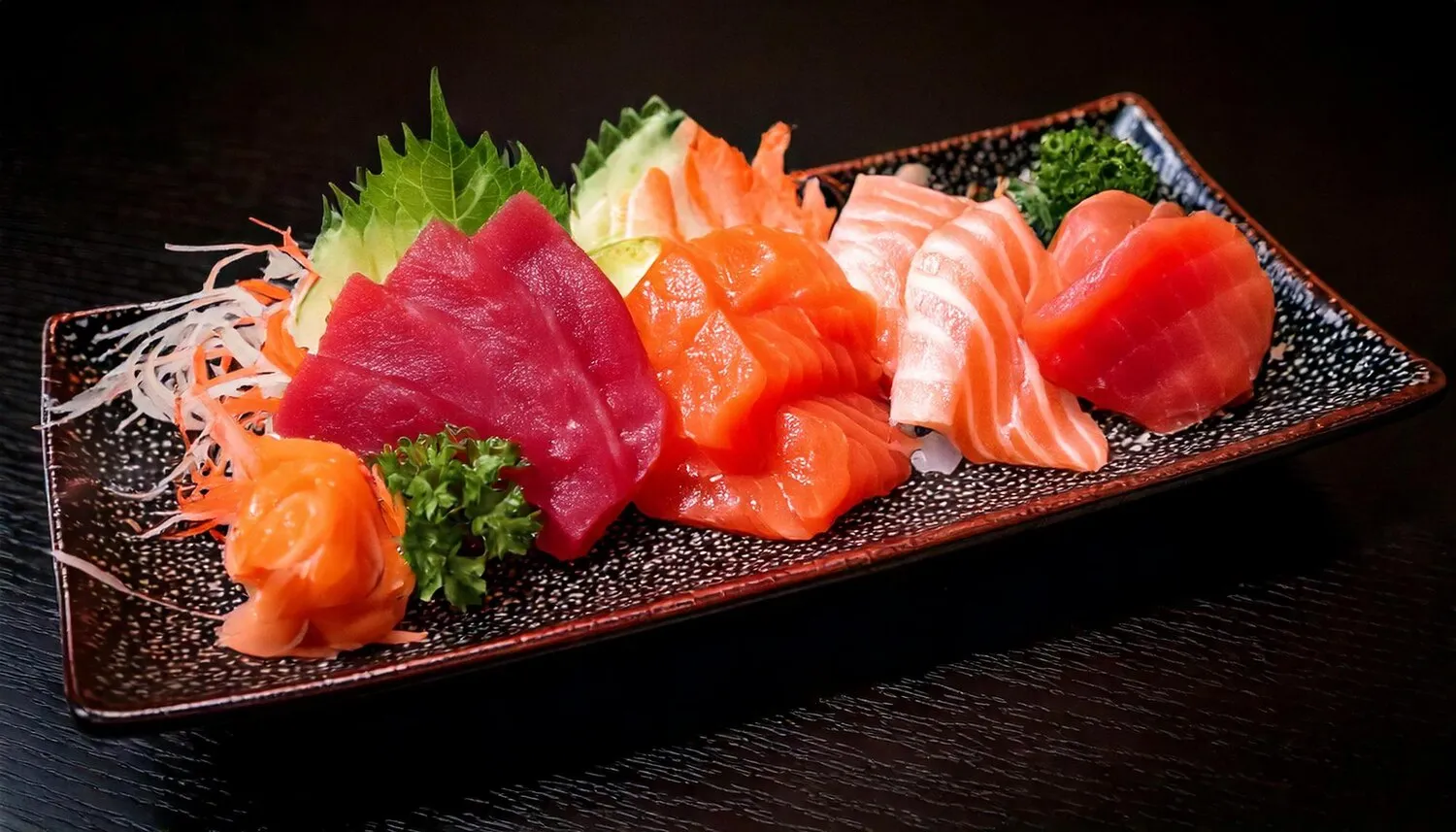

Sashimi
Selection of sashimi
Tabela Nutricional
* O % do Valor Diário (VD) informa quanto um nutriente em uma porção de alimento contribui para uma dieta diária. 2.000 calorias por dia são usadas para conselhos nutricionais gerais.
Recurso Premium
Recurso Premium
Sashimi's origins can be traced back to early Japanese cuisine, evolving from a need to consume fresh seafood. Techniques for preserving and preparing fish were developed, eventually leading to the art of slicing and serving raw fish as a distinct dish.
Recurso Premium
Sashimi is deeply embedded in Japanese culinary culture, representing a focus on freshness, simplicity, and respect for ingredients. It is often associated with special occasions and fine dining.
Presentation
The artful arrangement of sashimi is considered crucial. The presentation aims to showcase the beauty of the fish and enhance the dining experience, often using garnishes like seaweed, daikon radish, and shiso leaves.
Ingredient Quality
The quality of the fish is paramount. Only the freshest, highest-grade fish is suitable for sashimi. This reflects a cultural emphasis on sourcing the best ingredients.
Respect for the Chef
Preparing sashimi requires skill and precision. Chefs are highly trained in selecting, preparing, and slicing fish to maximize flavor and texture, and eating sashimi is considered showing respect to the chef's craftsmanship.
Recurso Premium
The flavors of sashimi are primarily defined by the freshness and quality of the fish, highlighting its natural taste and texture. Subtle accompanying flavors enhance the experience.
The dominant flavor is the clean, delicate taste of the raw fish itself. Different types of fish offer varying flavor profiles, from the buttery richness of tuna to the subtle sweetness of snapper. Wasabi provides a pungent kick, while soy sauce adds saltiness and umami. Ginger serves as a palate cleanser.
Recurso Premium
Wasabi Usage
Apply a small amount of wasabi directly to the fish rather than mixing it into the soy sauce. This allows you to control the intensity of the flavor and avoid overpowering the fish's natural taste.
Soy Sauce Dipping
Dip only the fish into the soy sauce, not the rice (if eating nigiri) or other garnishes. Over-soaking the fish can mask its flavor.
Eating Order
Consider eating sashimi in order of increasing richness, starting with lighter, milder fish and moving towards richer, more flavorful varieties. This allows you to appreciate the subtle nuances of each type.
Freshness Check
When eating at home, look for firm flesh and a clean, fresh smell. Avoid fish that appears dull, slimy, or has a strong odor.
Recurso Premium
Explore pratos e restaurantes adicionais de Japanese
Explorar JapaneseDescubra os melhores restaurantes e experiências culinárias em Logroño.
Explorar LogroñoSaiba mais sobre a cultura gastronômica, a cena de restaurantes e o patrimônio culinário de Spain.
Explorar Spain