
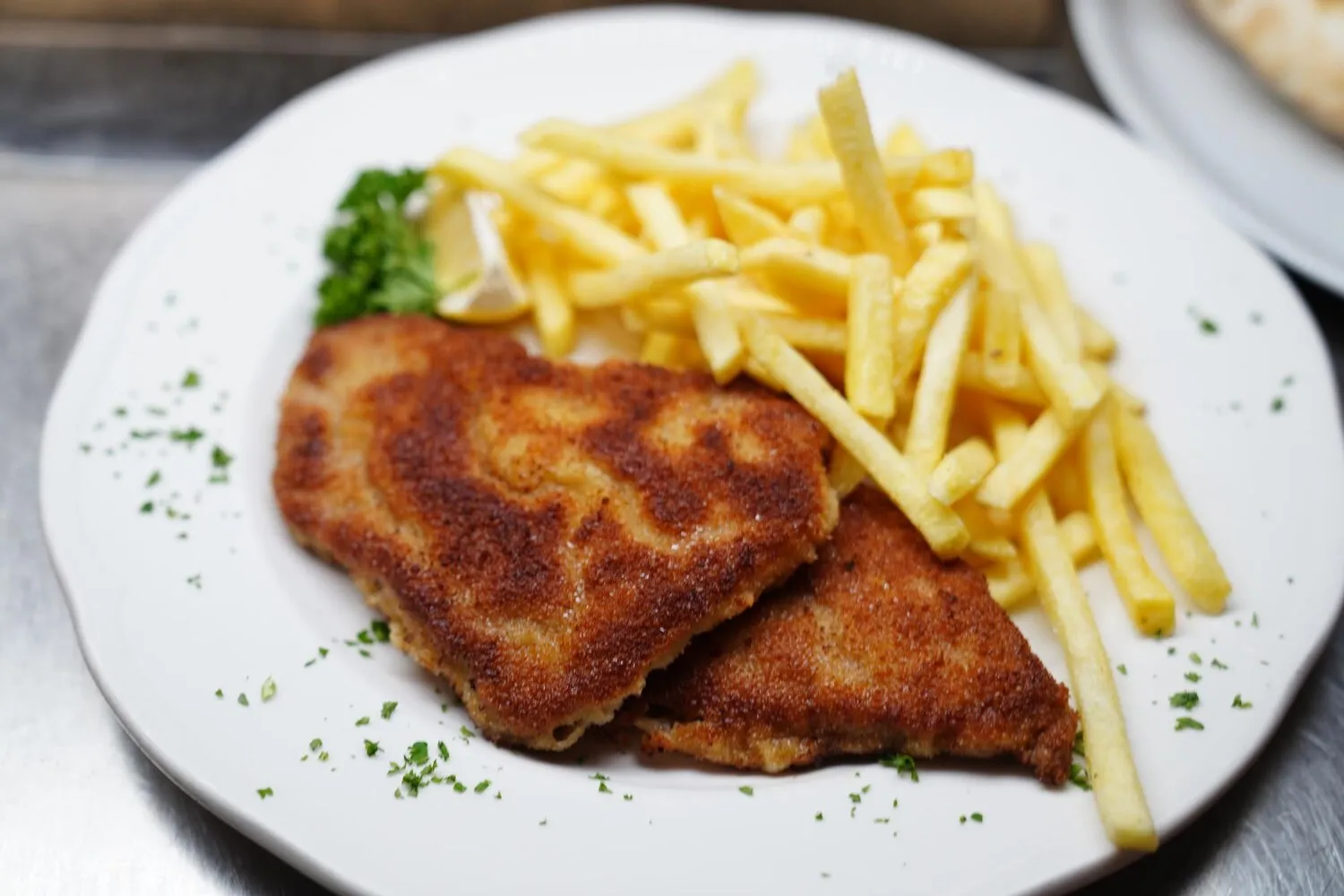

Schnitzel
Schnitzel is a thin, breaded, pan-fried cutlet of meat.
Tabela Nutricional
* O % do Valor Diário (VD) informa quanto um nutriente em uma porção de alimento contribui para uma dieta diária. 2.000 calorias por dia são usadas para conselhos nutricionais gerais.
Recurso Premium
Recurso Premium
Schnitzel's origins are debated, with some linking it to the Italian 'cotoletta alla milanese'. However, the Viennese Schnitzel, as we know it, gained popularity in Austria during the 19th century. Legend has it that Field Marshal Radetzky brought the recipe from Italy, but this is largely unsubstantiated. Regardless, the dish has evolved and solidified its place as a cornerstone of Austrian cuisine.
Recurso Premium
Schnitzel is deeply ingrained in Austrian culture and considered a national dish. It represents comfort food and is often served at family gatherings, restaurants, and traditional Austrian 'Gasthäuser' (inns).
Wiener Schnitzel vs. Schnitzel Wiener Art
Wiener Schnitzel *must* be made with veal. Schnitzel 'Wiener Art' (Viennese style) indicates that it's made with pork, which is a more affordable and commonly found alternative.
Traditional Garnishes
A typical serving of Schnitzel includes a lemon wedge for squeezing over the cutlet, and parsley. Common side dishes are potatoes (boiled, fried, or mashed), potato salad, or cranberries.
Festival Food
Schnitzel is often found at Austrian festivals and markets, sometimes served in a roll as a quick and portable meal.
Recurso Premium
The dominant flavors in Schnitzel are savory and subtly rich from the breaded and pan-fried meat, complemented by the simple seasonings. The choice of meat and fat for frying significantly influences the overall taste.
Typically, Schnitzel consists of a thin cutlet of veal (Wiener Schnitzel) or pork (Schnitzel Wiener Art), pounded until very thin. It's then dredged in flour, dipped in beaten eggs, and coated in breadcrumbs. The breadcrumbs should ideally be 'Semmelbrösel' (Austrian breadcrumbs made from Kaiser rolls). The cutlet is then pan-fried in clarified butter or oil until golden brown and crispy. The meat itself, ideally veal, provides a delicate, slightly sweet flavor. The breadcrumbs offer a textural contrast and nutty notes when fried. Seasoning is usually kept simple: salt and pepper.
Recurso Premium
Pounding the Meat
Pound the meat between two sheets of plastic wrap or parchment paper to prevent tearing. Aim for a consistent thickness of about ¼ inch (6mm).
Breading Technique
Follow the 'standard breading procedure': flour, egg, breadcrumbs. Ensure each layer is applied evenly and that excess flour and egg are removed before moving on to the next step. Use day-old or stale bread for superior breadcrumbs.
Frying Temperature
The fat should be hot enough to cook the Schnitzel quickly and evenly, but not so hot that it burns the breadcrumbs. Aim for around 325-350°F (160-175°C). Use enough fat so it floats freely and cook in batches to avoid overcrowding the pan, which lowers the temperature.
Fat Choice
Traditionally, clarified butter is used for frying, imparting a rich and nutty flavor. However, vegetable oil or a mixture of oil and butter can also be used. Avoid olive oil, as it has a lower smoke point.
Recurso Premium
Explore pratos e restaurantes adicionais de Main Course
Explorar Main CourseDescubra os melhores restaurantes e experiências culinárias em Göteborg.
Explorar GöteborgSaiba mais sobre a cultura gastronômica, a cena de restaurantes e o patrimônio culinário de Sweden.
Explorar Sweden