
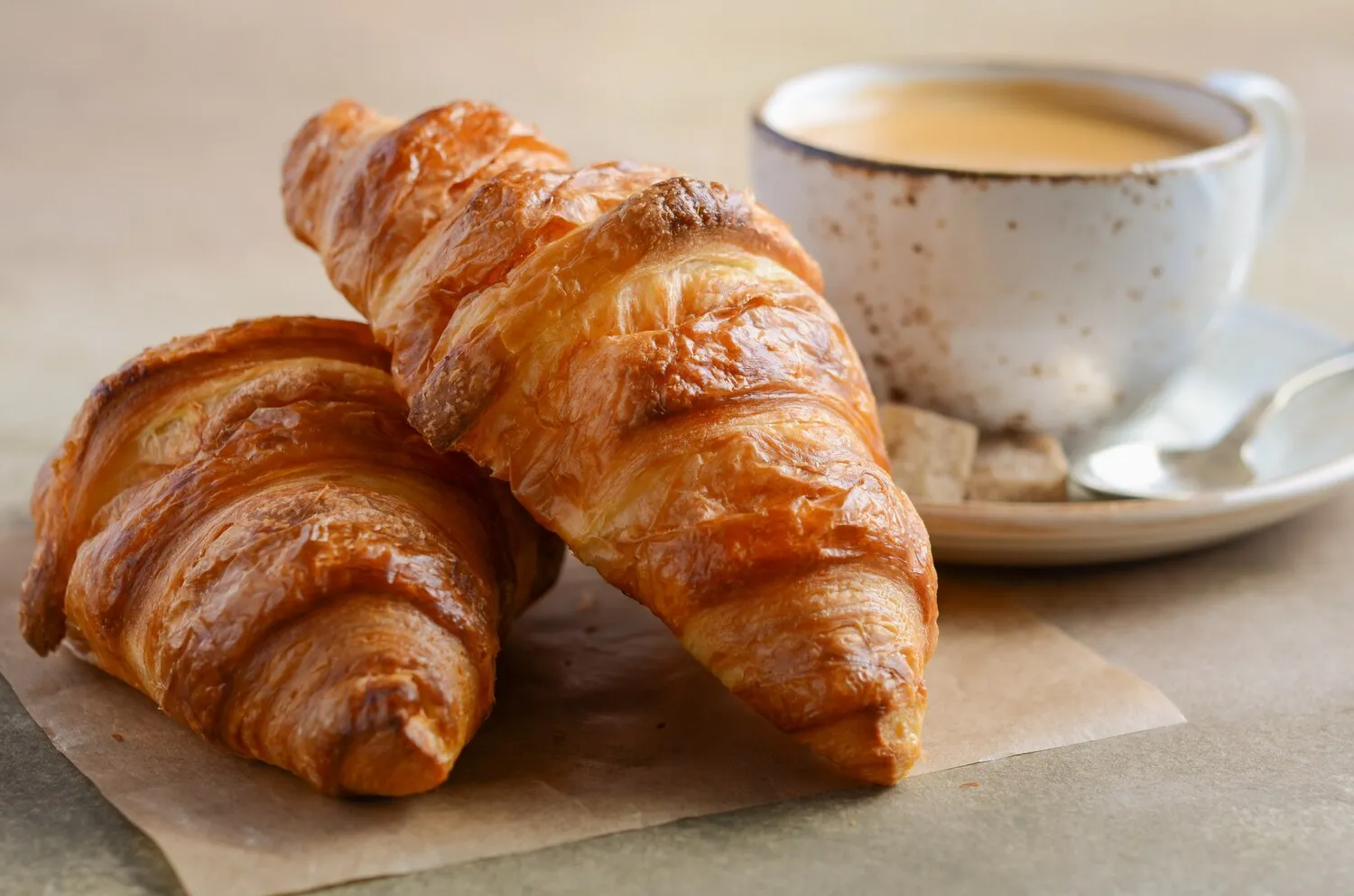

Croissant
Flaky and buttery croissant, a popular choice for breakfast or a snack.
Tabela Nutricional
* O % do Valor Diário (VD) informa quanto um nutriente em uma porção de alimento contribui para uma dieta diária. 2.000 calorias por dia são usadas para conselhos nutricionais gerais.
Recurso Premium
Recurso Premium
The croissant's ancestor is the Austrian kipferl. It's believed that the kipferl was created in Vienna in the 17th century, possibly to celebrate the defeat of the Ottoman Empire. The legend that Marie Antoinette introduced it to France is likely false. The croissant as we know it today, made with laminated dough, developed in France in the 19th century.
Recurso Premium
The croissant is deeply ingrained in French culture, particularly as a breakfast staple. It is a symbol of French baking prowess and a common sight in bakeries and cafes across the country.
Breakfast Staple
In France, the croissant is commonly enjoyed for breakfast, often paired with coffee or hot chocolate. It's a quick and convenient way to start the day.
Bakery Icon
French bakeries, or *boulangeries*, are renowned for their croissants. The quality of a bakery is often judged by the quality of its croissants.
Cultural Symbol
The croissant has become a symbol of French culinary identity and is recognized worldwide.
Recurso Premium
The croissant offers a rich buttery flavor with a delicate, slightly sweet undertone. Its texture is characterized by flaky layers and a soft, airy interior.
The dominant flavor is undeniably butter, derived from the repeated layering of butter between the dough. This creates a rich, almost creamy sensation in the mouth. The slight sweetness comes from the small amount of sugar in the dough. The subtle flavor of yeast also contributes to the overall taste profile. The exterior is typically golden brown and crisp, providing a textural contrast to the softer interior.
Recurso Premium
Temperature Control
Keeping the butter cold is crucial to prevent it from melting into the dough. Work in a cool environment and refrigerate the dough frequently during the lamination process.
Quality Ingredients
Using high-quality butter with a high fat content will result in a richer and more flavorful croissant.
Proper Proofing
Allow the croissants to proof properly before baking. They should almost double in size and feel light and airy. Over-proofing can lead to a flat, dense croissant.
Baking Temperature
Bake at a high temperature initially to create steam and help the layers separate. Then, reduce the temperature to ensure the croissants are cooked through without burning.
Recurso Premium
Explore pratos e restaurantes adicionais de Pastry
Explorar PastryDescubra os melhores restaurantes e experiências culinárias em Stockholm.
Explorar StockholmSaiba mais sobre a cultura gastronômica, a cena de restaurantes e o patrimônio culinário de Sweden.
Explorar Sweden