
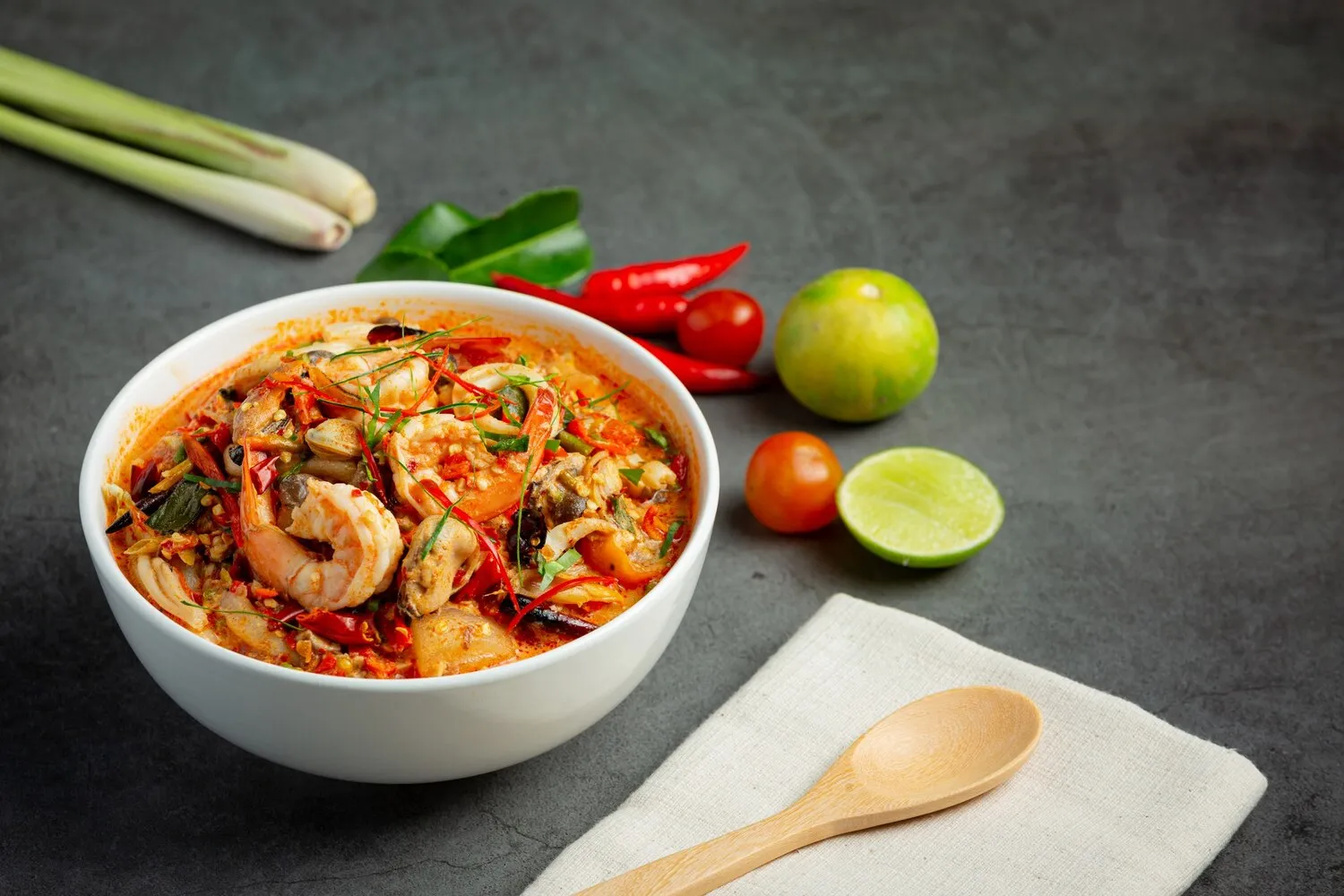

Tom Yum Soup
Spicy and sour Thai soup with lemongrass, galangal, chili, and mushrooms, often with shrimp.
Tabela Nutricional
* O % do Valor Diário (VD) informa quanto um nutriente em uma porção de alimento contribui para uma dieta diária. 2.000 calorias por dia são usadas para conselhos nutricionais gerais.
Recurso Premium
Recurso Premium
The precise origins of Tom Yum are unknown, but it is believed to have originated in Central Thailand, likely along the Chao Phraya River basin where fresh ingredients were readily available. The dish reflects Thailand's rich culinary heritage, blending indigenous ingredients with influences from neighboring Southeast Asian countries and China.
Recurso Premium
Tom Yum is more than just a soup; it's an integral part of Thai culture, often enjoyed as a starter or main course, and frequently served at social gatherings and family meals. It's believed to have medicinal properties, particularly in clearing sinuses and fighting colds.
Symbol of Thai Cuisine
Tom Yum represents the balance of flavors that is fundamental to Thai cooking: sour, salty, sweet, spicy, and umami all working together in harmony.
Celebratory Dish
Often served during Thai festivals and celebrations, Tom Yum signifies abundance and sharing.
Regional Variations
Different regions of Thailand have their own variations of Tom Yum, reflecting local ingredients and preferences. For example, some versions may be sweeter or more intensely spicy.
Recurso Premium
Tom Yum is characterized by its distinct hot and sour flavors, achieved through a harmonious blend of aromatic herbs and spices.
The soup derives its sourness from ingredients like lime juice and tamarind paste. The spiciness comes from fresh chilies, often bird's eye chilies. Lemongrass and galangal provide citrusy and earthy aromas, while kaffir lime leaves add a fragrant complexity. Fish sauce (nam pla) contributes a salty and umami depth. Mushrooms, such as straw mushrooms or oyster mushrooms, add an earthy texture. Shrimp is a popular protein, but chicken (Tom Yum Gai) or other seafood (Tom Yum Talay) are also common variations.
Recurso Premium
Bruise the Herbs
Bruising the lemongrass and galangal before adding them to the broth releases their essential oils, maximizing their flavor and aroma.
Add Lime Juice Last
Lime juice should be added at the very end of the cooking process to preserve its fresh, vibrant flavor. Cooking it for too long can make it bitter.
Adjust the Heat
The spiciness of Tom Yum can be adjusted to your preference by controlling the amount of chilies used. Start with a small amount and add more to taste.
Use Fresh Ingredients
Fresh herbs and spices are crucial for achieving the authentic flavor of Tom Yum. Dried ingredients can be used as a substitute, but the flavor will be less vibrant.
Recurso Premium
Explore pratos e restaurantes adicionais de Soup
Explorar SoupDescubra os melhores restaurantes e experiências culinárias em Uppsala.
Explorar UppsalaSaiba mais sobre a cultura gastronômica, a cena de restaurantes e o patrimônio culinário de Sweden.
Explorar Sweden